
Here is what moved overnight, chosen for dog owners, walkers and the people who care for them and explained in plain terms. Mornings are getting colder, so this is the month to check that last year's jacket still fits.
In today’s briefing:
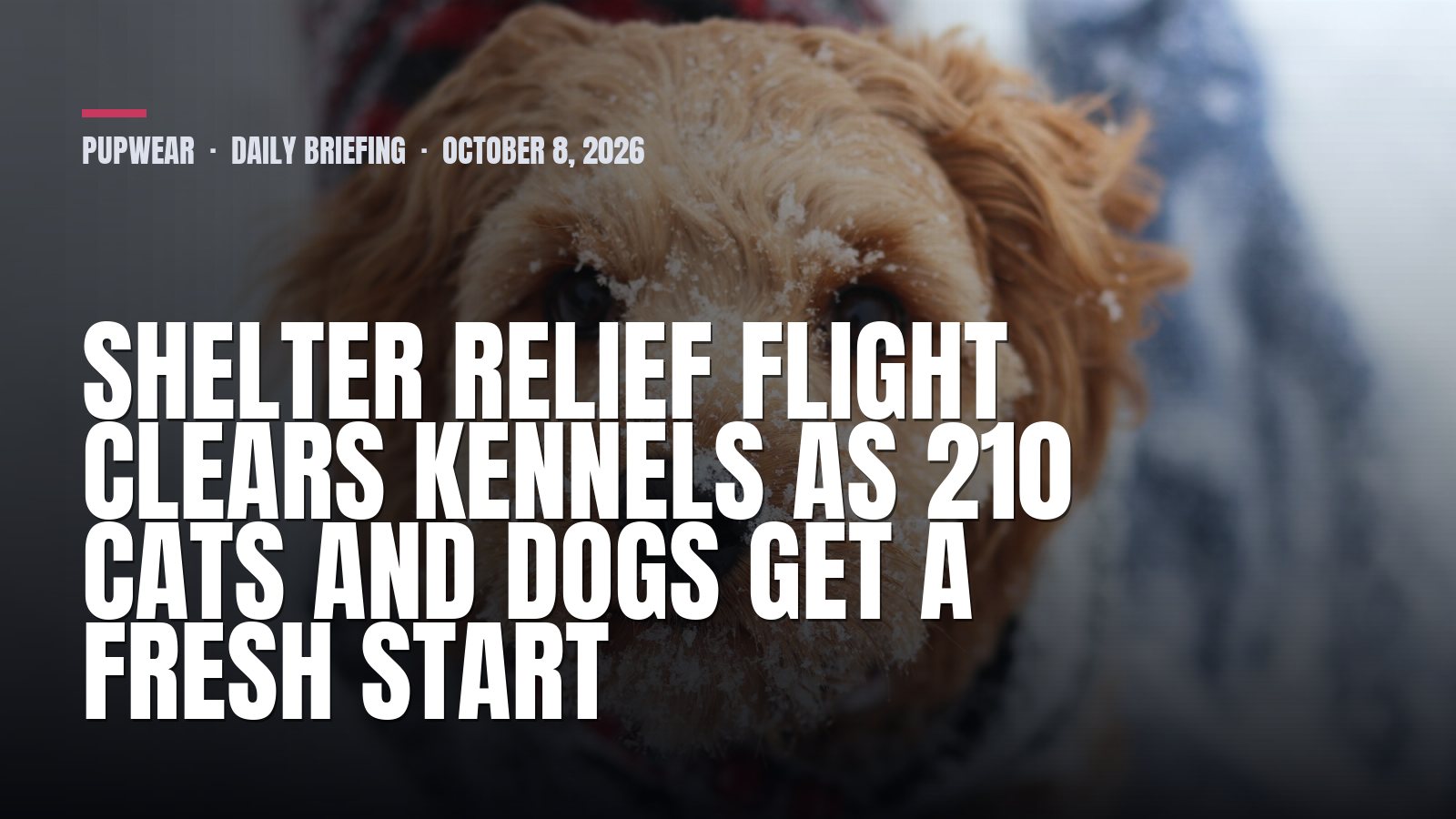
- Shelter relief flight clears kennels as 210 cats and dogs get a fresh start
- Vet-led rescue centre celebrates 30th anniversary
- Many people pretend to be owners, using AI to pick up dogs and cats at a rescue station in Ho Chi Minh City
- UPDATE: Dog rescued from Chattanooga drain pipe named Georgie, now receiving care
- 45 dogs rescued from ‘rancid’ Houston mobile home, officials say
Shelter relief flight clears kennels as 210 cats and dogs get a fresh start
Reported by KMPH Fox 26, Oct 7 — read the full story.
Why it matters: Shelters run on community. Adopting, fostering or simply sharing an adoptable dog's profile can change a life this week.
Vet-led rescue centre celebrates 30th anniversary
Reported by Vet Times, Oct 7 — read the full story.
Why it matters: Your vet is your best partner. When a health story makes headlines, a quick call to your clinic is always the right next step.
Many people pretend to be owners, using AI to pick up dogs and cats at a rescue station in Ho Chi Minh City
Reported by Laodong.vn, Oct 7 — read the full story.
Why it matters: Good information makes for happier dogs. This one is worth knowing.
UPDATE: Dog rescued from Chattanooga drain pipe named Georgie, now receiving care
Reported by Local3News.com, Oct 7 — read the full story.
Why it matters: Stories like this shape everyday life with dogs, at home and on the walk.
45 dogs rescued from ‘rancid’ Houston mobile home, officials say
Reported by CW39 Houston, Oct 7 — read the full story.
Why it matters: Worth a read for anyone who shares their home with a dog.
Keep exploring Pupwear
- Measure your dog for a jacket — two minutes, three numbers
- Preview the boutique — the first Pupwear collection
- Find a local pet store — independent shops near you
Join the Pack for new collections and guides →
Pupwear publishes a new briefing every morning. Stories are summarized with credit and links to the original reporting.
Going Deeper: How Shelter Relief Transports Work
Stories about relief flights and transports pop up often, so it helps to understand the basic idea behind them. Some shelters regularly take in more dogs and cats than their local community can adopt, while shelters and rescues in other areas may have more interested adopters than available animals. Transport programs move animals from the first kind of shelter to the second, by road or sometimes by air.
For the sending shelter, each transport frees kennel space, which can mean less crowding and less stress for the animals that remain. For the receiving shelter, it brings in animals that local families are ready to adopt. Animals moved this way are typically checked by veterinary staff and given required vaccinations and paperwork before travel, though exact practices vary by program and by state rules.
What this means for you
- If you are thinking about adopting, ask your local shelter whether it receives transport animals and when new arrivals usually become available.
- Many transport programs depend on volunteers for loading, driving, short-term fostering and paperwork. Shelters can tell you what roles they need filled.
- Sharing adoptable profiles on social media and with friends remains one of the simplest ways to help, at no cost.
Proving Your Dog Is Yours
Today’s report about people falsely claiming animals at a rescue station is a reminder that shelters and rescues need a way to confirm who an animal really belongs to. As an owner, a little preparation helps you prove ownership quickly if your dog is ever lost and found by someone else.
- Register the microchip in your name and keep your contact details current with the registry.
- Keep vet records handy, including vaccination certificates, which often list your dog’s description and your name.
- Save adoption or purchase paperwork in a folder you can find quickly, and keep a digital copy on your phone.
- Take photos of you with your dog regularly, along with clear shots of any unique markings, scars or features.
- Keep license tags current if your town or county requires dog licensing.
Shelters may ask for several of these before releasing an animal. That extra step protects your dog as much as anyone else’s.
When Many Dogs Are Rescued From One Home
Cases like the one reported in Houston, where many animals are removed from a single property, place sudden demands on local shelters. Dogs from these situations may need medical care, grooming, time to adjust to people and sometimes behavioral support before they are ready for adoption. They may also be held for a period while legal matters are resolved, depending on local rules.
When shelters announce a large intake, the most useful help usually looks like this:
- Checking the shelter’s official channels to see what they are actually asking for, whether supplies, fosters or volunteers
- Considering short-term fostering if you have a quiet home and some time
- Adopting an animal already at the shelter to free up space for new arrivals
- Being patient with dogs from difficult backgrounds, who may need extra time to trust people
Briefing Questions Readers Ask
Are transported dogs harder to adopt or care for?
Not necessarily. Like any shelter dog, each one has its own history and personality. Ask the shelter what they know about the dog’s behavior, health and history before you decide.
What should I do if I find a dog stuck somewhere dangerous, like a drain or culvert?
Do not put yourself at risk. Call local animal control or emergency services, keep an eye on the dog from a safe distance and follow their instructions.
How can I tell whether a rescue group is reputable?
Look for clear adoption processes, health records for animals, transparent contact information and a willingness to answer questions. Your veterinarian or local shelter may also be able to point you toward established groups in your area.
Is now a good time to adopt?
Fall is a good season for many families, with cooler walks and time to settle in before winter holidays. The best time is when your household is ready for the commitment.