

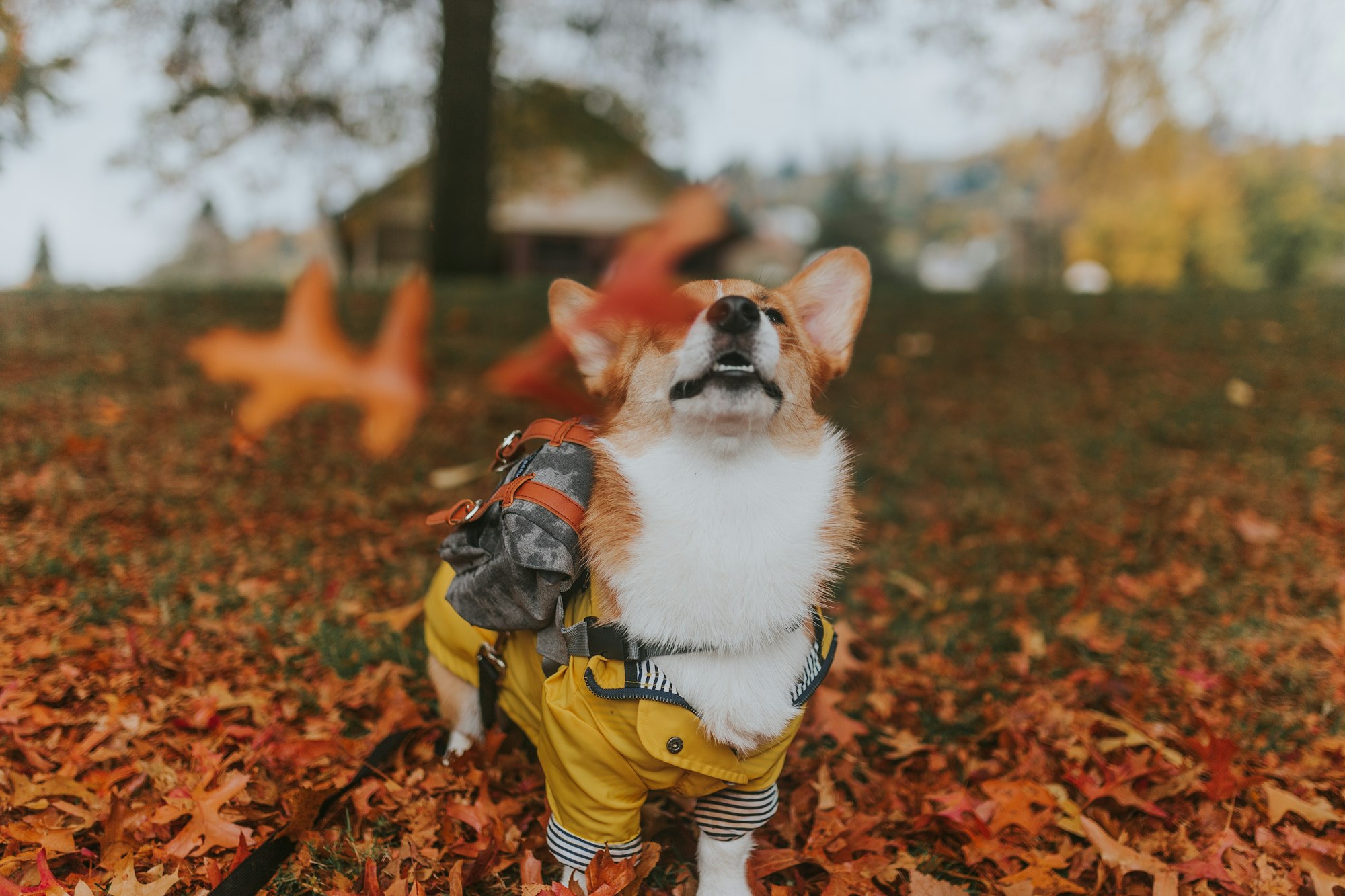
Photo: Cole Keister / Unsplash
The return from a wet outing often reveals an entryway's weak spots: a bag lands on the floor, a garment is left over a chair, and nobody can tell which towel was set aside for the dog. A return station gives those objects a predictable route through the home. It is a storage and household coordination project, not a weather protection claim. Start with the actual doorway and the items regularly brought through it.
Walk through the return in order
Think about the first few actions after entering: closing the door, putting down a bag, handling gear and moving away from the entrance. Identify where each object can wait without blocking movement. The station should support the household's existing way of keeping the dog secure, rather than introducing a rushed change at the doorway. Keep access to doors, stairs and shared passageways clear. If the space is tight, a smaller station is preferable to an obstacle.
Separate temporary placement from drying
A landing place for wet gear is not necessarily its final drying location. Choose a washable or otherwise appropriate surface for the immediate handoff, then follow each product's care and drying directions. Do not pile everything together simply because it arrived at the same time. Garments, bags and other accessories may need different treatment. A short note showing where each category goes can help another household member complete the routine without improvising.
Keep clean supplies distinct
Store clean supplies separately from used ones so the next outing does not begin with uncertainty. Use labels that describe the actual contents rather than broad categories nobody remembers. Put household cleaning products and loose accessories where pets cannot access them. The aim is not to display every possible item at the door. Keep only the essentials there and put less frequently used supplies in their normal storage location, with a clear route for retrieving them.
Agree on who finishes the process
Returning home and resetting the station are different tasks. Decide whether the person coming in also moves gear to its drying location or whether another adult will take over. A visible status can be useful when the handoff is not immediate. Avoid making someone infer completion from an empty hook or a closed bag. The next person should be able to tell which items are ready, which are still being cared for and which need attention.
Test it on an ordinary day
Before relying on the arrangement during bad weather, practice placing the usual bag and garments in their intended locations. Check whether a cupboard door can open, whether a towel can be reached and whether the walking route remains clear. This is a chance to move an awkward basket without the pressure of a wet return. Use the smallest set of storage pieces that works. Buying extra containers should not be the first step in solving a layout problem.
Reset rather than expand
After the next wet outing, note one thing that worked and one point of friction. Move or remove an item before adding another organizer. Once gear is dry and ready according to its instructions, return it to its everyday home so the station stays available. A useful rainy-day setup does not need to be elaborate. It needs to make the short transition from outdoors to indoors understandable, repeatable and easy for the household to finish.
Putting It Into Practice: Three Doorway Layouts
Every entryway is different, so the station has to fit the space that exists. Three common situations show how the same principles can work in very different homes.
A narrow hallway
With little floor space, the station may be as simple as one wall hook for the bag, a washable mat where wet gear lands, and a small labeled basket on a shelf for clean towels. Drying happens elsewhere, perhaps in a bathroom or utility area, so nothing stays in the passage longer than necessary. The rule here is that the hallway is only a landing place, never a storage area.
A back door into a kitchen or utility room
A larger space allows a little more structure: a low shelf or bench for the landing surface, a separate hook for used towels and a closed cupboard for clean supplies and household cleaning products. Because kitchens are busy, the key decision is keeping the path to the door and any appliances clear.
A shared building entrance
Where the doorway is shared with neighbors, the station usually has to start inside the flat or apartment. A tray just inside the front door and a bag that holds a clean towel for the walk home can bridge the gap. Communal hallways and stairwells stay clear.
A Return-Route Checklist
A short written sequence by the door can help everyone finish the same routine. It might read:
- Door closed and dog settled in the usual way.
- Bag on its hook.
- Wet garments on the landing surface.
- Used towel to its separate place.
- Garments moved to their drying location, following each item’s directions.
- Status note updated if anything is left for someone else.
- Clean supplies checked before the next outing.
The list should describe the household’s real steps. If a step is never done, it belongs off the list or the routine needs adjusting.
Common Mistakes at the Door
- Turning the landing place into permanent storage. Gear that never moves on fills the station and leaves no room for the next wet return.
- Mixing clean and used towels. A single hook for both creates exactly the uncertainty the station was meant to solve.
- Buying organizers before testing the layout. A practice run often shows that moving one basket matters more than adding three new ones.
- Leaving cleaning products within reach. Sprays and wipes kept near the floor for convenience can be reached by a curious dog.
- Assuming someone else will finish. Without an agreed handoff, items can sit damp for longer than intended.
Questions Readers Ask
How much should actually live at the door?
Only what is used on most returns. Occasional items are better kept in normal storage with a clear route to them.
What if two people come home at different times?
A visible status note, such as a small card on the hook, lets each person see what has been done and what is still waiting.
When should the setup be changed?
When the same point of friction comes up more than once. Change one thing at a time, then try it on the next wet day.
Quick check
How much did you catch? Tap a question to see the answer.
1. Why are temporary placement and drying separate decisions?
Answer: Different items may need different care and drying locations after the initial handoff.
2. What should remain clear around the station?
Answer: Doors, stairs and shared passageways.
3. What should be tried before buying more organizers?
Answer: A simple practice run using the usual gear and the smallest workable setup.













Leave a Reply