

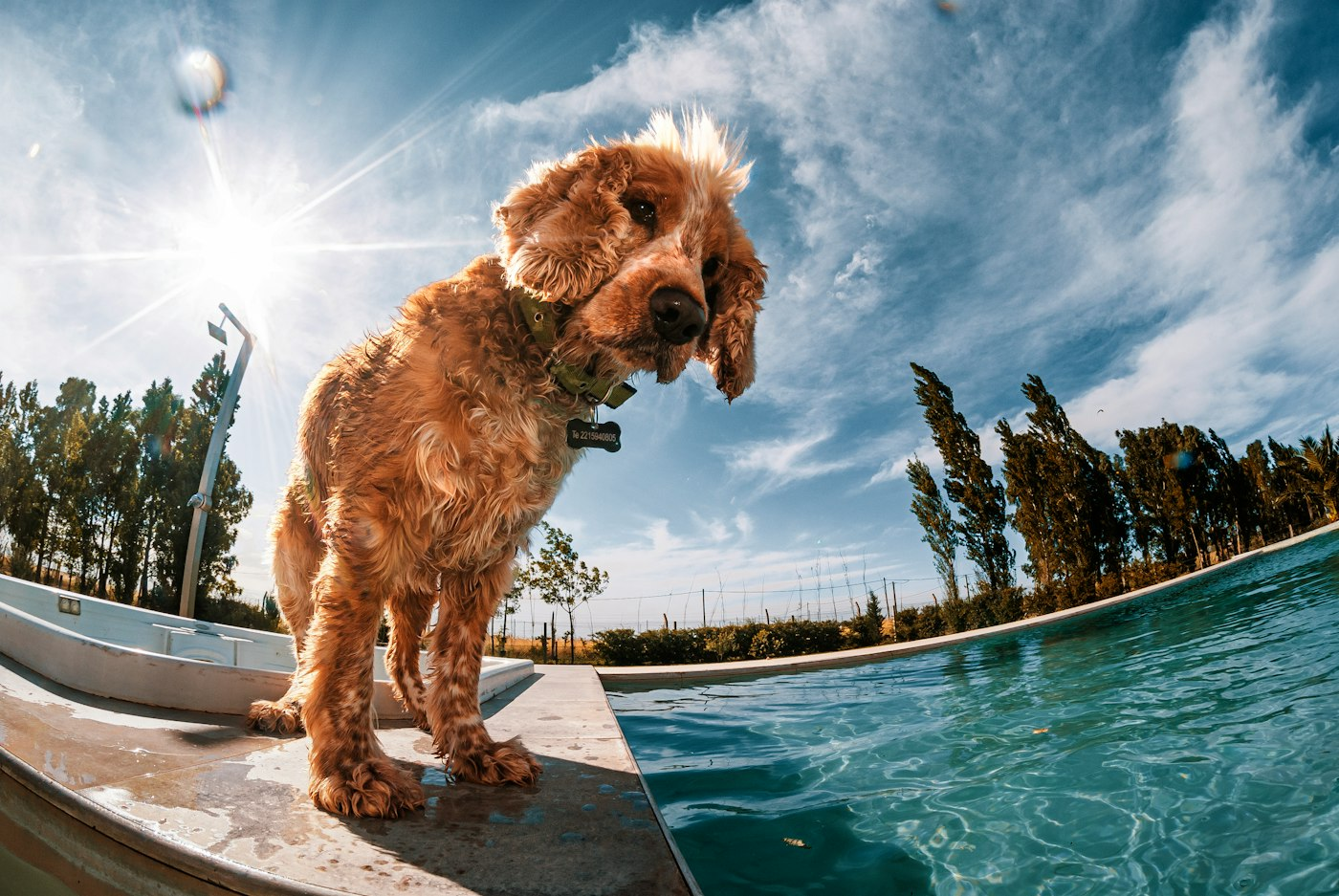
Not every dog likes to swim, but many enjoy standing in a few inches of cool water on a hot day. A kiddie pool gives them a place to splash, lie down and cool their paws without leaving the yard. With a little care, it can become a favorite summer spot.
Choosing a pool
Hard plastic wading pools are generally better for dogs than inflatable ones, which can be punctured by claws. There are also pools made specifically for dogs, often with sturdy, foldable walls.
Pick a size that lets your dog step in, turn around and lie down comfortably. Keep the water shallow, just enough to cool the legs and belly. For small dogs, puppies and seniors, a few inches is plenty, and an easy way in and out matters. Some owners place a rubber mat inside for traction.
Setting it up
- Put the pool in the shade, or water will warm quickly and the plastic can get hot.
- Place it on a level spot where it will not tip.
- Keep it away from fences, so your dog cannot use it as a step to jump over.
- Use fresh tap water, and let it sit for a few minutes if it is very cold from the hose.
- Run the hose for a moment before filling, since water sitting in a hose in the sun can be surprisingly hot.
Introducing your dog
Some dogs leap right in. Others need time. Let your dog sniff the empty pool first, then add a little water. Toss a treat or floating toy in and praise any interest. Never force a dog into the water. If your dog prefers just dipping their paws or drinking, that is fine too.
Discourage drinking large amounts of pool water, and keep a bowl of fresh drinking water nearby.
Supervision and safety
Even shallow water deserves supervision, especially with small dogs, puppies, seniors and dogs with mobility or health issues. Stay nearby while your dog is in the pool.
Dry your dog after a dip, paying attention to ears, paws and armpits. Damp fur can lead to skin irritation, and moisture in the ears may contribute to ear problems in some dogs. Ask your veterinarian about ear care if your dog is prone to infections. Doodles and other curly-coated dogs may need a quick brush once dry to prevent mats.
Keeping the water clean
Standing water gets dirty fast with fur, dirt, grass and drool, and it can breed bacteria and mosquitoes. Empty the pool after each use, or at least daily. Scrub it regularly with mild soap and rinse well. Do not add pool chemicals or bleach to water your dog may drink.
When the pool is not in use, empty it and tip it on its side or store it. That keeps rainwater from collecting and keeps the yard tidy. A clean pool, a shady spot and a happy dog make for one of summer’s simplest pleasures.
Making Pool Time a Habit
A kiddie pool works best when it is part of a predictable summer routine. Dogs come to look forward to it, and you can plan cleaning and supervision around the same windows each day.
A simple daily rhythm
- Fill in the late morning, once the yard warms up but before the hottest part of the day, using cool water from a hose you have flushed first.
- Set out a towel and fresh drinking water nearby so you are not running back inside.
- Offer short sessions of splashing and lounging, with breaks in the shade in between.
- Dry your dog after the last dip, especially the ears and paws.
- Empty, rinse and tip the pool at the end of the day so it is ready tomorrow.
Fun ideas for pool time
- Float a sturdy toy and encourage your dog to fetch it from the water.
- Toss in a few safe treats that sink and let your dog fish for them.
- Drop in a frozen toy or a few ice cubes for a cool surprise.
- Practice calm cues, such as sit or down, in the water for a low-key training session.
Adapting the Pool for Different Dogs
- Small dogs and puppies: keep the water very shallow and the sides low. A ramp or step stool outside the pool can help them climb in and out.
- Seniors and dogs with joint problems: a non-slip mat inside the pool and a low entry point make it easier. Ask your veterinarian whether water play suits your dog.
- Diggers and chewers: choose a hard plastic or reinforced pool, and stay close so you can redirect chewing on the edges.
- Nervous dogs: start with just a damp towel or an inch of water and build up over several days.
Common Mistakes to Avoid
- Filling and forgetting. A pool left out for days becomes slimy, smelly and attractive to mosquitoes.
- Using it as a substitute for shade. A pool in full sun warms quickly, and the area around it does too. Keep both the pool and resting areas shaded.
- Leaving toys in the water overnight. Soaked toys can grow mildew and fall apart. Rinse them and let them dry.
- Letting children and dogs share the pool without supervision. Excited splashing can scratch, startle or overwhelm both.
- Skipping the dry-off. Damp coats and ears can lead to irritation, especially in humid weather.
Questions Readers Ask
Can I add anything to keep the water clean longer?
It is safest to use plain fresh water and change it often. Avoid chemicals, since dogs often drink from the pool.
My dog digs at the water. Is that normal?
Many dogs paw and splash in water. It is usually just play, but it can tear softer pools. A sturdier model helps.
Is a kiddie pool enough to cool down an overheated dog?
A pool is for comfort, not for treating heat illness. If your dog shows signs of overheating, such as heavy panting, weakness, vomiting or confusion, move them to a cool place and call your veterinarian right away for guidance.
How do I store the pool between uses?
Empty it, rinse it, let it dry in the sun for a short while and then stand it on its side or move it to a covered spot. Storing it dry keeps mildew from forming and stops rainwater from collecting in the yard.
What if my dog has skin or ear problems?
Some dogs are prone to irritation when they are often wet. Ask your veterinarian whether water play is a good idea and what aftercare they recommend.












