

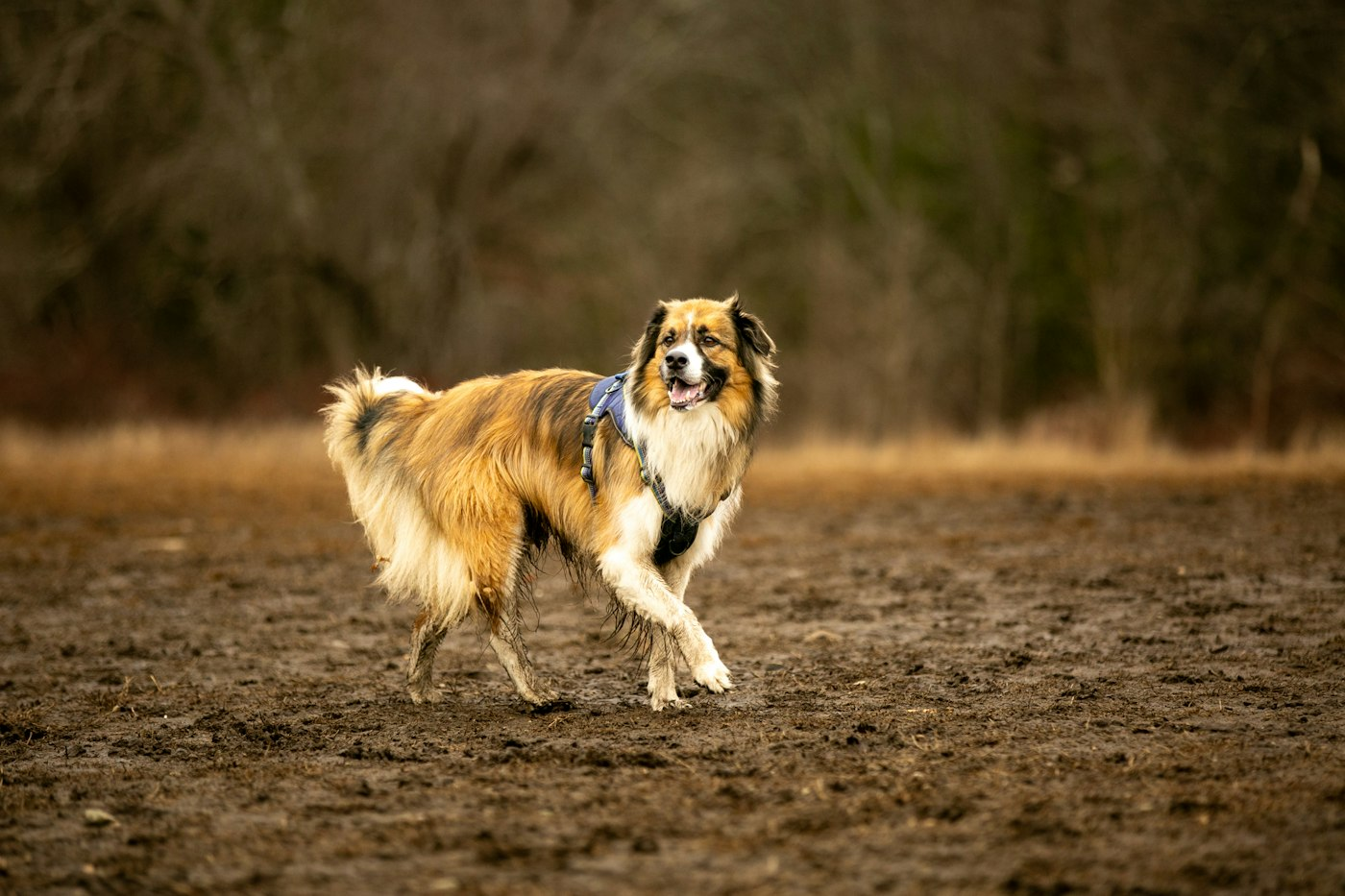
When the snow melts and the rain starts, the walk back inside becomes the messiest part of the day. A dedicated spot by the door, stocked and ready, can turn muddy paw cleanup into a quick routine instead of a chase through the house. You do not need anything fancy. You just need everything in one place before your dog comes through the door.
Pick the right spot
Choose the door your dog uses most, whether it is the back door, a mudroom or the garage entry. Ideally, there is a little floor space where your dog can stand or sit while you clean them, plus a hook or shelf nearby for supplies. If the door opens straight onto carpet, consider a washable runner to protect the floor.
What to keep at the station
- An absorbent mat: place one outside the door and one inside, so paws start drying before they reach the floor.
- Several towels: one for paws, one for the body. Keep extras so there is always a dry one.
- A shallow tub or paw washer: for paws that need more than a wipe. Lukewarm water works best.
- Pet-safe wipes: handy for quick cleanups between muddy walks.
- A hook for the leash and collar or harness: so wet gear can dry instead of piling up.
- A small container of treats: to reward your dog for waiting patiently.
Teach your dog to wait at the door
The station only works if your dog stops there. Practice a simple “wait” at the door on dry days first. Ask your dog to sit or stand on the mat, reward them, and gradually ask them to hold the position while you handle each paw. Rewarding calm behavior makes the routine smoother, and many dogs come to see paw cleaning as a pleasant ritual.
If your dog dislikes having their feet handled, start with gentle touches and treats, working up to holding a paw and wiping it. Go slowly and stop before your dog becomes uncomfortable.
Clean the paws, then check them
Wipe each paw, including between the toes and pads, where mud and grit collect. On long-haired or curly-coated dogs, the fur between the pads can trap a lot of debris. Once the paws are clean, take a quick look for cuts, cracked pads, splinters or anything stuck between the toes. Mud can hide small injuries. If you see limping, swelling or a wound that does not look minor, talk to your veterinarian.
Keep the station itself clean
Towels and mats get dirty quickly. Wash them often, and let the station dry out between uses so it does not start to smell. Hang wet jackets and harnesses to air dry, and rinse a muddy collar before mud dries into the stitching. A tidy station is one you will actually use all season.
A Two-Minute Routine, Step by Step
Once the station is stocked, a set sequence makes the routine fast and predictable for both of you. Dogs learn routines quickly, and a dog who knows what comes next is much easier to clean.
- Stop on the outside mat. Ask for a sit or stand before the door opens fully. Reward the pause.
- Unclip and hang the leash. Remove a wet jacket or harness now so it can start drying, and so you can reach the legs and belly.
- Do the paws in the same order every time. Front left, front right, back left, back right is easy to remember. Dip or wipe, then dry.
- Towel the legs and belly. These areas pick up the most splash and are often missed.
- Quick body rub. A second, larger towel takes care of the back and sides.
- Release with a treat. Use a consistent word, such as “all done,” so your dog knows when the routine is finished and learns to wait for it.
On very muddy days, it can help to keep your dog on the inside mat for a few extra minutes with a chew while their legs finish drying, rather than letting them race straight to the couch.
Adapting the Station to Your Dog
Long-haired and curly-coated dogs
Mud can cling deep in the fur on the legs and between the toes. A paw washer or tub does more than a wipe. Dry thoroughly afterward, since damp fur between the pads can lead to irritation and tangles. Some owners ask their groomer to keep the paw hair trimmed short during mud season.
Large dogs
A bigger dog may not fit comfortably on a small mat. A runner or two mats side by side gives them space to stand. A low stool for you can save your back during the paw routine.
Small dogs
Many small dogs are easier to clean if you lift them onto a towel on a low, stable surface. Hold them securely and never leave them unattended up high.
Nervous dogs
If your dog is wary of the routine, keep sessions very short and the treats generous. Wiping a single paw and stopping is a fine start. Build from there.
Common Mistakes to Avoid
- Using water that is too cold or too hot. Lukewarm is most comfortable. Test it on your wrist.
- Letting gear pile up wet. Damp harnesses and jackets left in a heap can smell and wear out faster. Give each item a hook.
- Running out of dry towels. Keep a basket of spares and a plan for getting used ones straight into the wash.
- Skipping the check. The cleaning step is the best moment to spot small cuts or something lodged between the toes, before your dog can lick at it.
- Making it a battle. If you rush or wrestle, your dog may start avoiding the door. Patience early on saves time all season.
Questions Readers Ask
Are paw wipes safe to use every day?
Wipes made for pets are designed for this, but some dogs have sensitive skin. If you notice redness or your dog licks their paws more than usual, switch to plain water and talk to your veterinarian.
Do dog boots help in mud season?
They can keep paws cleaner and protect against grit, but many dogs need time to get used to them. Introduce boots gradually indoors first.
How often should I wash the mats and towels?
In a wet stretch, towels may need washing daily and mats every few days. If the station starts to smell, it is time to wash everything and let the area dry out completely.












