

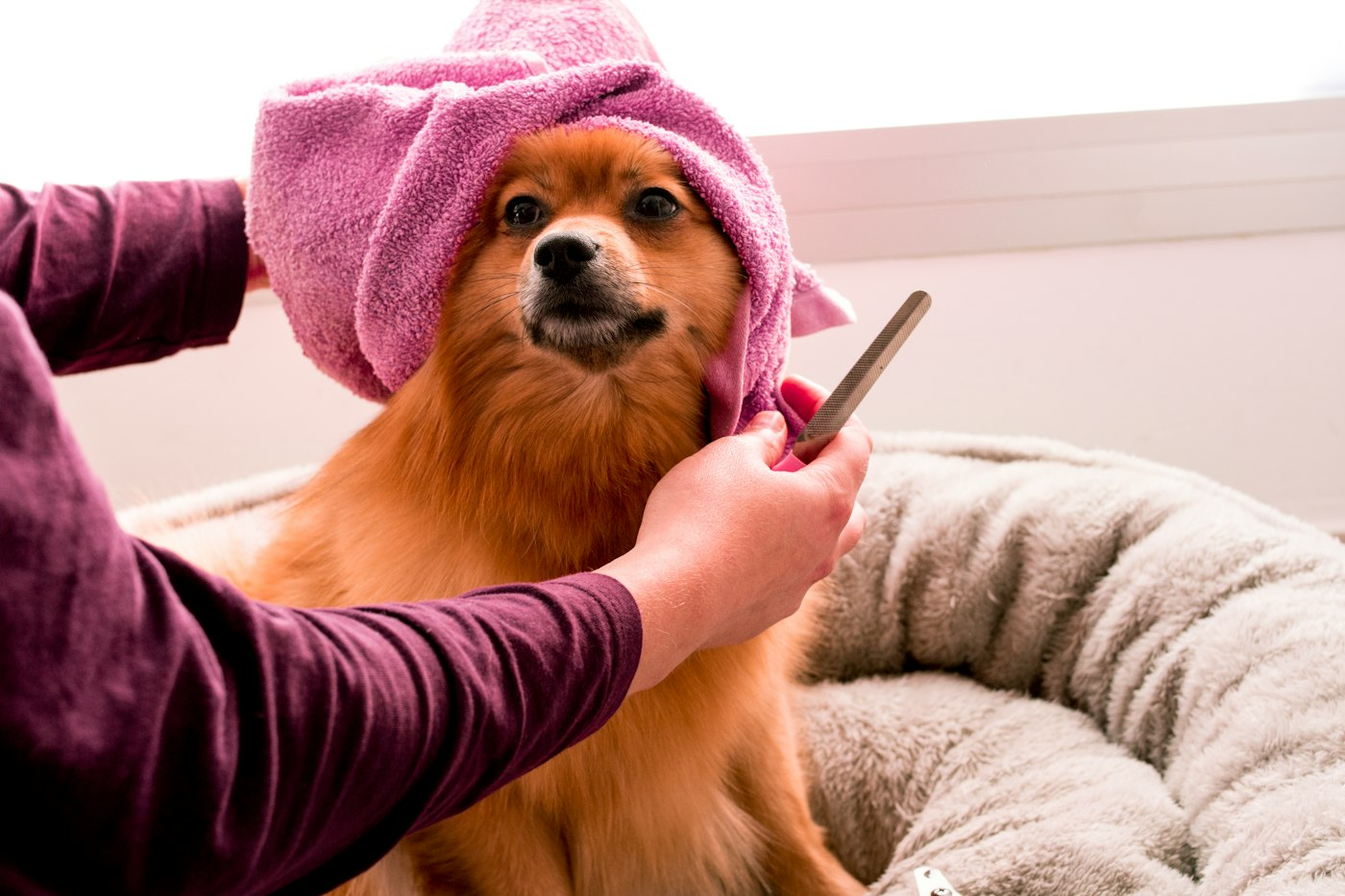
Doodles and other curly-coated dogs are snow magnets. Flakes cling to the coat, melt into the curls and soak down toward the skin. Leaving a doodle damp after a winter walk can lead to chills, tangles and a musty smell. Drying takes a little time, but a good routine makes it easier for both of you.
Start at the door
Before your dog bolts into the house, knock off the worst of it. Gently squeeze snow clumps from legs, paws and belly with your hands. Many clumps will melt quickly once you are inside, so a towel ready at the entry is essential. Wipe or rinse paws to remove salt and de-icer, and dry between the toes.
Towel the right way
Rubbing a curly coat vigorously can create tangles. Instead, press and blot. Wrap a towel around a section, squeeze gently and move on. Microfiber towels tend to absorb a lot of water and are lightweight. Work from the top down: back, sides, chest, belly, legs and tail. Keep a second dry towel for when the first one is soaked. On a dog with a long coat, towel drying alone may leave the fur near the skin damp, so feel down to the base of the hair to check.
Using a dryer safely
A dryer can speed things up and help you brush out the coat as it dries. Some owners use a dryer made for dogs; others use a human hair dryer carefully. Either way:
- Use a cool or low warm setting, not high heat
- Keep the airflow moving and hold it at a distance from the skin
- Avoid blowing directly into the face, eyes or ears
- Check the skin often to make sure it is not getting hot
- Introduce the sound gradually with treats if your dog is nervous
Brushing while drying, a section at a time, can help straighten curls and catch tangles before they set. Never leave a running dryer unattended near your dog.
Let the coat finish drying
If your dog is not a fan of the dryer, you can towel thoroughly and let them finish drying in a warm room on a dry bed, away from drafts and cold floors. Avoid putting a jacket, harness or collar back on a damp coat, since moisture plus friction is a recipe for mats. Wash and dry wet towels promptly, too, so they are ready for the next walk.
Prevention for next time
A well-fitted, water-resistant jacket can keep part of the coat drier, though legs and bellies will still collect snow. Keeping the fur between the paw pads trimmed reduces ice balls. Some owners choose a slightly shorter winter trim to make drying easier. Ask your groomer what length makes sense for your dog’s coat and your climate. If you notice red, irritated or smelly skin under the coat, or your dog keeps scratching after being wet, talk to your veterinarian. A dry doodle is a warmer, happier doodle, and a little patience after each walk keeps that soft coat in good shape.
A Step-by-Step Drying Routine
It helps to follow the same order every time, so neither you nor your dog has to think about it. Here is one routine that works for many curly-coated dogs.
- Stop at the entry. Ask your dog to wait on a mat or towel while you take off the leash, jacket and any booties.
- Clear the clumps. Squeeze or gently break up snowballs on legs, belly and paws. If they are stubborn, a bowl of lukewarm water will melt them quickly.
- Do the paws. Rinse or wipe each foot and dry between the toes.
- Blot the body. With a fresh towel, press and squeeze from the back downward, then the chest, belly, legs and tail.
- Check the base of the coat. Slide your fingers down to the skin in several spots. If it feels damp, keep going.
- Finish with dryer or rest. Use a dryer on a gentle setting while brushing in sections, or settle your dog on a warm, dry bed to air dry.
- Brush once dry. A quick comb-through after the coat has fully dried catches any tangles that formed while it was wet.
Helping a Nervous Dog Accept the Dryer
Many dogs are uneasy about the noise and airflow at first. A gradual introduction, over several short sessions, can make a big difference.
- Leave the dryer turned off on the floor and reward your dog for sniffing or walking near it.
- Turn it on at the lowest setting across the room, pointed away, and give treats while it runs for a few seconds.
- Move it a little closer each session, still pointed away, as long as your dog stays relaxed.
- Let the airflow touch a back leg or the side of the body briefly, then reward.
- Build up to drying small sections, always avoiding the face and ears.
If your dog shows strong fear at any point, go back to an easier step. Some dogs never love the dryer, and that is fine. Careful towel drying and a warm room still get the job done.
Common Mistakes
- Calling it done too soon. A doodle can feel dry on the surface and still be wet near the skin, especially on the chest and under the legs.
- Using a high heat setting to save time. Heat can burn skin and dry out the coat. Patience on a lower setting is safer.
- Drying in a drafty spot. A damp dog near a cold door or on a tile floor can get chilled. Pick a warm room.
- Reusing damp towels. Towels left in a pile can turn musty and do a poor job next time. Hang or wash them right away.
Questions Readers Ask
How long should drying take?
It depends on coat length, density and how wet your dog got. A short winter trim may dry quickly, while a full coat can take much longer. The goal is dry to the skin, not a certain number of minutes.
Is it okay for my doodle to sleep while still a little damp?
A slightly damp dog resting on a dry bed in a warm room is usually fine, but check later that the coat has dried completely and brush out any tangles.
Can I use a towel made for people?
Yes, though many owners keep dedicated dog towels so they can be washed separately and kept by the door.












