

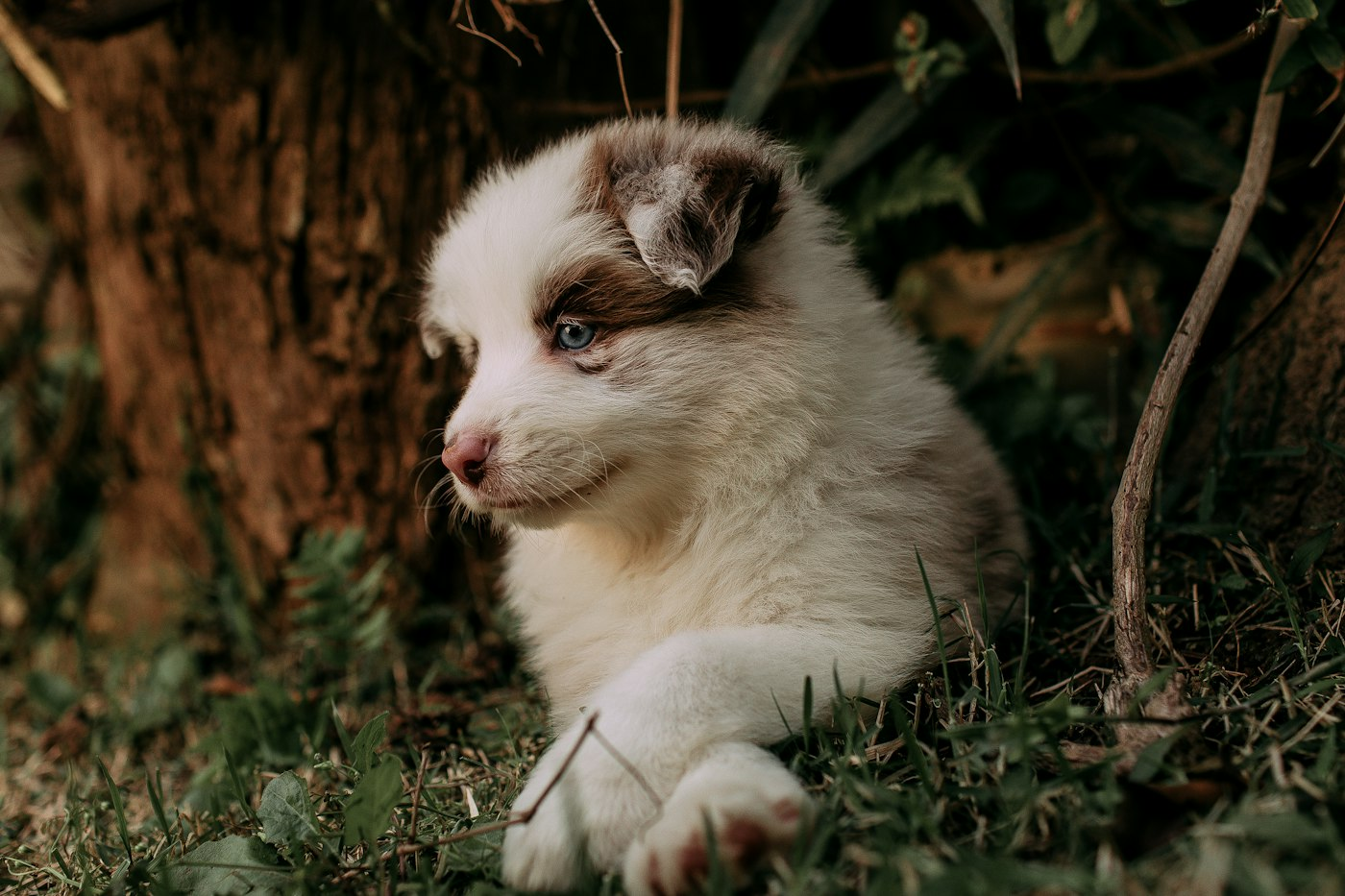
A puppy’s first summer is full of firsts: the first sprinkler, the first cookout, the first fireworks, the first trip to the lake. It is a great season for exploring, and many of these experiences help shape a confident adult dog. It is also a season with real risks for young dogs, who may not know their limits.
Puppies and heat
Young puppies may be less able to regulate their body temperature than adult dogs, and they often play until they are exhausted. That combination means they can overheat quickly.
- Keep play sessions short, especially outdoors.
- Schedule outdoor time for early mornings and evenings.
- Provide constant access to shade and fresh water.
- Watch closely for heavy panting, drooling, weakness or wobbliness, and bring your puppy into a cool space at the first sign of overheating.
- Test pavement and sand with your hand before letting your puppy walk on them.
Ask your veterinarian how much exercise is appropriate for your puppy’s age and breed. Long runs and hikes are generally not recommended for young puppies whose bodies are still developing.
Socialization in summer
Puppies benefit from positive exposure to many people, places, sounds and surfaces, especially early in life. Summer offers lots of opportunities: outdoor cafes, farmers markets, parks and backyard gatherings.
Keep experiences short, positive and at your puppy’s pace. Bring treats, let your puppy observe from a distance at first and leave before they become overwhelmed. Talk to your veterinarian about when it is safe for your puppy to visit public places and meet other dogs, based on their vaccination schedule.
Preparing for fireworks and storms
Fireworks and thunderstorms can be frightening, and a bad experience can make a lasting impression. If your puppy will experience their first fireworks this summer, plan ahead: keep them indoors in a quiet room with sound masking, stay calm and offer treats or a chew during the noise.
Some owners play recordings of storm or fireworks sounds at a very low volume during meals and play, gradually increasing over many sessions only if the puppy stays relaxed. If your puppy shows fear, slow down. Your veterinarian or a qualified trainer can help if fear seems strong.
Gear and ID for a growing pup
Puppies grow quickly, and collars and harnesses that fit in May may be too tight by July. Check fit weekly using the two-finger rule, and adjust or replace as needed.
Make sure your puppy wears an ID tag with your phone number from the start. Ask your veterinarian about microchipping, and register the chip once it is placed. A puppy who slips out of a door during a summer party has the best chance of getting home quickly with current identification.
Most of all, enjoy the season. A first summer full of safe, happy experiences is a wonderful foundation for the many summers to come.












