

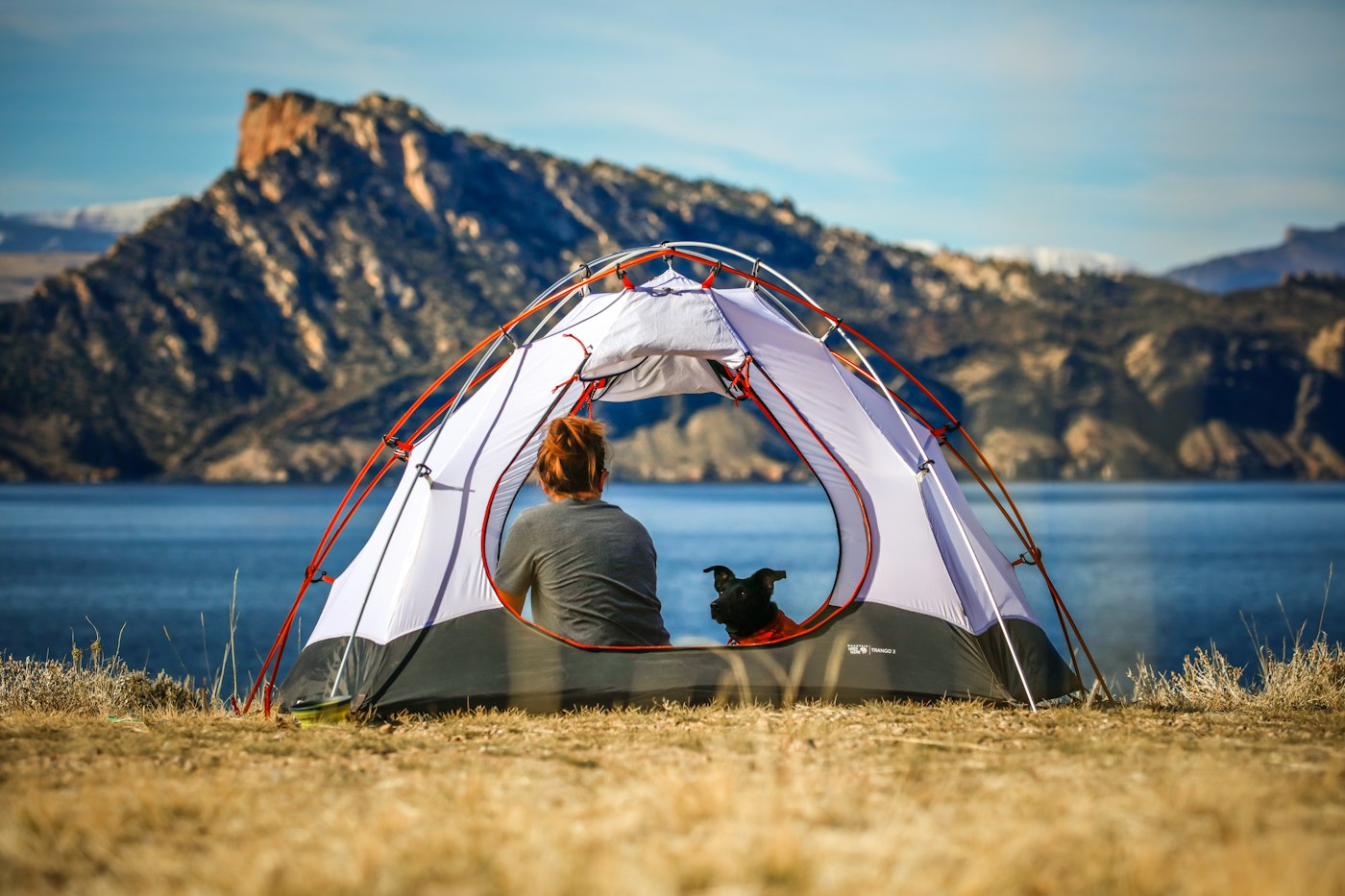
Camping with a dog combines two things many people love: the outdoors and time with their best friend. Late spring is a popular time for a first trip, before the peak heat of summer. A night under the stars is new for most dogs, though. Planning ahead helps your dog feel comfortable and keeps your campsite a pleasant place for everyone.
Choosing a Campground
Pet policies vary by park and campground. National, state and local parks set their own rules, and some areas within a park may be closed to dogs. Check the official website for the campground you are considering. Common rules include:
- Dogs must be leashed at all times, often with a maximum leash length.
- Dogs may not be left unattended at the campsite.
- Dogs may be restricted on certain trails or beaches.
- Proof of vaccination may be required.
For national parks, the National Park Service explains pet rules for each park on nps.gov. Many parks encourage the B.A.R.K. principles: Bag your pet’s waste, Always leash your pet, Respect wildlife and Know where you can go.
Prepare Your Dog
Before the trip, set up your tent in the backyard and let your dog explore it. Spend some time inside together, and maybe a practice night if your dog seems comfortable. Practice settling on a mat and staying calm on a tie-out or long leash while you work around them.
Make sure your dog is current on vaccinations and parasite prevention. Ask your veterinarian about any specific risks in the area you are visiting.
Packing List
- Food and water for the whole trip, plus extra
- Bowls, including a collapsible one for hikes
- A leash, a long line and a secure tie-out system
- A collar with current ID, plus a QR tag or tag with your cell number
- Bedding or a sleeping pad for your dog
- A towel and a first-aid kit
- Waste bags
- A light jacket if nights are cool, and a cooling option if days are warm
- A light-up collar or clip-on light for nighttime visibility
At the Campsite
Keep your dog leashed and close. Campgrounds are full of new smells, other dogs, wildlife and sometimes food left out by other campers. Store your dog’s food securely, just like your own, to avoid attracting wildlife. Never leave your dog alone at the site.
Be mindful of neighbors. Dogs who bark at every noise can disturb other campers, especially at night. A quiet cue and a calm space in the tent can help. Pick up waste promptly.
Health and Safety
Check your dog for ticks after every outing. Keep your dog away from campfires, hot grills and sharp tools. Avoid letting your dog drink from streams or lakes, which can carry parasites or bacteria, and watch for algae advisories. Watch for signs of heat stress during warm days.
Find the nearest veterinary clinic before you go, especially if you will be in a remote area.
A first camping trip often reveals how much dogs love the outdoors. With preparation, it can be the first of many shared adventures.












