

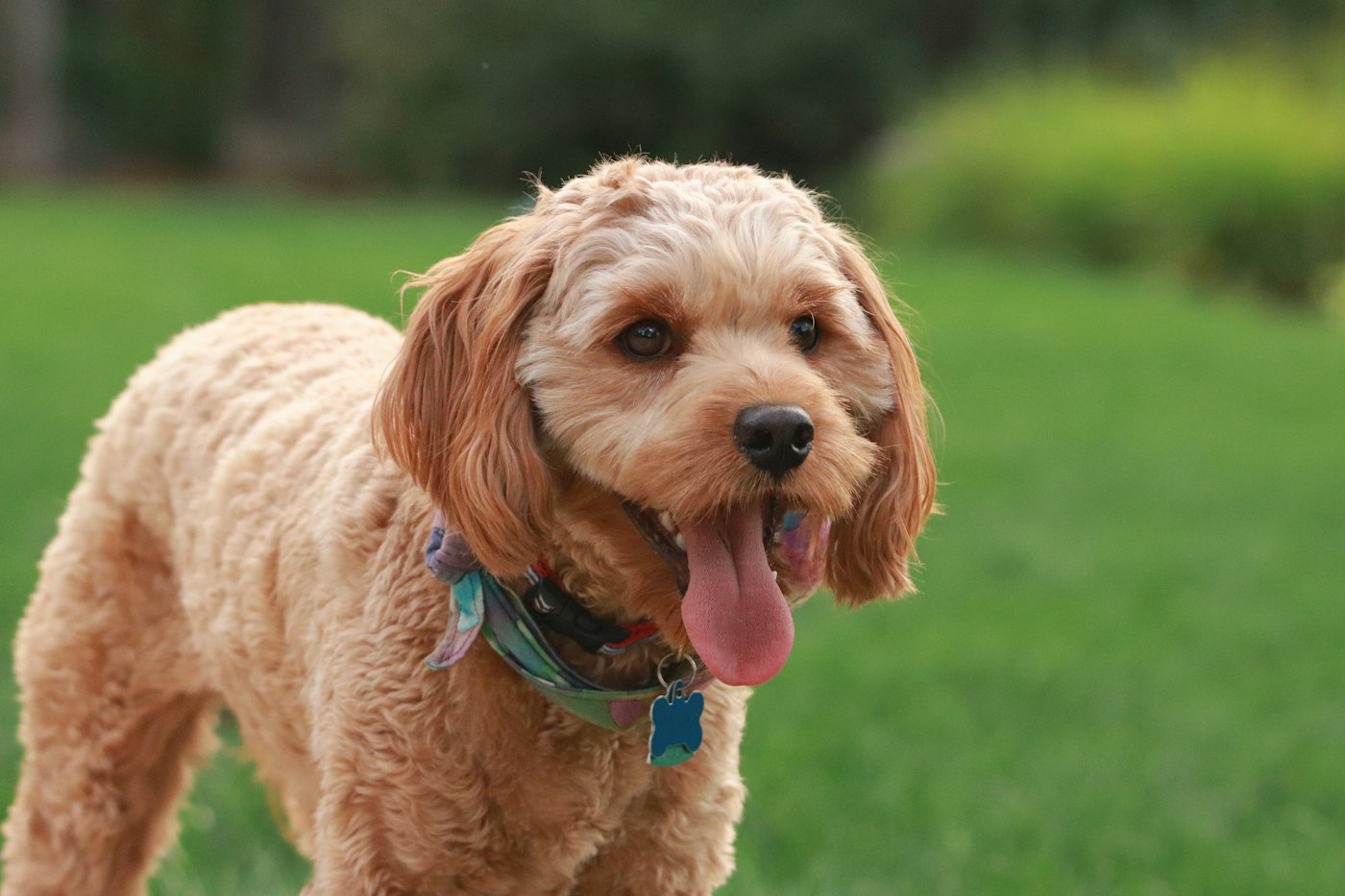
Doodle coats are soft, curly and wonderful to touch, but they can also tangle quickly. Winter makes it harder. Jackets, harnesses and collars rub against the coat all day, snow and moisture tighten curls, and owners are less eager to brush a dog after a cold walk. The result is often mats in hidden places. A few habits can help keep your doodle comfortable and tangle-free until spring.
Why winter gear causes mats
Mats form when loose hair wraps around growing hair and the strands twist together. Friction speeds that up. Anywhere a strap or fabric moves against the coat is a likely trouble spot: behind the front legs, around the neck, across the chest and under the belly. Moisture adds to the problem, because wet curly fur clumps and then dries in tight knots. Mats can pull on the skin, trap moisture and dirt, and become uncomfortable or even painful.
Brush where the gear sits
You do not have to brush the whole dog thoroughly every day, but checking friction zones daily can stop small tangles before they become mats. A common approach for doodles is line brushing: part the coat in sections and brush from the skin outward, so you reach the base of the hair rather than just the surface. A slicker brush followed by a metal comb is a popular combination. If the comb glides from skin to tip, that section is clear.
- Behind and under the front legs
- Around the neck and collar area
- Chest and belly under jacket straps
- Behind the ears
- Around the tail base and back legs
Dry before you brush, and before you dress
Brushing a wet doodle can stretch and break hair. After a snowy walk, towel off and let the coat dry fully, or use a dryer on a cool or low warm setting while brushing, then work through the coat. Avoid putting a jacket or harness on a damp dog, because the combination of moisture and rubbing is exactly what creates mats. If your dog lives in a jacket on cold days, take it off indoors so the coat can breathe.
Gear and haircut choices
Smooth, well-fitted gear tends to cause less friction than loose, shifting pieces. Remove harnesses and jackets when your dog is inside. Some owners choose a slightly shorter, easier-to-manage trim for winter, while others prefer more length for warmth. There is no single right answer. A professional groomer can suggest a cut that suits your dog’s coat type, your climate and how much brushing you can realistically do.
When mats are already there
Small tangles can sometimes be worked out gently with your fingers, a detangling spray made for dogs and a comb, holding the hair near the skin so you do not tug. Large or tight mats close to the skin are best left to a groomer. Do not try to cut them out with scissors, since it is easy to cut skin hidden inside a mat. If you find redness, sores, odor or signs of irritation under a mat, talk to your veterinarian. With regular checks, your doodle can enjoy winter gear without paying for it in tangles.












