

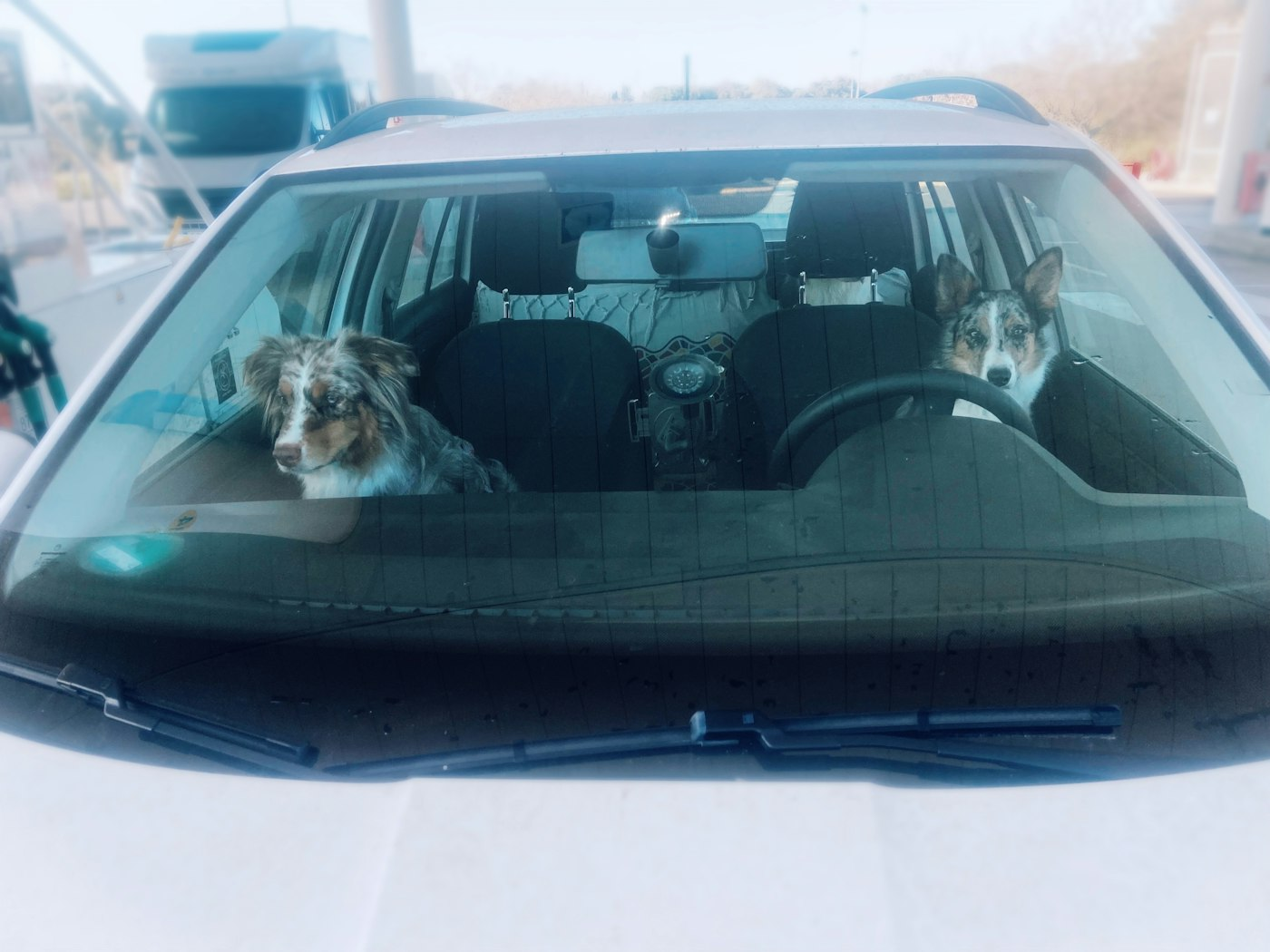
It is easy to think that a quick stop at the store is fine when the weather feels pleasant. But the inside of a parked car can become dangerously hot much faster than many people expect. Every warm-weather season, veterinarians and animal welfare groups remind owners of the same simple rule: do not leave your dog alone in a parked car on warm days.
How Cars Heat Up
Sunlight passes through car windows and heats the interior surfaces: seats, dashboard and steering wheel. Those surfaces release heat into the air inside the car, which has nowhere to go. The temperature inside can climb well above the outside temperature within minutes. Shade and cracked windows help very little.
Dogs are particularly vulnerable because they cool themselves mainly by panting. In a hot, enclosed space, panting becomes less and less effective, and a dog’s body temperature can rise to dangerous levels.
It Is Not Only Hot Days
Many people associate hot car danger with the peak of summer. In fact, mild days with strong sun can also make a car interior far too warm for a dog. Late spring is a time when owners may not yet think of the weather as hot, which can make this risk easy to overlook.
Running the air conditioning with the car on is not a reliable solution either. Air conditioning systems can fail, and leaving a running car unattended carries its own risks.
Planning Around Errands
The simplest approach is to leave your dog at home when you have errands that require going inside places where dogs are not allowed. When you do want your dog along:
- Choose dog-friendly businesses where your dog can come inside.
- Use drive-through services or curbside pickup.
- Bring a second person who can stay with your dog outside the car in a shady area.
- Plan outings around dog-friendly parks and patios instead of indoor stops.
On road trips, take turns at rest stops so someone always stays with the dog, or choose stops where your dog can come with you.
Know the Signs of Heatstroke
Heatstroke can develop quickly. Signs include heavy panting, excessive drooling, bright red or pale gums, weakness, confusion, vomiting and collapse. If you suspect heatstroke, move your dog to a cooler area right away, offer small amounts of cool water and contact a veterinarian immediately. Heatstroke is an emergency even if the dog seems to improve.
If You See a Dog in a Hot Car
Laws about what bystanders can do vary by state and city. In many places, the recommended first step is to note the car’s details, ask a nearby business to page the owner and contact local animal control or the police non-emergency or emergency line, depending on how distressed the dog appears. Check your local government’s website for the rules where you live.
The best protection is prevention. Making it a firm habit never to leave your dog in a parked car on warm days removes the risk entirely and lets you both enjoy the season with peace of mind.












