

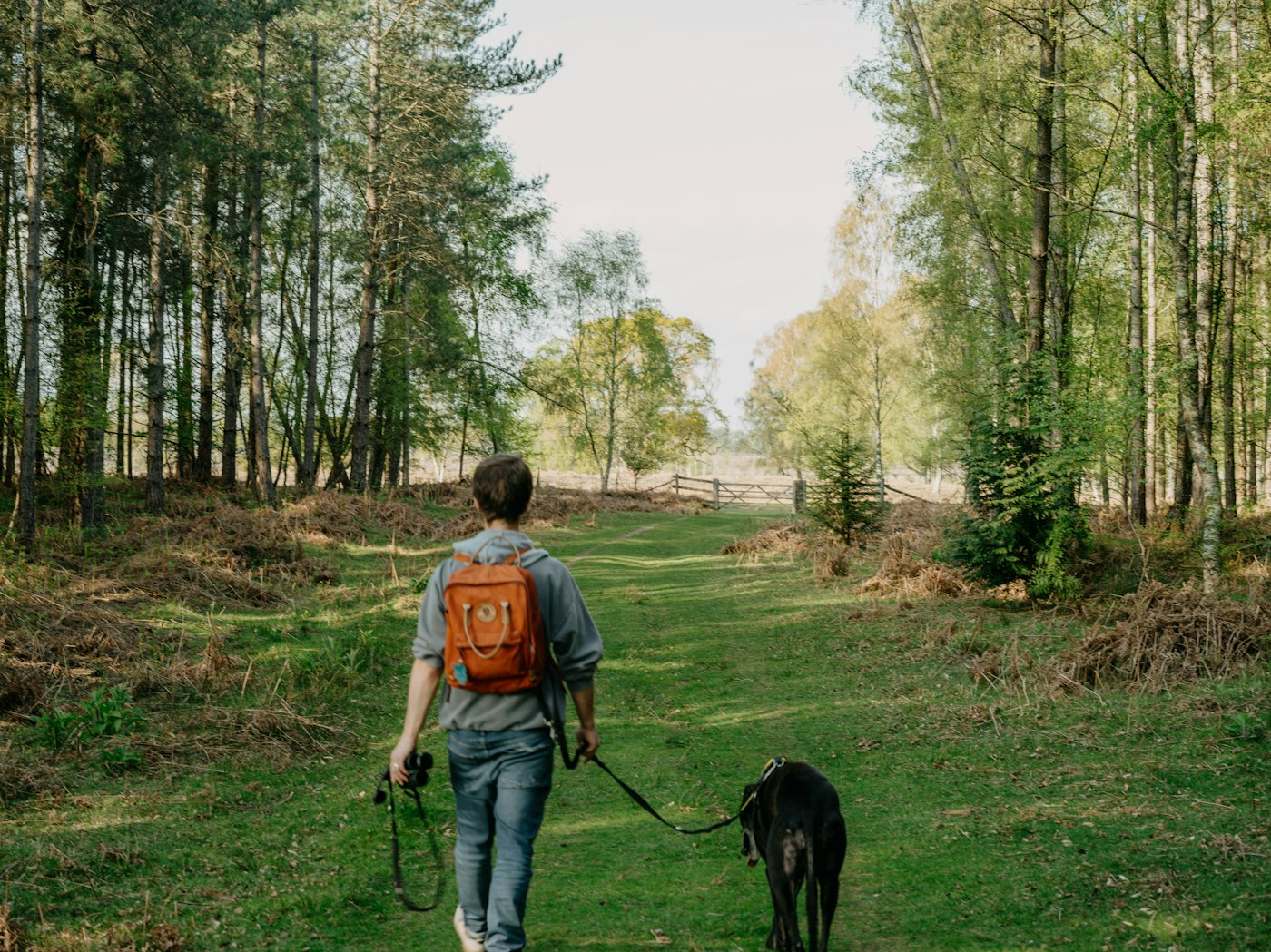
Hiking with a dog is one of the best ways to enjoy the longer days of late spring. Dogs love the smells and sights of the trail, and the exercise is good for both of you. Trails, though, are shared spaces. Other hikers, runners, mountain bikers, horseback riders and wildlife are all part of the picture. Good trail etiquette, backed by a few practiced skills, keeps everyone safe and keeps trails open to dogs.
Check the Rules and Know the Basics
Before heading out, look up the rules for the trail system or park. Some trails do not allow dogs at all, some require leashes of a certain length and some allow off-leash dogs only in specific areas. Rules can differ between nearby trails. Check the managing agency’s official website and the signs at the trailhead.
Once you are on the trail, a few basic manners apply nearly everywhere.
- Keep your dog leashed where required, and under close control everywhere.
- Pick up waste and carry it out. Leaving bags beside the trail is not acceptable.
- Step aside to let others pass, keeping your dog on the side of the trail away from them.
- Ask before letting your dog greet other dogs or people.
- Keep your dog from chasing or harassing wildlife.
- Stay on marked trails to protect plants and habitat.
Yielding to Others
On many trails, the general custom is that bikers yield to hikers and horses, and hikers yield to horses. In practice, a hiker with a dog often finds it easiest to step aside for everyone. Horses can be startled by dogs. When you see horses approaching, move well off the trail on the downhill side if possible, keep your dog close and calm, and follow the rider’s instructions.
Skills to Practice
A few skills make trail hiking much smoother.
- A reliable “leave it” for wildlife, trash and food dropped by others.
- A step-aside or “side” cue where your dog moves off the trail and sits or stands beside you.
- Calm passing, where your dog walks past people and dogs without lunging or pulling.
- A strong recall, practiced in safe, enclosed areas first.
Practice these in your neighborhood before tackling a busy trail. Reward your dog generously for calm behavior when others pass.
Health and Comfort
Build up distance gradually. Dogs need conditioning just like people, and long hikes can be hard on paws and joints. Bring plenty of water, take breaks in shade and watch for signs of fatigue or overheating. Check paws for cuts and check for ticks after every hike.
Consider your dog’s age and health. Puppies and senior dogs may need shorter, easier routes. If you have questions about how much activity is appropriate, ask your veterinarian.
Gear for the Trail
A well-fitted harness can give you better control and comfort on rough terrain. A standard leash is generally better than a retractable leash on narrow trails. Your dog should wear a collar with current ID. A bright color or reflective trim helps you spot your dog in brush or low light.
With good manners and preparation, your dog can be a welcome trail companion. Every courteous interaction helps keep trails open to dogs in the future.












