

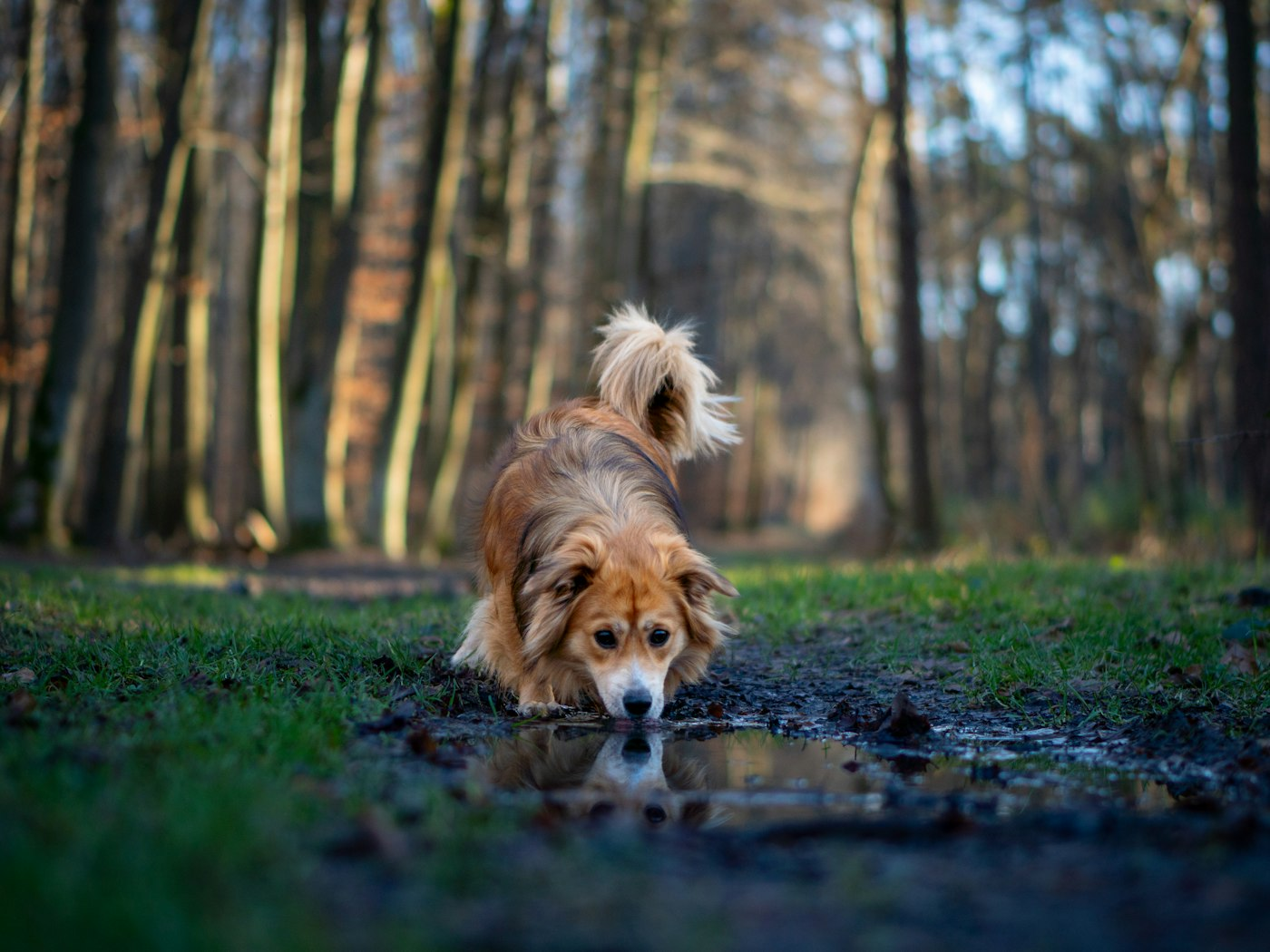
Somewhere in late winter, the snow starts to give way. Sidewalks turn to slush, yards become mud and piles of plowed snow slowly shrink. It is a welcome sign that spring is coming, but the thaw brings its own set of challenges for dogs and their owners. Knowing what to watch for can make these messy weeks easier and safer.
What melting snow reveals
All winter long, snow covers things that dogs would love to investigate. As it melts, it uncovers trash, food scraps, bones, chicken wings, broken glass, sharp debris and animal waste that piled up over the season. Dogs who like to scavenge may suddenly find a buffet. Keep your dog on a leash, watch what they sniff and practice a reliable leave-it cue. If you think your dog has eaten something questionable, talk to your veterinarian.
Puddles and runoff
Meltwater carries what it picks up along the way. Puddles near roads, driveways and parking lots may contain road salt, de-icers, oil and antifreeze. Standing water can also harbor bacteria and parasites. Leptospirosis, for example, is a bacterial disease spread through the urine of infected animals, and contaminated water is one way dogs can be exposed. Bring fresh water on walks, discourage your dog from drinking from puddles and ask your veterinarian whether vaccinations or other precautions make sense for your area.
Mud and messy paws
Mud season is hard on floors, furniture and coats, especially curly and long coats. Some tips:
- Set up a cleaning station at the door with towels and a basin of lukewarm water
- Keep paw fur trimmed to reduce how much mud clings
- Wipe or rinse legs and belly, then dry thoroughly
- Use a jacket with belly coverage to protect part of the coat
- Wash muddy gear according to the maker’s instructions
Damp mud left in a doodle coat can lead to tangles, so dry and brush after messy walks.
Thin ice and changing footing
Thawing ponds and streams are especially dangerous. Ice that held up in January may be weak and rotten by late winter, and moving water under ice is unpredictable. Keep dogs leashed and well away from frozen or partially frozen water. On walks, watch for refreezing. Puddles that melt during the day can turn to black ice by evening, so take extra care on dark walks.
Getting ready for spring
The thaw is a good time to look ahead. As temperatures rise, parasites like ticks and fleas may become more active. Ask your veterinarian about the right parasite prevention for your dog and region. Inspect your dog’s gear for winter wear, refresh tags and plan a grooming appointment to address any winter tangles. Messy as it is, the thaw is a sign that longer walks and warmer days are on the way.












