

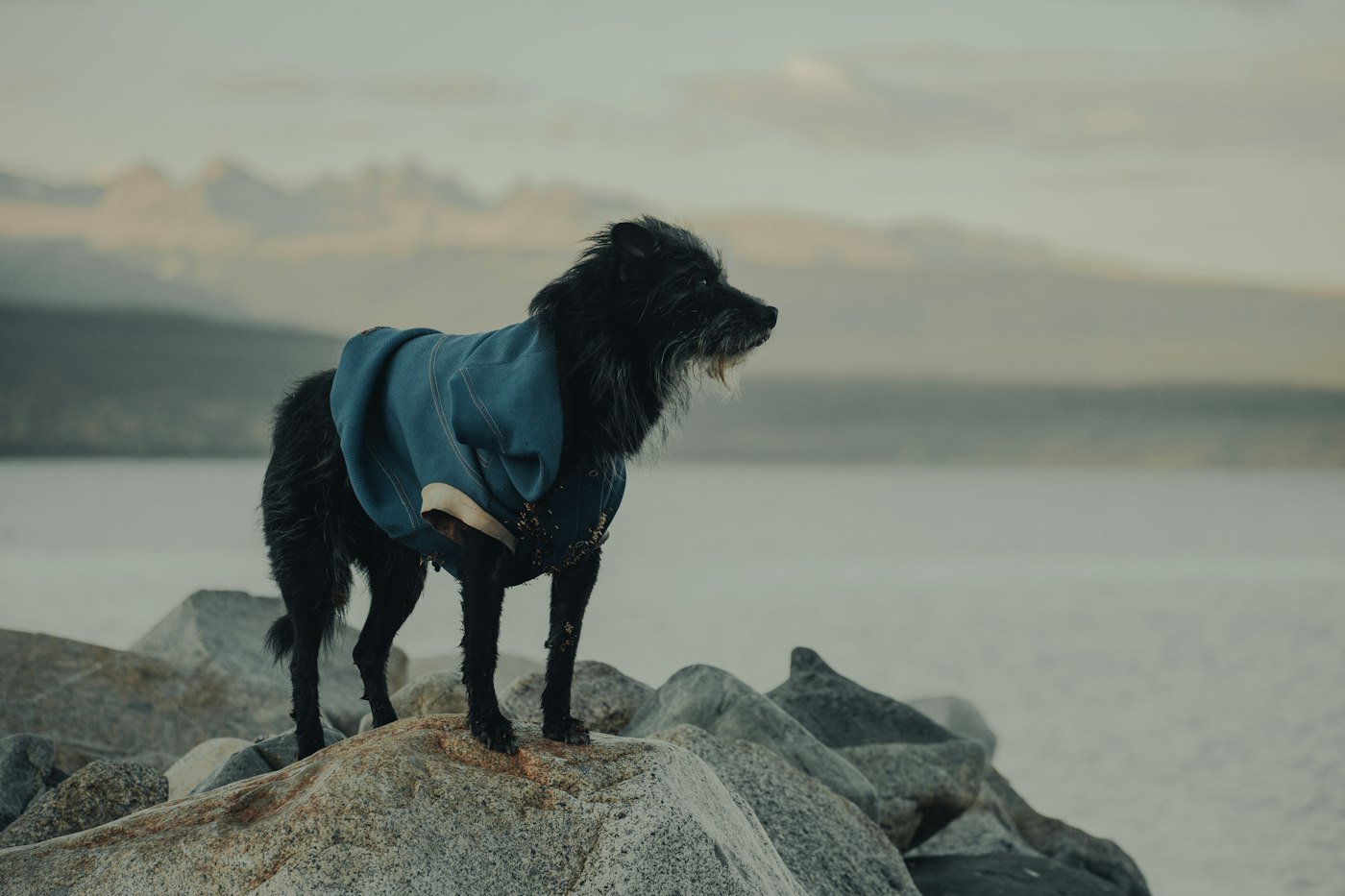
Plenty of dogs react to their first coat by standing perfectly still, walking strangely or trying to wriggle out of it. That is a normal response to an unfamiliar feeling on the body. With some patience and a few short sessions, most dogs learn to accept a raincoat, and many come to associate it with going outside. The trick is to start before you actually need the coat in a downpour.
Start with a good fit
No amount of training will make an uncomfortable coat feel good. Before you begin, make sure the raincoat fits: it should not rub under the front legs, press on the throat or restrict movement. Loose straps that flap or tight closures that pinch can make a dog resist. Check the fit with your dog standing and moving.
Step one: meet the coat
Let your dog sniff the coat on the floor. Reward them for investigating. Then gently touch the coat to your dog’s back and give a treat. Repeat a few times until your dog looks happy, or even eager, when the coat appears.
Step two: drape, then fasten
Lay the coat over your dog’s back without fastening it. Reward, then remove it. When your dog is relaxed with that, fasten one closure, reward, and remove it. Work up to fastening everything. Some owners find it helps to scatter a few treats on the floor while fastening, so the dog is busy sniffing.
If your raincoat goes over the head, hold the neck opening in front of your dog’s nose with a treat on the other side, so your dog chooses to push their head through. Never force a dog’s head into an opening.
Step three: wear it indoors
Once your dog is comfortable having the coat put on, leave it on for a few minutes while you play, practice a trick or offer a chew. Moving and having fun helps dogs forget about the new sensation. Gradually lengthen the time.
- Keep sessions short and end on a good note.
- Reward walking normally, not just standing still.
- If your dog freezes, encourage movement with a toy or a treat tossed a short distance away.
- Remove the coat before your dog becomes frustrated.
Try the coat on a dry day for a short walk first. Rain adds new sensations, such as the sound of drops on the fabric, so a dry rehearsal helps. Then try a short walk in light rain. Over time, the coat becomes part of the leash-and-door routine, and many dogs start to understand that coat on means walk time.
Signs to slow down
Watch your dog’s body language. A tucked tail, flattened ears, lip licking, yawning, trembling or repeated attempts to remove the coat suggest your dog needs more time. Go back to an easier step. If your dog seems uncomfortable or sore even in a well-fitted coat, or suddenly resists gear they used to accept, talk to your veterinarian, since pain can make dogs reluctant to be touched or dressed.












