

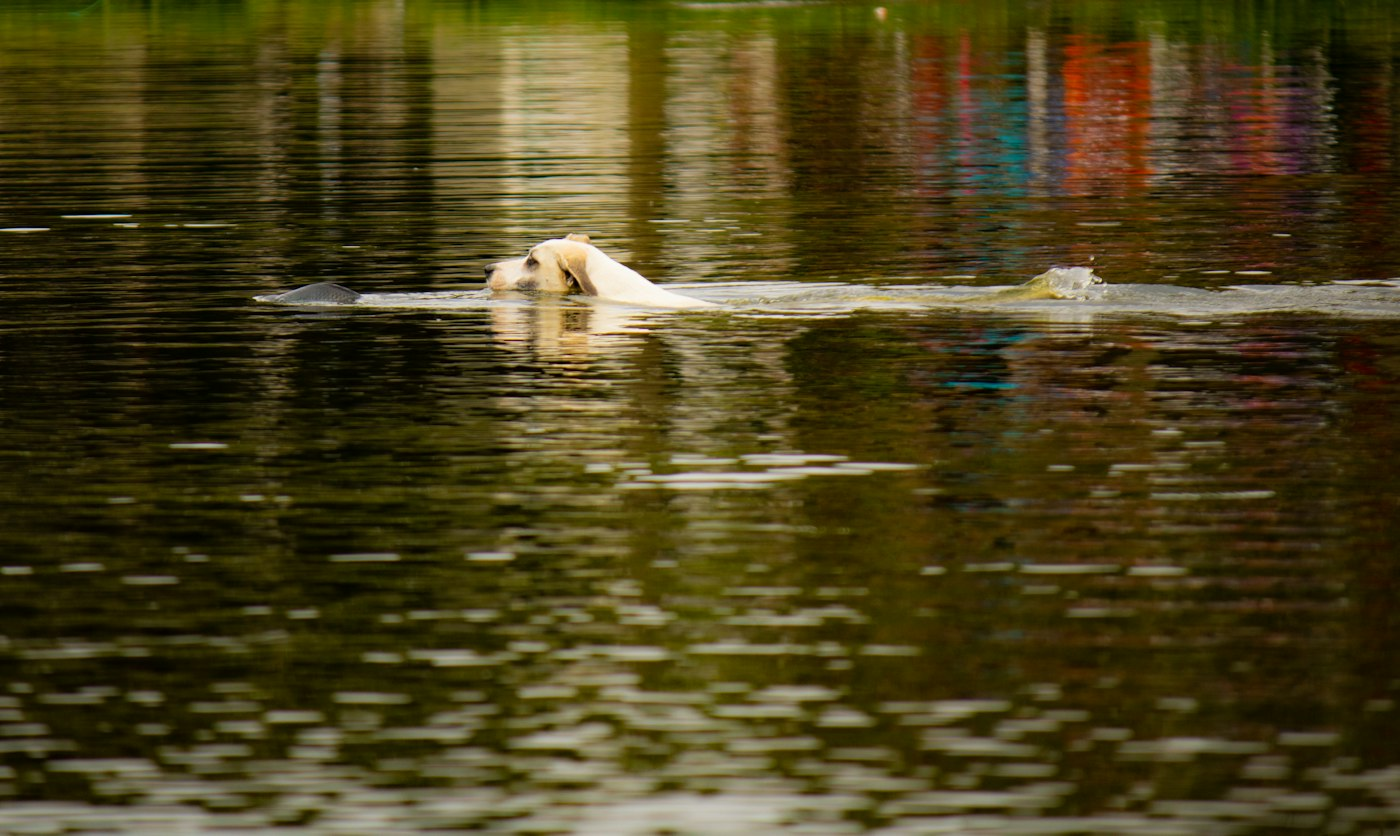
It is a common belief that all dogs can swim. In reality, swimming ability varies widely. Some dogs take to the water immediately; others are nervous or struggle to stay afloat. Body shape matters too. Dogs with heavy chests, short legs or short noses often have a harder time in the water. Whether your dog is a natural or a beginner, a careful introduction helps them learn to enjoy swimming safely.
Start with the Right Place
Choose calm, shallow water with a gentle slope, such as a quiet lake shore or a pond where dogs are allowed and the water quality is good. Avoid strong currents, waves, steep drop-offs and cold water for first lessons. Check local rules and any posted water quality warnings before you go.
A dog life jacket is a smart idea for beginners. It helps keep your dog’s body level and gives you a handle to support or lift them. Make sure it fits snugly and comfortably.
Let Your Dog Lead
Begin at the water’s edge. Let your dog explore, sniff and wade at their own pace. Reward with praise, treats or a favorite toy for any interest in the water. Never throw or force a dog into the water; that can create lasting fear.
- Walk into the shallows yourself, encouraging your dog to follow.
- Toss a floating toy just a short distance into shallow water.
- Keep sessions short and stop while your dog is still having fun.
The First Swim Strokes
When your dog wades deep enough that their feet leave the bottom, they will start paddling. Many beginners paddle mostly with their front legs, splashing and staying vertical. Supporting their belly or the life jacket handle helps them level out and use their back legs. Stay close and guide them back toward shore after a few seconds.
Over several sessions, gradually let your dog swim a little longer and a little farther, always within reach.
Teach Exits, Not Just Entries
A dog should always know how to get out of the water. At a lake, practice returning to shore from different points. At a pool, the exit is especially important: dogs can drown when they cannot find the steps. Guide your dog to the steps repeatedly so they learn where they are, and consider a ramp made for pools. Never leave a dog unsupervised near a pool.
Safety Every Time
- Watch for fatigue. Swimming is hard work, and dogs may not stop on their own.
- Avoid water with visible scum, discoloration or posted warnings about algae.
- Discourage drinking large amounts of water while swimming or playing with toys in the water.
- Rinse your dog with fresh water afterward and dry their ears.
- Keep a collar with current ID on your dog, and check that it is secure.
Some dogs never become enthusiastic swimmers, and that is perfectly fine. Wading, splashing in a kiddie pool or simply lying in the shade by the water can be just as enjoyable. If your dog has health issues such as joint, heart or breathing concerns, talk with your veterinarian before starting a swimming routine.












