

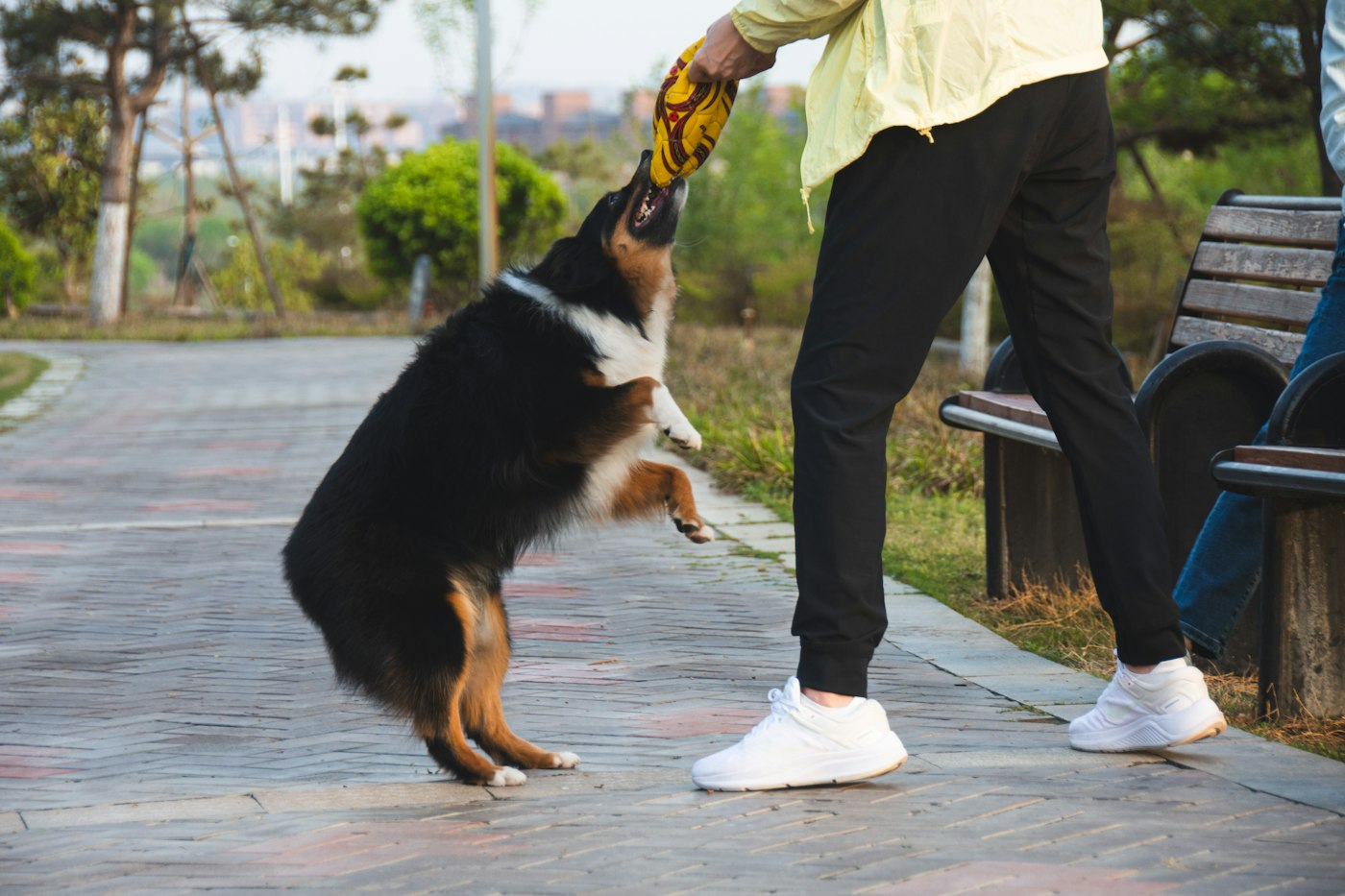
When spring brings neighbors back outside and friends over for visits, dogs get many more chances to say hello. For a lot of dogs, hello means jumping up. Jumping is a natural greeting behavior, since dogs often greet by reaching toward each other’s faces, but it can knock over children and older adults, muddy clothes and frighten people who are nervous around dogs. With consistent practice, most dogs can learn a calmer way to greet.
Why dogs jump
Dogs usually jump because it works. When a dog jumps, people often look at them, talk to them, push them away or pet them. All of that is attention, and attention is rewarding. Even pushing a dog off can feel like a game. The goal of training is to make sure jumping does not pay off, while sitting or standing calmly does.
Teach a replacement behavior
It is much easier for a dog to learn what to do than simply what not to do. A sit is a common choice, since a dog cannot sit and jump at the same time. Some trainers prefer “four paws on the floor,” rewarding any calm standing or sitting.
- Practice sit in quiet settings until your dog does it reliably.
- Then practice when you come home, rewarding a sit before giving attention.
- Gradually add more exciting situations, such as a family member entering the room.
Manage greetings at home
When visitors arrive, set your dog up to succeed. Put your dog on a leash or behind a baby gate at first, so they cannot practice jumping. Ask guests to ignore your dog until they are calm, then to greet them gently, at the dog’s level, with all four paws on the floor. If your dog jumps, guests can turn away and wait. When the paws are on the ground, the attention comes back.
Keep arrivals and departures low-key. Exciting greetings at the door often lead to more jumping. A toy kept near the door can give some dogs something to carry, which may reduce jumping.
Greetings on walks
On walks, keep your dog on a short, loose leash as people approach. Ask your dog to sit or focus on you, and reward them for staying calm. Only allow a greeting if the person wants one and your dog can stay relaxed. If your dog is too excited, it is fine to say “not today” and keep walking. Many people appreciate it.
Remember that not every dog needs to greet every person. Some dogs are happier simply watching people pass.
Consistency is everything
Jumping will continue if it is sometimes rewarded, so everyone in the household, and as many visitors as possible, should follow the same rules. If some people encourage jumping and others do not, your dog will keep trying. Practice in short sessions, celebrate progress and be patient, especially with young, energetic dogs. If jumping comes with mouthing, growling or other worrying behavior, a qualified trainer or behavior professional can help.












