

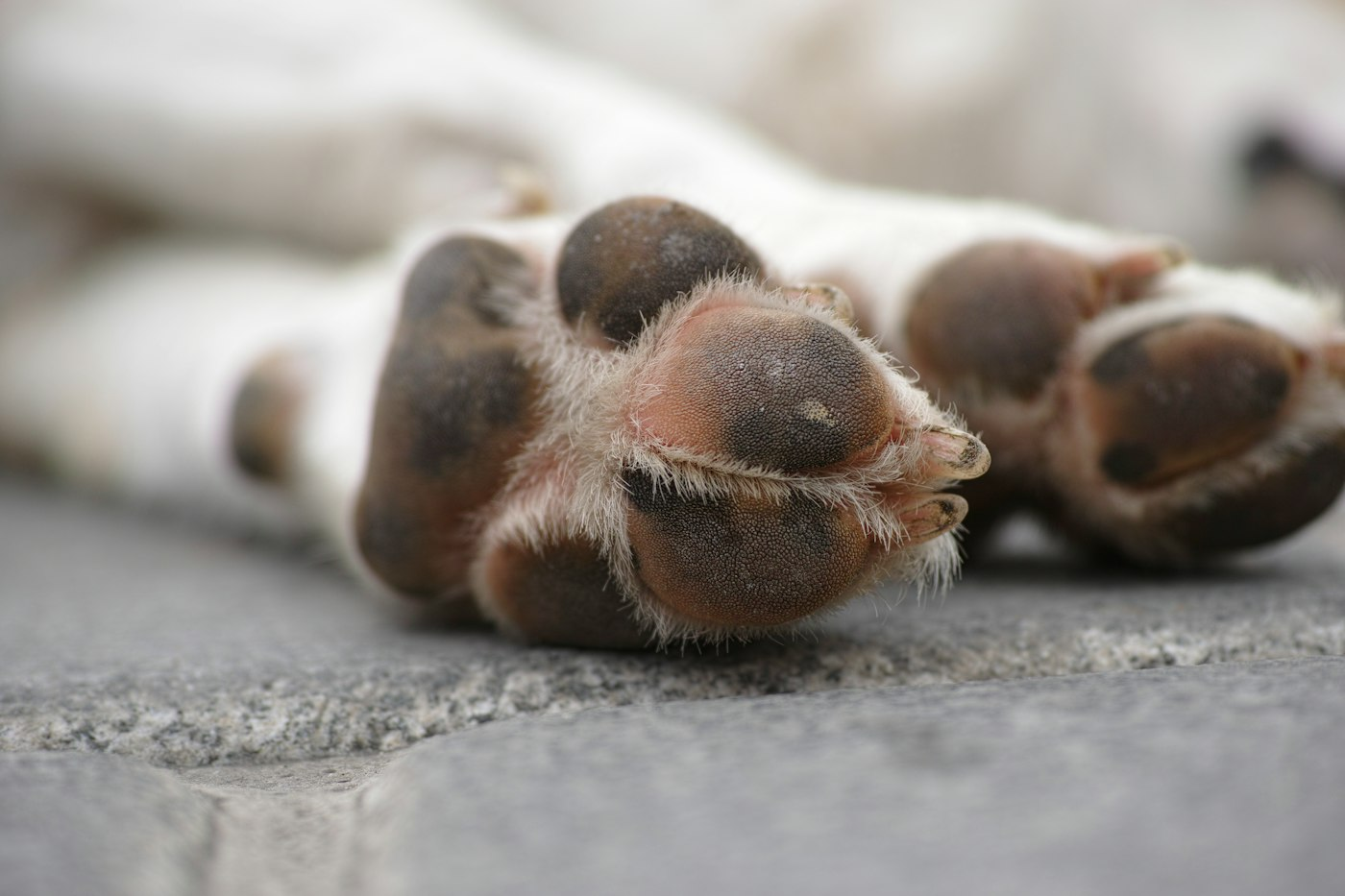
Your dog’s paw pads take a beating over the winter. Salt, ice and dry indoor air can leave them rough. Then spring arrives, the snow melts, and the ground gives up everything it was hiding: broken glass, sharp sticks, thorny stems and gravel spread on icy roads. A regular paw check is one of the simplest ways to catch small problems early.
How to check your dog’s paws
Choose a calm moment, perhaps when your dog is resting after a walk. Gently lift each foot and look at the pads, the skin between them, the nails and the fur. Spread the toes to see in between. On dogs with furry feet, such as many doodles, you may need to part the hair to see the skin.
Make it pleasant. Reward your dog with treats and keep early sessions short. Dogs who are used to having their feet handled are much easier to help when something goes wrong.
Common spring paw problems
- Dry or cracked pads: pads may look rough, flaky or have small splits after winter.
- Small cuts and scrapes: often from sharp debris uncovered by melting snow.
- Foreign objects: pebbles, burrs, thorns and splinters can lodge between toes and pads.
- Torn or broken nails: can happen during energetic play or on rough terrain.
- Redness and licking: may point to irritation, allergies or infection.
- Matted fur between pads: can trap moisture and debris and make walking uncomfortable.
What you can do at home
Gently rinse muddy or gritty paws with lukewarm water and dry them thoroughly, including between the toes. Loose debris like a pebble or burr can often be removed carefully. Keeping the fur between the pads trimmed short helps reduce tangles and trapped debris; if you are not comfortable trimming near the pads, a groomer can do it.
For dry pads, some owners use a paw balm made for dogs. Choose a product designed for pets, since dogs often lick their feet. Ask your veterinarian if you are unsure what is safe for your dog.
When to call your veterinarian
Many paw problems are minor, but some need professional care. Contact your veterinarian if you notice:
- A cut that is deep, gaping or bleeding heavily
- Something embedded in the pad that you cannot easily remove
- Limping that does not improve quickly
- Swelling, heat, pus or a bad smell
- A torn nail that is bleeding or seems painful
- Constant licking or chewing at one or more feet
Spring is also a good time to think about where your dog walks. Freshly thawed parks, beaches and roadsides can collect litter and broken glass, so a quick look ahead on the path helps. Do not try to dig out deeply embedded objects yourself, and avoid using human medications or ointments without your vet’s advice. A quick paw check after spring walks takes only a minute and can save your dog a lot of discomfort.












