

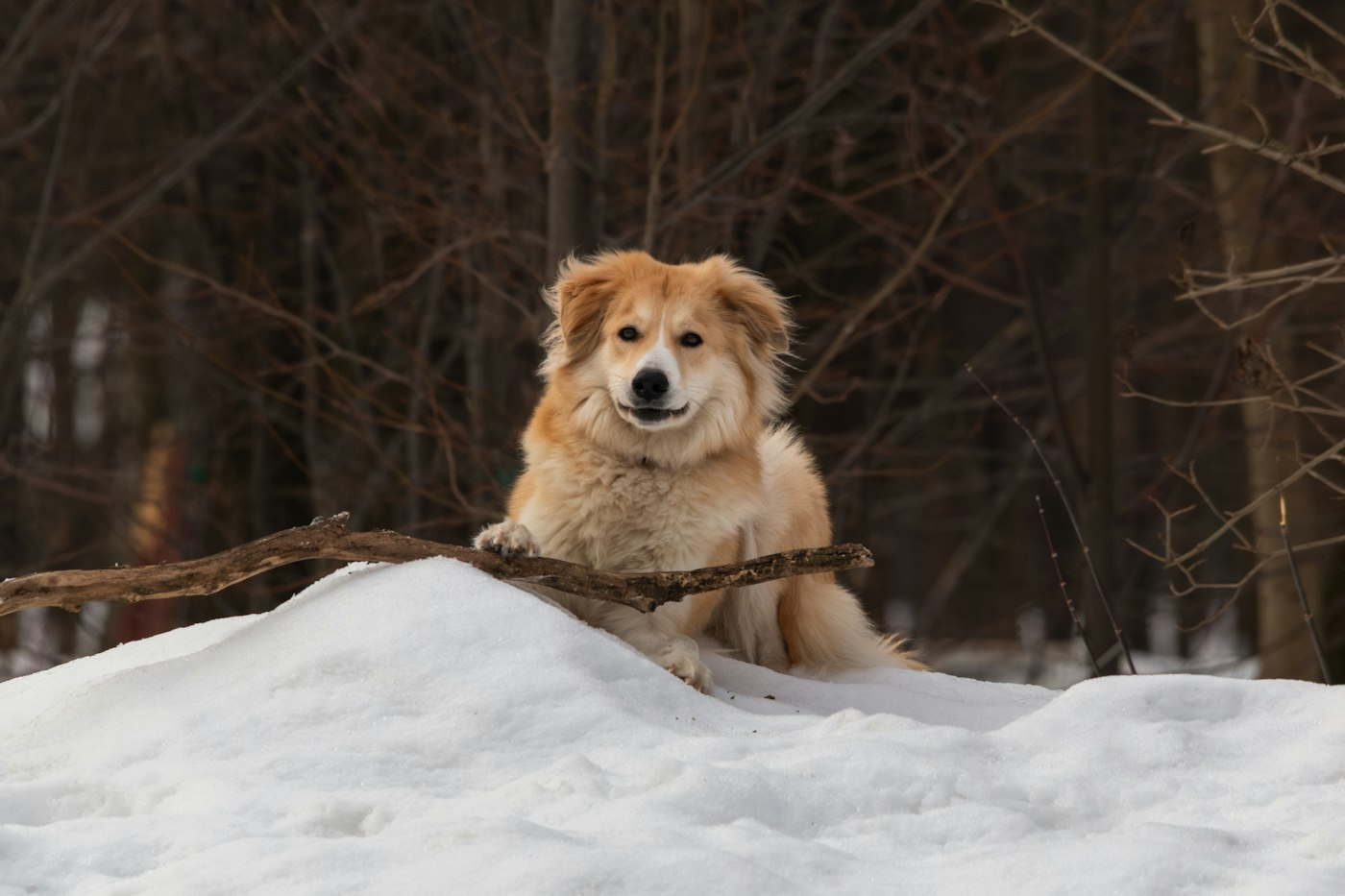
Anyone who owns a fluffy dog knows the look: you head out on a snowy walk with a clean dog and come back with a dog covered in snowballs. Hard little clumps form on the legs, belly, paws and sometimes the ears and tail. They can be uncomfortable, slow a dog down and pull on the fur. Understanding why they form can help you prevent them.
Why snow sticks to some dogs
Snowballs form when snow touches fur, partly melts from body warmth and then refreezes into ice that grabs more snow. Long, curly and wavy coats provide plenty of surface for snow to cling to. Doodles, Poodles, Bichons, many terriers and long-coated breeds are especially prone. Wet, packing snow tends to cause more clumping than dry, powdery snow. Fur between the toes and paw pads is a common trouble spot, because those ice balls can make walking painful.
Prevention before the walk
- Trim paw fur. Keeping the fur between and around the pads neatly trimmed reduces ice balls on the feet. A groomer can help if you are not comfortable trimming near the pads.
- Consider a tidy winter trim. Some owners have the legs and belly trimmed a little shorter. Ask your groomer what makes sense for your dog’s coat.
- Use a barrier. A dog-safe paw balm can help reduce sticking on the feet. Some owners also use grooming sprays intended to help shed snow, following label directions.
- Cover up. A jacket with belly coverage can protect part of the coat, and booties protect the feet for dogs who wear them.
Choosing routes and timing
Deep, wet snow is a snowball factory. On those days, walking on plowed paths or packed trails can reduce clumping, though you will want to watch for salt. Shorter, more frequent walks can also mean fewer clumps building up at once.
Removing snowballs safely
Do not pull clumps out, which can hurt your dog and break the coat. Instead, melt them gently:
- Hold a warm, damp washcloth over the clump until it softens
- Rinse legs and paws in a basin of lukewarm, not hot, water
- Pat dry with a towel rather than rubbing
- Dry thoroughly, especially between the toes
A dryer on a cool or low warm setting, kept moving and at a distance, can help finish drying. Never use high heat close to the skin.
After the melt
Once your dog is dry, comb through the areas where clumps formed. Snowballs often leave behind tangles that become mats if ignored. Check paw pads and between the toes for redness, cracks or small cuts. If you notice sores, swelling, limping or skin that looks pale or unusual after time in the snow, talk to your veterinarian. With a few adjustments, even the fluffiest dog can enjoy a snowy walk and come home mostly snowball-free.












