

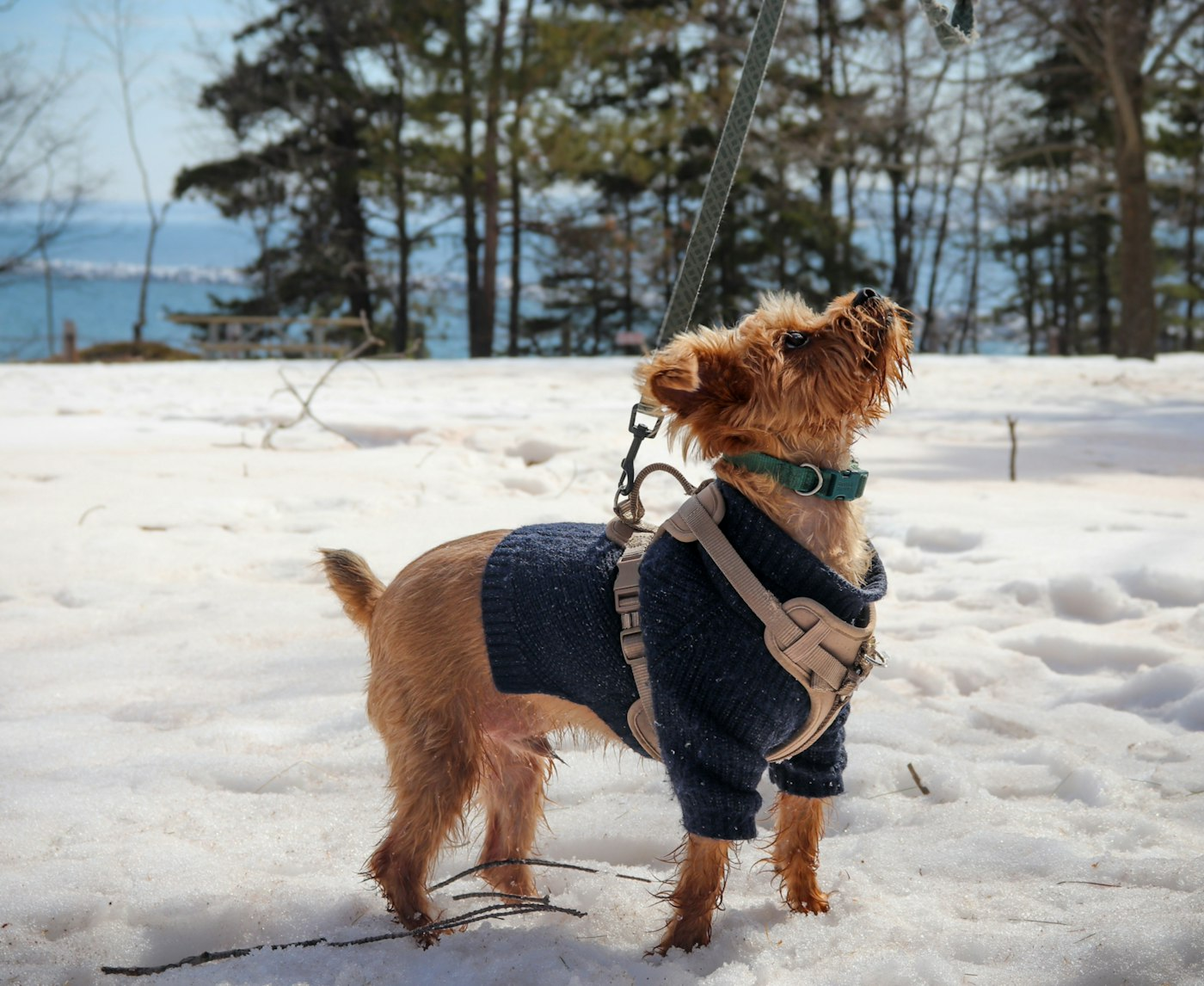
Dogs cannot tell us when they are cold, but they show it. Some signs are obvious, like shivering, and others are easy to miss, like a subtle change in posture or pace. Learning to spot them helps you end a walk at the right time and recognize when a situation might need a veterinarian. This is general information, and your vet is always the best resource for your dog.
Early signs of discomfort
These usually mean your dog is getting chilly and it is time to head inside or warm up:
- Shivering or trembling
- Hunched posture with a tucked tail
- Lifting paws off the ground or holding one up
- Slowing down, stopping or refusing to keep walking
- Whining or seeming anxious
- Seeking shelter, pressing against you or turning toward home
Some dogs, especially young and excited ones, will keep playing in the snow even when they are getting cold. It is up to you to keep an eye on the clock and their body language.
More serious warning signs
Prolonged cold exposure can lead to hypothermia, a drop in body temperature below normal. Signs can include intense shivering that may stop as the condition worsens, weakness, lethargy, stiff muscles, slow or shallow breathing, confusion, clumsiness and pale or bluish gums. Frostbite most often affects the ears, tail tip, paws and scrotum. Affected skin may look pale, gray or bluish and feel cold and hard, and later may become red, swollen or painful. These are emergencies. Contact your veterinarian or an emergency animal hospital right away.
What to do if your dog is chilled
For a dog that is simply cold after a walk:
- Bring them indoors to a warm, draft-free room
- Remove any wet jacket or booties and towel them dry
- Wrap them in a dry, warm blanket
- Offer a comfortable bed away from cold floors
If you suspect hypothermia or frostbite, call your vet on the way. Warm your dog gradually with blankets. Do not rub frostbitten areas and do not use direct high heat such as heating pads on high or hair dryers held close, which can cause burns, especially on skin that has lost feeling. Let your veterinarian guide next steps.
Dogs at higher risk
Small dogs, short-coated breeds, lean dogs, puppies, seniors and dogs with health conditions are more vulnerable to cold. Wet dogs, including doodles whose curly coats hold snow and moisture, lose heat faster than dry ones. Dogs that spend long periods outdoors need proper shelter, and many dogs simply should not be left outside for long in cold weather. If you are unsure how much cold your dog can safely handle, ask your vet.
Prevention is easier than treatment
Plan shorter walks on bitter days, use a well-fitted coat for dogs that need one, keep your dog dry and watch for early signs before they turn into serious ones. Indoors, offer a warm bed off the floor and away from drafts. Paying attention to these small signals is one of the best ways to keep winter fun and safe for your dog.












