

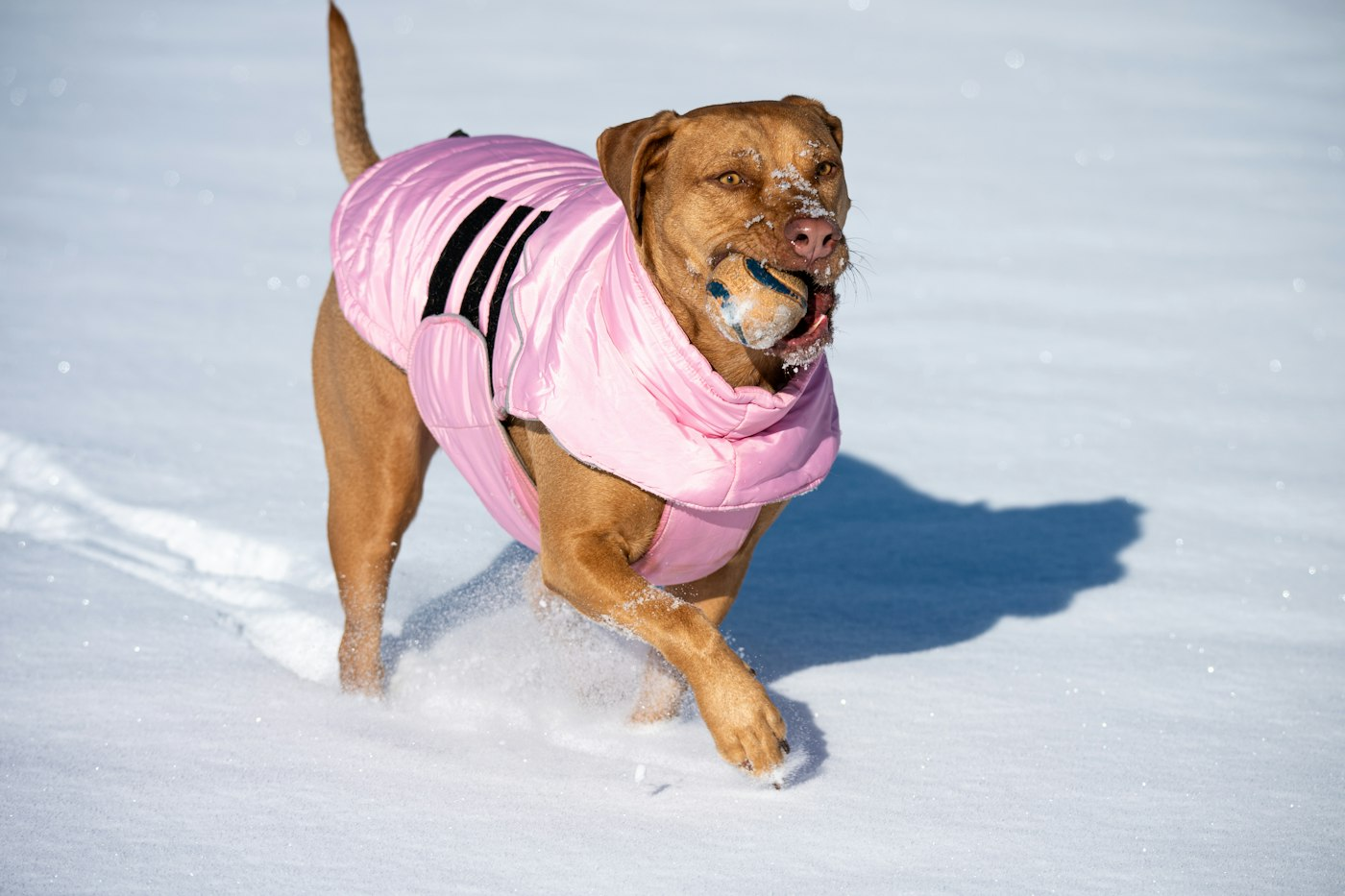
There is something about fresh snow that makes many dogs come alive. They dive, roll, bound and race in circles. Snow play is great exercise and a lot of fun to watch. It also comes with a few hazards that are easy to overlook in the excitement. Knowing them in advance helps keep playtime safe.
Stay away from frozen water
This is the most important rule of winter play. Frozen ponds, lakes, rivers and retention basins can look solid but have thin spots, especially near inlets, edges and moving water. A dog that runs onto ice can fall through, and people who try to rescue them can fall through too. Keep your dog leashed near frozen water, and never throw balls or sticks toward ice. If your dog does fall through, call 911 rather than going onto the ice yourself. Emergency responders have training and equipment for ice rescue.
Watch what is under the snow
Snow hides things. A fun dash across a field can end with a twisted leg in a hidden hole, a cut from a buried branch or a collision with a rock or fence. Play in areas you know well, and walk new areas first. Deep snow is also hard work. It can tire dogs quickly and put strain on joints, so watch for heavy breathing and slowing down, especially in older or less fit dogs.
Fetch and toys in the snow
- Use brightly colored toys that are easy to spot in snow
- Avoid throwing sticks, which can splinter and cause mouth or throat injuries
- Toss toys onto open, level ground rather than near roads or ice
- Take breaks so your dog does not overdo it in the excitement
Some dogs eat snow while playing. A little clean snow is usually fine for a healthy dog, but discourage eating snow near roads, driveways or parking areas where salt, de-icers or antifreeze may be present.
Zoomies and footing
Snow zoomies are joyful but can lead to strains and slips, particularly on icy patches under the snow. Let your dog warm up with a few minutes of walking before intense play. Keep play away from icy driveways and stairs. Dogs with long nails may slip more, so keep nails trimmed. Puppies, seniors and dogs with joint problems may need gentler play; ask your veterinarian what is appropriate.
Know when to stop
Many dogs will play long past the point of being cold, so set the limits yourself. Watch for shivering, lifting paws, snowballs packing on fur or slowing down. Bring your dog inside, wipe and dry paws and coat, and offer fresh water. Check paws for cuts or ice balls. If your dog seems very tired, limps, or shows signs of being too cold, warm them up and contact your veterinarian if you are concerned. With a little care, snow days can be some of the best play days of the year.












