

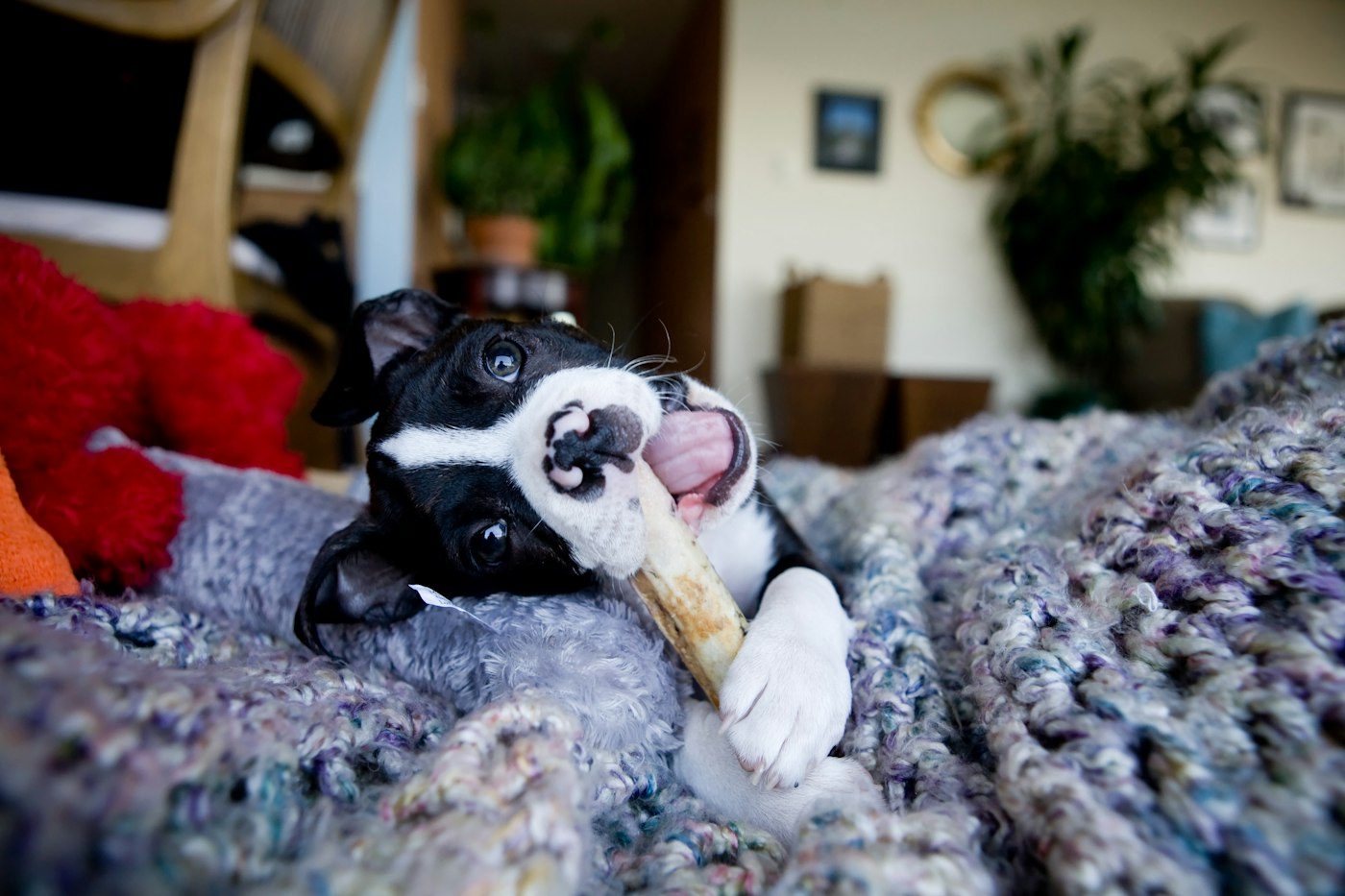
Chewing is a normal dog behavior. It helps puppies through teething, relieves boredom and stress, and gives dogs a satisfying way to spend time. Providing safe things to chew is far better than trying to stop chewing entirely. The challenge is that the chew aisle is huge, and not every product suits every dog.
Know Your Chewer
Dogs chew in very different ways. Some gently mouth and carry toys. Some steadily gnaw for an hour. Others are power chewers who can destroy a toy in minutes. Watching how your dog chews is the first step in choosing well.
- Gentle chewers may do fine with soft toys and lighter rubber.
- Steady chewers often enjoy durable rubber toys and appropriate edible chews.
- Power chewers need sturdy products and close supervision, and may need fewer soft toys.
Hardness and Size
Very hard chews can break teeth. Fractured teeth are painful and may need veterinary treatment. Many veterinarians suggest a simple test: if you cannot make a dent in it with your fingernail, or it would hurt to be hit on the knee with it, it may be too hard for regular chewing. Ask your veterinarian about specific products you are considering.
Size matters just as much. A chew or ball that is too small can be swallowed or lodged in the throat. Choose items larger than your dog’s mouth can fully close around, and replace chews once they have been worn down to a swallowable size.
Chews to Think Twice About
Some items carry well-known risks. Cooked bones can splinter. Small, hard objects and toys with loose parts can be swallowed. Some dogs swallow large chunks of edible chews rather than chewing them, which can cause choking or digestive blockages. Strings, ribbons and stuffing pulled out of soft toys can also be dangerous if eaten.
Every dog is different, so talk with your veterinarian about which chews make sense for your dog’s age, size, dental health and chewing style.
Supervision and Inspection
Even the best chew is safest with supervision, especially when it is new. Watch how your dog handles it for the first few sessions.
- Inspect toys regularly for cracks, tears and loose pieces.
- Throw away chews that have become small or sharp.
- Remove squeakers or stuffing that are coming loose.
- Rotate toys so your dog stays interested without overusing any one item.
Teaching Good Chewing Habits
Make the right choice easy. Keep appropriate chews available, and when your dog picks up something they should not have, calmly trade it for a toy. Praise them when they choose their own chews. For puppies, frozen chew toys designed for teething can be soothing.
If your dog suddenly starts chewing more than usual, chewing destructively when left alone or eating non-food items, mention it to your veterinarian. Changes in chewing can sometimes be linked to stress, boredom, dental discomfort or other health issues worth checking. If your dog swallows something they should not have, call your veterinarian promptly.












