

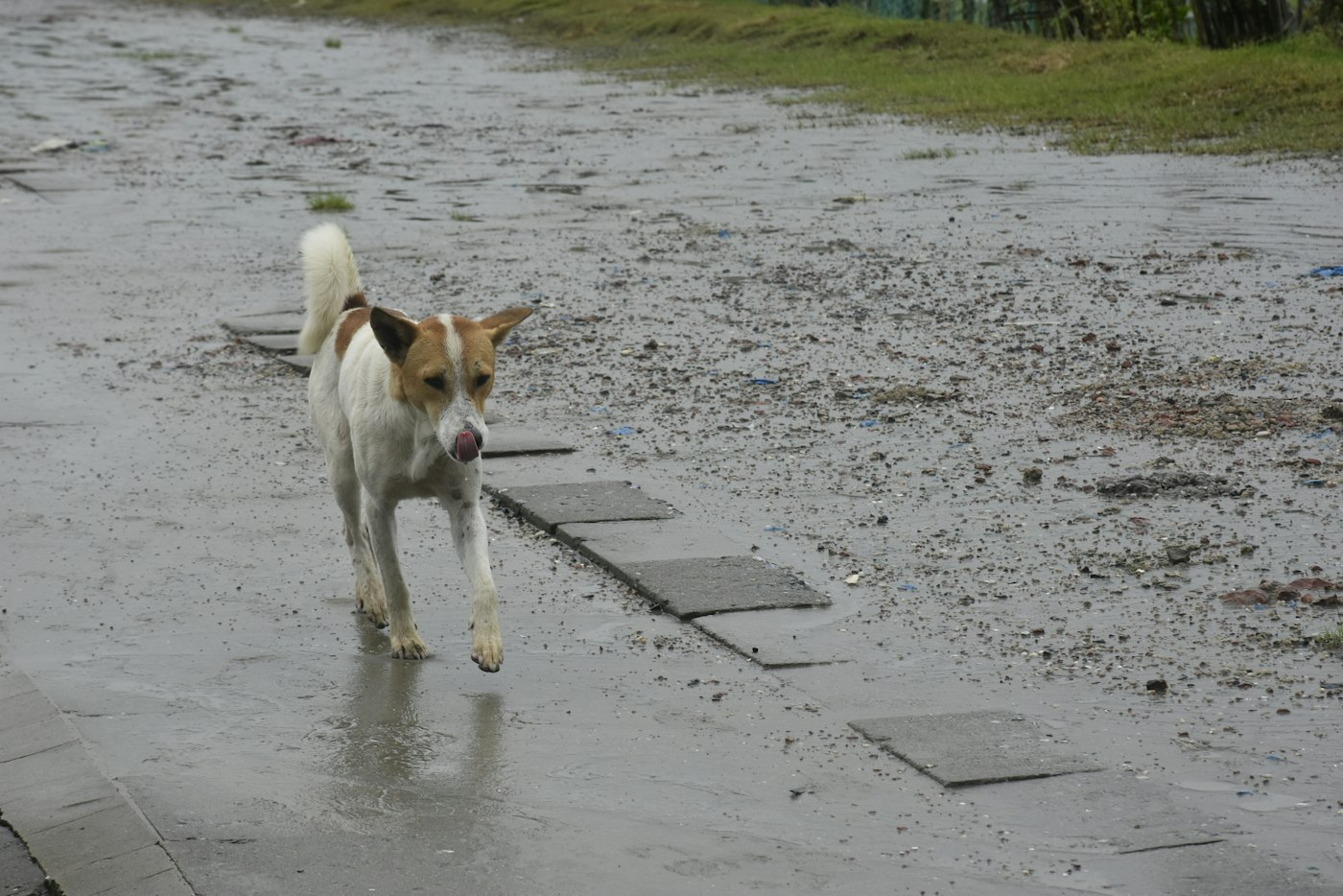
Spring can bring days, or whole weeks, of rain. Dogs still need exercise and bathroom breaks, and many do not seem to mind getting wet at all. A little planning can help you get through rainy season with a dog who is exercised and content, and a home that is not completely covered in mud.
Know your dog’s attitude toward rain
Some dogs love splashing through puddles. Others refuse to step outside if the grass is wet. If your dog is reluctant, try going out during lulls in the rain, use a covered porch or the shelter of a tree near the door for bathroom breaks, and reward going outside with treats and praise. Short, positive trips are better than long, miserable ones.
Gear that helps
- A raincoat for dogs with curly, short or thin coats, small dogs and older dogs.
- Reflective gear or a light clipped to the collar or harness, since rainy days are often dim.
- A leash with a secure grip, because wet leashes can slip through your hands.
- Waterproof footwear and a rain jacket for you, so you can stay out long enough.
- Towels at the door and a mat to catch drips.
Watch for wet-weather hazards
Rain changes the walking environment. Sidewalks and painted lines can be slippery, so slow down on steps and slopes. Avoid flooded areas and fast-moving water in ditches and streams, which can be stronger than it looks. Puddles and runoff can contain motor oil, antifreeze, lawn chemicals and other contaminants, so discourage your dog from drinking from them. Bring fresh water if your walk is long.
Visibility drops for drivers in the rain, too. Walk facing traffic where there is no sidewalk, and keep your dog on a short leash near roads.
Make shorter walks count
If the weather means a shorter walk, add mental exercise to make up for it. Let your dog sniff more, since rain can bring out strong smells. Practice a few training cues along the way, such as sit, wait or a quick recall on a long line in a safe area. A sniffy, engaging fifteen-minute walk can be more satisfying than a rushed thirty. On the wettest days, indoor games such as hide-and-seek with treats or a few rounds of tug can fill the rest of the exercise gap.
Coming home
Have a routine for the door. Ask your dog to wait on a mat, towel them off, and wipe each paw, including between the toes. Check the legs and belly, where mud collects. For long or curly coats, dry thoroughly, because damp hair tangles and can irritate the skin. Hang any raincoat or harness to dry before the next outing.
If your dog seems chilled after a wet walk, shivering or lethargic, warm them up with dry towels and a cozy spot. Persistent shivering, weakness or unusual behavior is worth a call to your veterinarian.












