

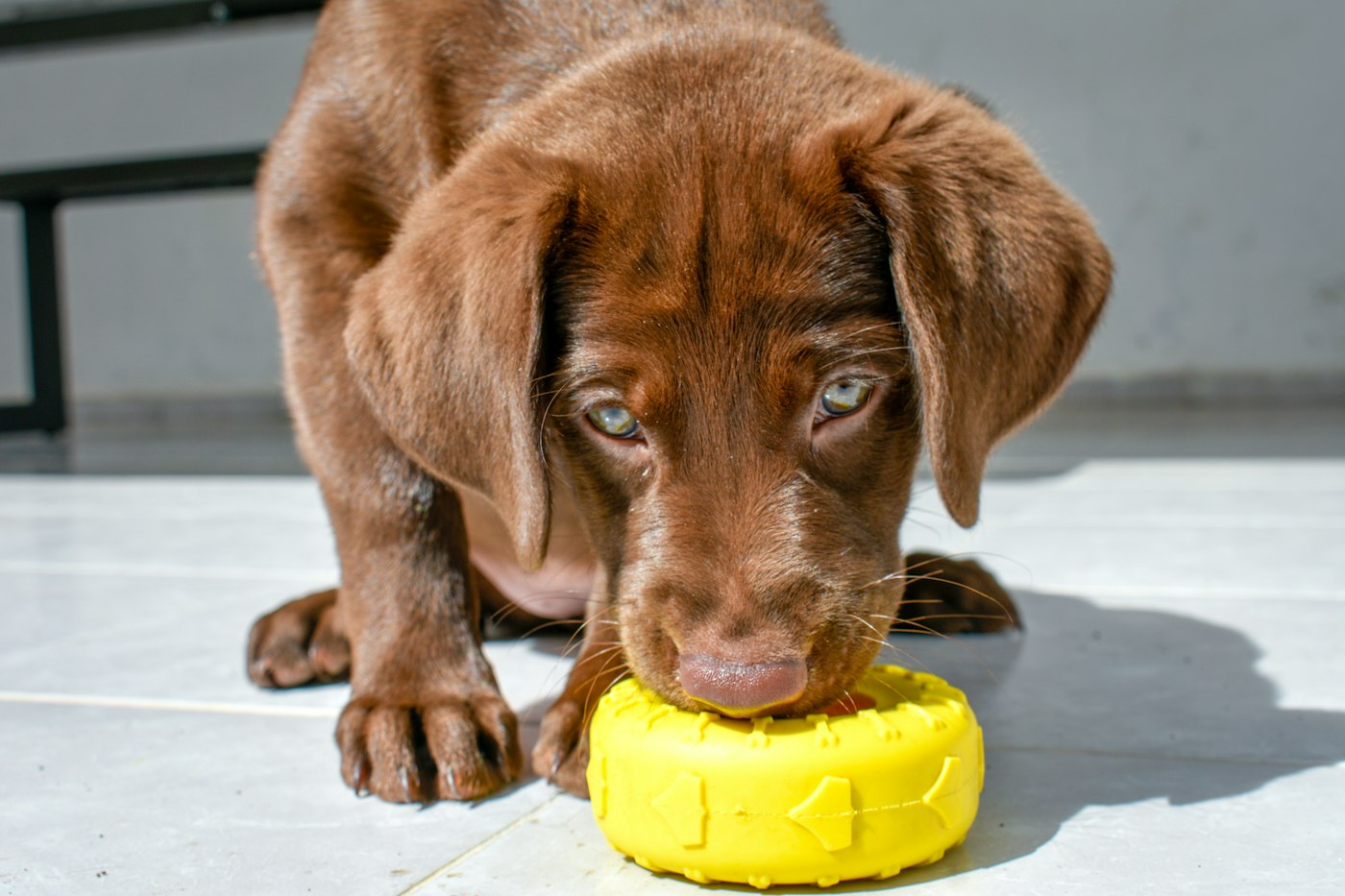
Puppies learn about the world by sniffing, pawing and chewing almost everything they find. That curiosity is normal and healthy, but it means your home needs a careful once-over before a new puppy arrives. Adult dogs new to your home benefit from the same preparation. The easiest way to do it is to get down at dog height and walk through each room.
Living Areas
Look for anything that dangles, rolls or sits within reach of a curious nose.
- Bundle or cover electrical cords and phone chargers, or block access behind furniture.
- Move houseplants up high or out of the room until you have checked whether they are safe for dogs.
- Put remote controls, small toys, coins, batteries and hair ties out of reach.
- Secure blind and curtain cords.
- Check under couches for small objects that could be swallowed.
Baby gates are one of the most useful tools for a new puppy. They let you limit your puppy to a safe area while still keeping them near the family.
Kitchen and Pantry
Kitchens hold many of the most common household dangers for dogs. Foods such as chocolate, grapes and raisins, onions and garlic, and products sweetened with xylitol can be harmful. Keep food off counter edges and use a trash can with a secure lid or one tucked inside a cabinet.
Store cleaning products in high cabinets or use childproof latches on lower ones. Puppies can learn to nose open a cabinet door surprisingly fast.
Bathrooms and Bedrooms
Medications are a serious risk. Keep all human and pet medications in closed cabinets, never on nightstands or low counters, and pick up any dropped pills right away. Close toilet lids, keep razors and cosmetics put away and use a covered bathroom trash can.
In bedrooms, shoes, socks and laundry are irresistible to puppies and can cause blockages if swallowed. A closed closet door and a laundry hamper with a lid solve most of the problem.
Garage, Yard and Outdoor Spaces
Garages often hold antifreeze, fertilizers, pest baits, paint and tools. Store these securely, wipe up spills and keep your puppy out of the garage unless you are right there.
Walk your yard fence line and look for gaps, loose boards or spots where a small puppy could squeeze through or dig under. Check that gates latch reliably. Many common garden plants and mulches are not suitable for dogs, so research your plants or ask your veterinarian.
Give Them Something Better to Chew
Puppy-proofing is not only about removing things. It works best paired with plenty of appropriate chew toys so your puppy has a good outlet. When your puppy picks up something they should not have, calmly trade it for a toy and praise them for taking it.
Supervise closely in the first weeks, and use a crate or puppy-safe pen when you cannot watch. Keep your veterinarian’s number and the number of an animal poison control service where you can find it quickly. If you think your puppy has swallowed something harmful, call your veterinarian right away rather than waiting for symptoms.












