

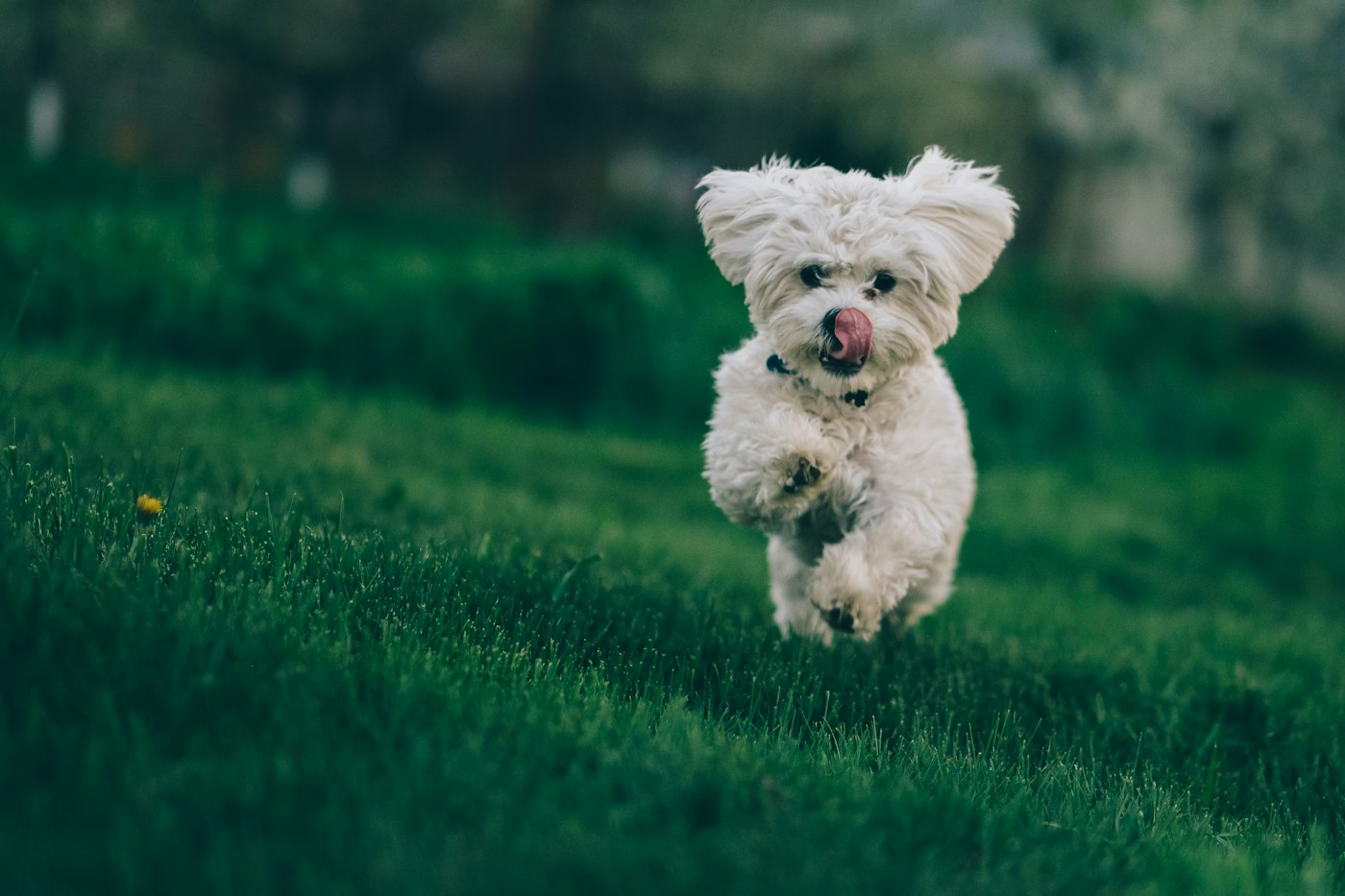
Many dogs come running every time in the kitchen and then seem to forget their name the moment they see a squirrel. That gap is normal. Outdoor environments are full of distractions, and a dog’s recall needs to be practiced in those settings to become reliable. A long line lets you practice safely while giving your dog room to explore. Spring, with more time outside, is a great season to work on it.
A long line is a lightweight leash much longer than a standard walking leash, often fifteen to fifty feet. It gives your dog freedom to roam while you keep a way to prevent them from running off. Long lines are generally attached to a well-fitted harness rather than a collar, so a sudden stop at the end of the line does not jolt your dog’s neck.
Using a long line safely
- Use it in open areas away from roads, where the line will not tangle around trees or people.
- Wear gloves if you are handling a long line for long periods, since a line pulled quickly through bare hands can cause burns.
- Never wrap the line around your hand or fingers.
- Let the line trail or hold it loosely, gathering it in as your dog comes back.
- Watch for other people, dogs and wildlife, and shorten the line when needed.
- Follow local leash laws. Some places require a short leash, and a long line may not be allowed.
Step one: practice in a quiet outdoor space
Start in your yard or a quiet field. Let your dog wander on the long line. When they are not too distracted, call them once in a happy voice. When they come, reward generously. If they do not respond, make yourself interesting by moving away, crouching or using a fun sound. Use the line only to prevent your dog from leaving, not to reel them in.
Step two: add distance
As your dog succeeds, call from farther away. Let them get a little farther out on the line before calling. Keep rewards generous, especially for fast, enthusiastic returns. If your dog starts to struggle, go back to shorter distances for a while.
Step three: add distractions slowly
Distractions are where recall is really tested. Begin with mild ones, such as a person walking at a distance or a toy on the ground. Call your dog when the distraction is present but not overwhelming. Reward strongly. Over time, work up to bigger distractions. Some trainers use a technique sometimes called the Premack principle: after your dog comes back, release them to go sniff or play with the thing they wanted, which makes coming back part of the fun rather than the end of it.
Know your dog’s limits
Every dog has situations where recall is hardest, like a rabbit bolting or a group of dogs playing. Avoid calling your dog in situations where you are fairly sure they will not respond, since each failure weakens the cue. Instead, manage the situation and keep practicing at a level your dog can succeed at. Even with excellent training, keep your dog leashed near roads, livestock and wildlife and wherever leash rules apply. A trainer can help if recall is not improving.












