

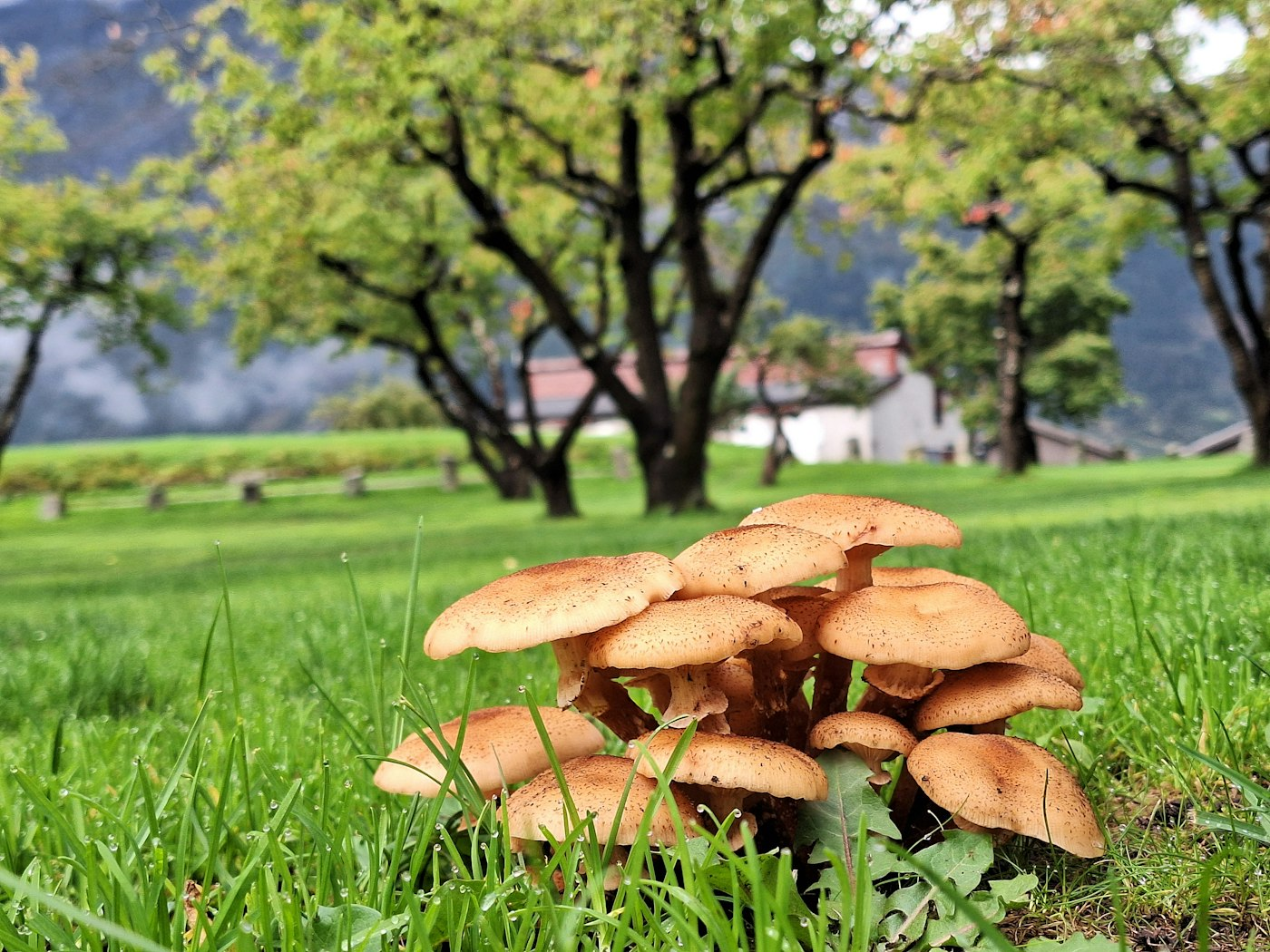
A few rainy days in fall can turn a lawn into a field of mushrooms almost overnight. They appear in grass, around tree roots, in mulch beds and along trails. For many dogs, a new thing on the ground is something to sniff, and sometimes something to eat.
Most wild mushrooms are not dangerous, but some are extremely toxic. Because telling them apart can be difficult even for experts, the safest approach is to treat every wild mushroom as a potential risk.
Why identification is so hard
Many toxic mushrooms look ordinary. Some resemble edible species closely. Color, size and shape vary with age and weather, and a mushroom that has been nibbled or trampled loses many of its identifying features. Some of the most dangerous species, including certain Amanita mushrooms, can cause serious liver damage, and symptoms may not appear right away.
For a dog owner, the practical takeaway is simple: you do not need to identify a mushroom to decide it should not be eaten.
Keeping your yard and walks safer
- Walk your yard after rain and remove mushrooms you find. Wear gloves and bag them for the trash.
- Check again often. Mushrooms can pop up quickly and keep coming back through damp weather.
- Keep your dog on leash in wooded or grassy areas where mushrooms are common.
- Practice a reliable “leave it” cue so you can interrupt your dog before they grab something.
- Watch puppies and dogs known for eating things off the ground especially closely.
Removing visible mushrooms will not stop the underlying fungus, which lives in the soil and roots. That is normal. The goal is just to reduce what your dog can reach.
If your dog eats a mushroom
Call your veterinarian or an emergency animal hospital right away, even if your dog seems fine. Waiting for symptoms is not a good strategy, since some toxins act slowly. You can also contact a pet poison control service, such as the ASPCA Animal Poison Control Center, which may charge a consultation fee.
Helpful steps while you call:
- Note the time your dog ate the mushroom and roughly how much.
- If you can do so safely, collect a sample of the same mushroom, or what is left of it, in a paper bag. A photo of where it was growing can also help.
- Do not try to make your dog vomit unless a veterinary professional tells you to.
Signs to watch for
Depending on the mushroom, signs can include vomiting, diarrhea, drooling, stumbling, tremors, unusual sleepiness or agitation, yellowing of the gums or eyes, and seizures. Any of these after possible mushroom exposure is an emergency. Your veterinarian is the right person to guide treatment.
Fall mushrooms are a natural part of the season. With regular yard checks and a watchful eye on walks, you can keep them from becoming a problem.












