

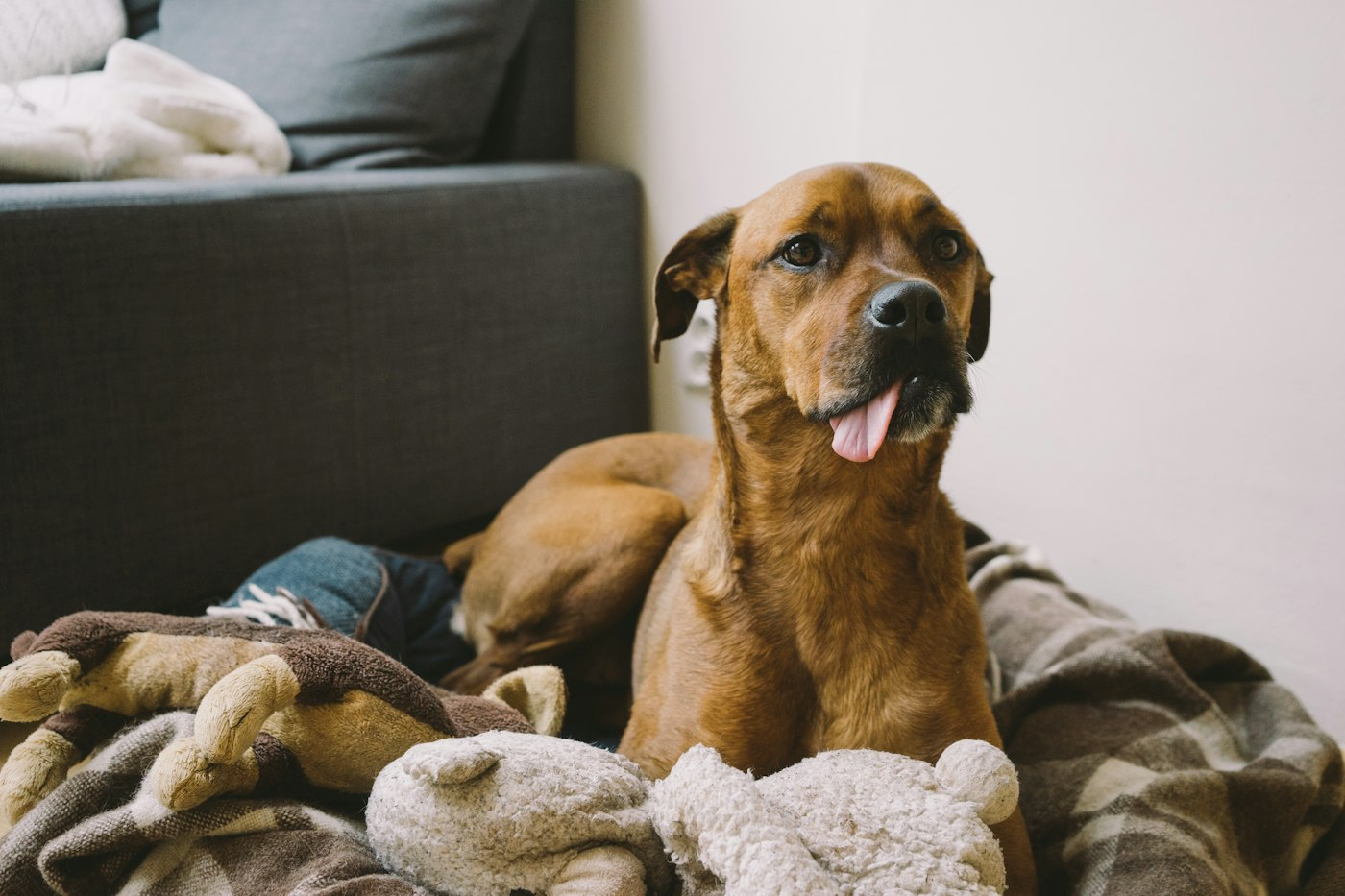
As dogs age, the home they have lived in for years can start to present new challenges. Slippery floors, steep steps and a bed that is too thin can all become harder to manage. The good news is that many helpful adjustments are simple and inexpensive. Your veterinarian can tell you which changes matter most for your dog’s specific needs.
Better footing
Hardwood, tile and laminate floors can be tough for older dogs, especially those with weaker hind legs. Slipping can make a dog hesitant to walk across a room or come to you when called.
- Add washable rugs or runners along your dog’s usual paths.
- Use non-slip mats near food and water bowls and at the bottom of stairs.
- Keep nails trimmed so paw pads can make better contact with the floor.
- Trim fur between paw pads if it grows long, or ask your groomer to do it.
Easier access
Jumping onto a couch or into a car may become difficult. Pet ramps or sturdy steps can help a dog reach favorite spots without straining. For stairs, consider gating them off if your dog struggles, and set up a cozy space on the main floor. Some owners help larger dogs with a supportive harness that has a handle on the back, which makes it easier to steady a dog on steps or getting into a vehicle. Ask your veterinarian or a rehabilitation professional how to support your dog safely.
Comfortable rest
Older dogs often sleep more and may feel stiff after lying down. A thick, supportive bed, such as one with orthopedic foam, can help. Place beds away from drafts and in spots where your dog can still feel part of the family. Some dogs appreciate a second bed in a different room so they can follow you without lying on a hard floor.
Raised food and water bowls may make eating more comfortable for some dogs, though not every dog needs them. Ask your vet whether they would help yours.
Helping with senses
Dogs with fading eyesight often manage well in familiar spaces, so avoid rearranging furniture when you can. Night lights can help in hallways. Soft textures or scents can mark important spots, such as the top of the stairs. For dogs with hearing loss, hand signals and gentle touch can replace verbal cues. Approach from the front and let your dog see or feel you before you touch it, to avoid startling.
Gear for older dogs
A senior dog’s gear may need a refresh. A lighter collar can feel more comfortable on an older neck, and a well-padded harness can spread pressure more evenly on walks. Make sure ID tags are current and clearly readable, since an older dog with declining vision or hearing could become disoriented if it wanders. A light jacket can also help some lean or older dogs stay comfortable on cooler mornings. Check the fit of everything every few months, since muscle and weight can change with age.












