

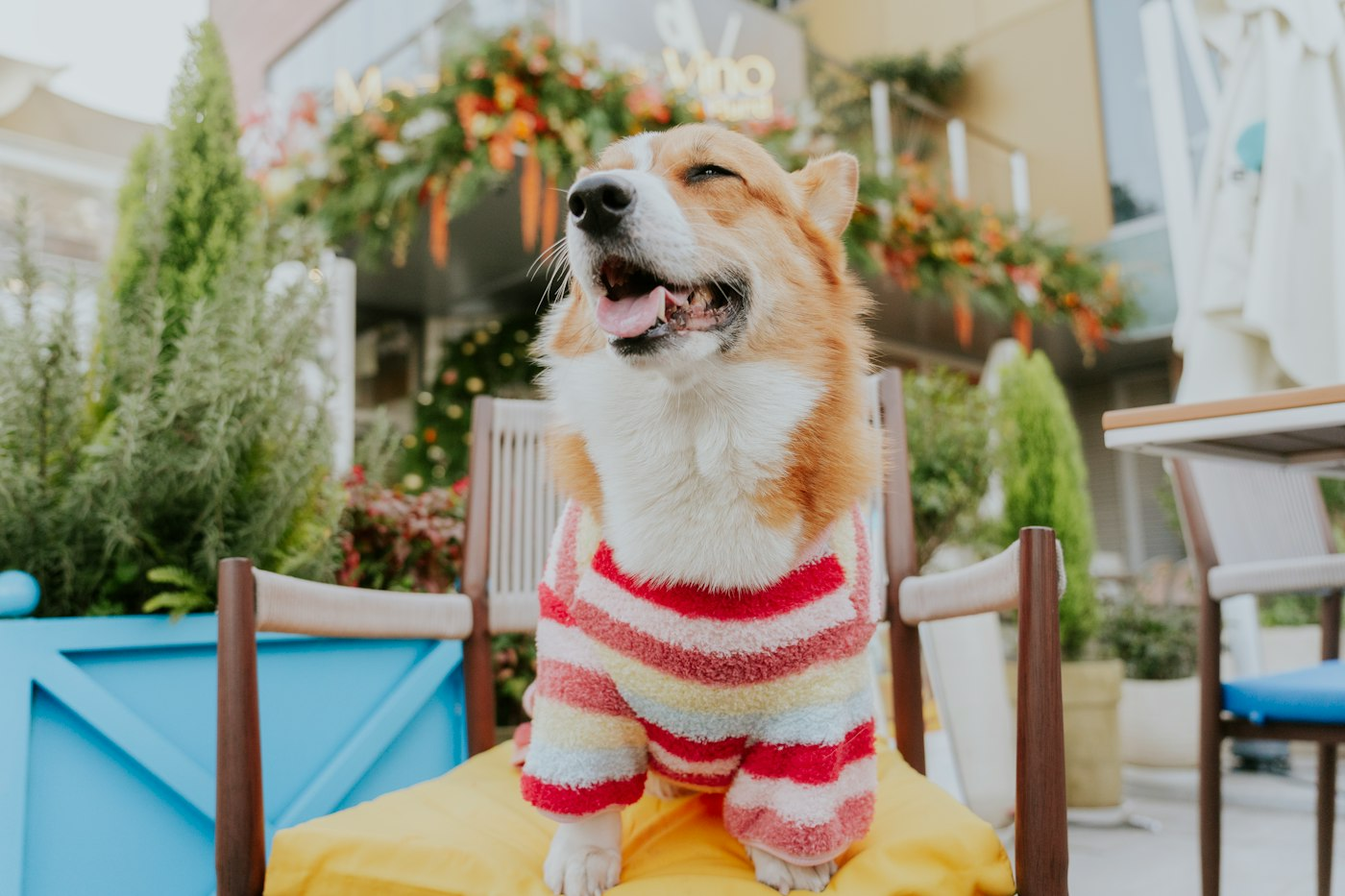
Fall weather rarely sits still. A walk that starts in frost can end in sunshine, and a pleasant afternoon can turn damp and windy by evening. People handle this by layering. Dogs can benefit from the same idea, as long as you keep it simple and keep your dog’s comfort at the center.
Why layering makes sense in fall
A heavy winter coat is built for sustained cold. Put it on a dog for a September morning walk and they may be overheated before you reach the corner. Lighter, removable layers let you match what your dog wears to the conditions as they change. That matters most for dogs who feel cold easily: small breeds, short-coated dogs, seniors, puppies and dogs with a fresh short trim.
The pieces most dogs actually need
Most dogs do not need a full wardrobe. In practice, fall layering usually comes down to two or three pieces:
- A light warm layer. A thin fleece or knit that adds a little insulation on chilly mornings.
- A shell. A lightweight jacket that blocks wind and light rain, useful on its own on mild, damp days.
- Visibility. Reflective trim or a bright color for walks near dawn and dusk, which come earlier as fall goes on.
Some dogs do best with only a shell. Others are happiest in a fleece alone. Combining them makes sense only if the shell is cut to fit over the base layer without squeezing.
Fit comes first
Layers that bunch, twist or rub cause more problems than they solve. Check the areas where friction usually starts: behind the front legs, around the neck and along the belly. You should be able to slide a couple of fingers under the jacket at the neck and chest. If you layer, check fit with both pieces on, since a jacket that fits perfectly alone can be snug over fleece.
Also think about the collar or harness. Some jackets have an opening for a leash attachment, while others sit over the harness. Either way, make sure nothing is pressing a buckle or ring into your dog’s skin.
When to take a layer off
Overheating is a real risk with active dogs. Signs your dog is too warm include heavy panting, seeking shade, slowing down or lying down on cool ground. On walks with big temperature changes, plan to stop and remove a layer. A jacket that clips or fastens easily makes this much less of a hassle.
Indoors, take layers off. Dogs regulate temperature mostly through panting and through their paw pads, and wearing a jacket in a heated house can make them uncomfortable.
Keeping it simple
The best fall layering system is one you will actually use. Keep your dog’s layers near the leash, so getting ready is quick. Watch your dog on each walk and adjust from there. If you have questions about how cold affects a dog with arthritis, heart issues or other health conditions, your veterinarian can help you decide what level of protection makes sense.












