

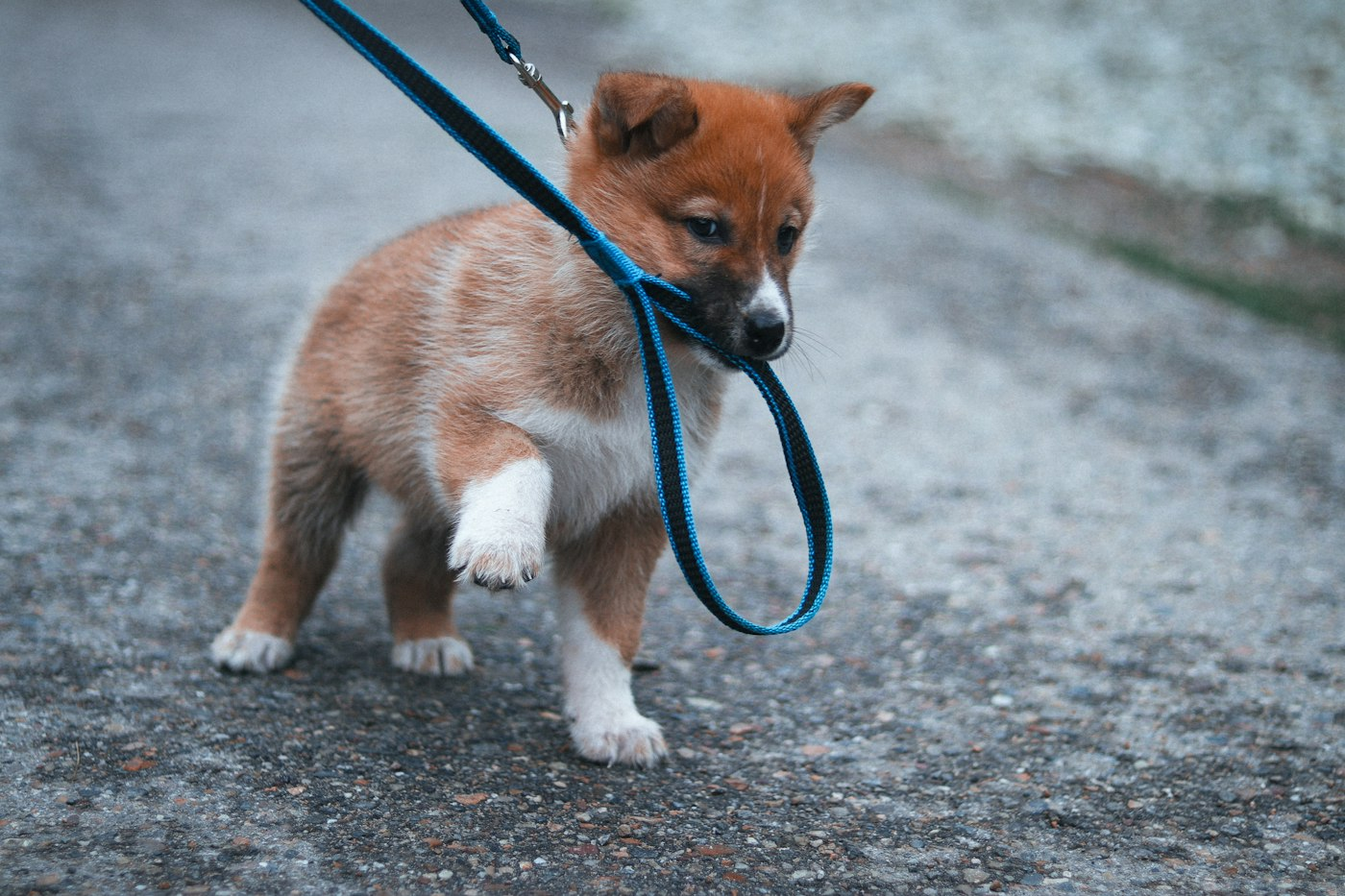
Loose-leash walking is a long-term project, but it starts with something simpler: helping a puppy feel relaxed wearing a collar or harness and having a leash attached. Many puppies are surprised the first time they feel pressure on their neck or body. A few short, positive sessions at home can prevent a lot of fear and frustration later. Late winter, when outdoor time may be limited, is a good time to lay this groundwork indoors.
Step one: get comfortable with the collar or harness
Put the collar or harness on during calm, pleasant moments, such as just before a meal or a play session. Offer a few small treats while it goes on and while your puppy wears it. Keep early sessions short and take it off before your puppy starts scratching at it.
Fit matters from the start. A collar should be snug enough that it will not slip over the head but loose enough that you can slide two fingers underneath. Puppies grow quickly, so check the fit every week or so.
Step two: let the leash just hang
Clip a lightweight leash on indoors and let your puppy move around with it trailing, while you supervise closely so it does not get caught on furniture. The goal is for the leash to be boring. Reward your puppy for ignoring it, and redirect gently if they start chewing it.
Step three: pick up the leash and follow
Once your puppy ignores the trailing leash, pick up the end and simply follow them around the room for a minute. Keep the leash loose. Then start encouraging your puppy to follow you instead. Take a few steps, use a happy voice, and reward them when they come along beside you.
- Keep sessions to a few minutes at a time.
- Use small, soft treats your puppy loves.
- Reward often for being close to you with a slack leash.
- If your puppy pulls or freezes, stop, wait and make it easy again.
Step four: practice in new places
When your puppy is comfortable indoors, move to a hallway, a quiet yard or a calm corner of the driveway. New places are full of distractions, so make each session shorter and the rewards more frequent. Avoid busy sidewalks and crowded areas until your puppy is more confident. Ask your veterinarian when it is safe for your puppy to walk in public spaces based on their vaccination schedule.
What to avoid
Do not drag a puppy who has stopped walking, and avoid yanking or jerking the leash. These can make the leash feel scary and may strain a young neck. If your puppy plants their feet, wait, kneel down, and encourage them toward you with a treat. If they seem frightened, go back to an easier step.
Patience in the first week pays off. A puppy who already sees the leash as a sign of good things to come is ready to start learning loose-leash walking when spring arrives.












