

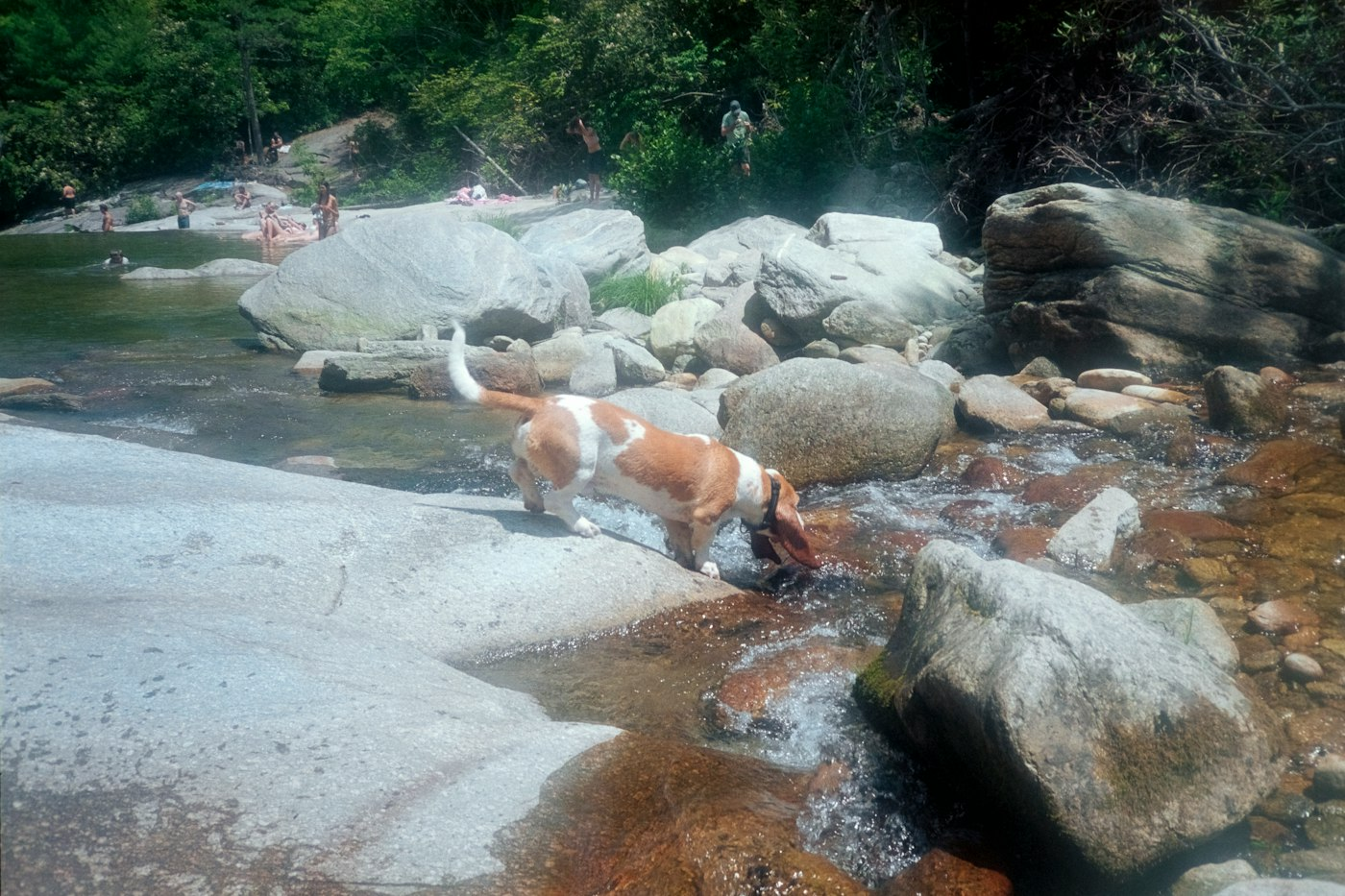
A summer walk that is easy in the morning can feel very different by midafternoon. Dogs lose water quickly when they pant, and panting is how they shed heat. Planning for water is one of the simplest things you can do to keep summer walks safe.
Bring water every time
For a quick loop around the block in the cool of the morning, your dog may be fine until you get home. For anything longer, or any walk in warm weather, carry water and a way to serve it. A collapsible bowl or a bottle with a built-in trough takes up little space.
Offer water before you start, at regular intervals along the way and when you get home. Many dogs will not drink much while they are excited, so pausing in the shade often helps them settle enough to drink.
How much is enough
Water needs vary with size, diet, activity, age and health. Dogs who eat dry food generally drink more than those on wet food, and active dogs need more than couch companions. Instead of focusing on a number, watch your dog and make sure fresh water is always available.
If your dog seems to be drinking far more or far less than usual, mention it to your veterinarian. A sudden change can be a sign of a health issue.
Signs your dog needs a break
- Heavy panting that does not ease when you stop.
- Thick, sticky saliva or dry gums.
- Lagging behind, lying down or seeking shade.
- Sunken-looking eyes or unusual lethargy.
If you see these signs, stop, find shade and offer water. If your dog does not improve quickly, or shows signs of overheating such as vomiting, stumbling or confusion, contact your veterinarian immediately.
Water sources to avoid
It is tempting to let a thirsty dog drink from whatever is nearby, but some water is risky:
- Stagnant puddles, which can contain bacteria, parasites or chemical runoff.
- Ponds or lakes with visible scum or discolored water, which may indicate harmful algae.
- Salt water at the beach, which can upset the stomach and, in larger amounts, be dangerous.
- Pool water, which is not meant for drinking.
Carrying your own fresh water removes the temptation. It also lets you see how much your dog is actually drinking.
Make it a habit
Hydration also starts before the walk. Make sure your dog’s water bowl at home is clean, full and in a cool spot, and consider adding a second bowl in another room or on a shaded porch during the summer months. Keep a filled bottle and a bowl by the door or clipped to your leash bag, so you never have to think about it. Refill the bottle when you get home. On hot days, consider shorter walks with more frequent breaks, and save long outings for cooler mornings.












