

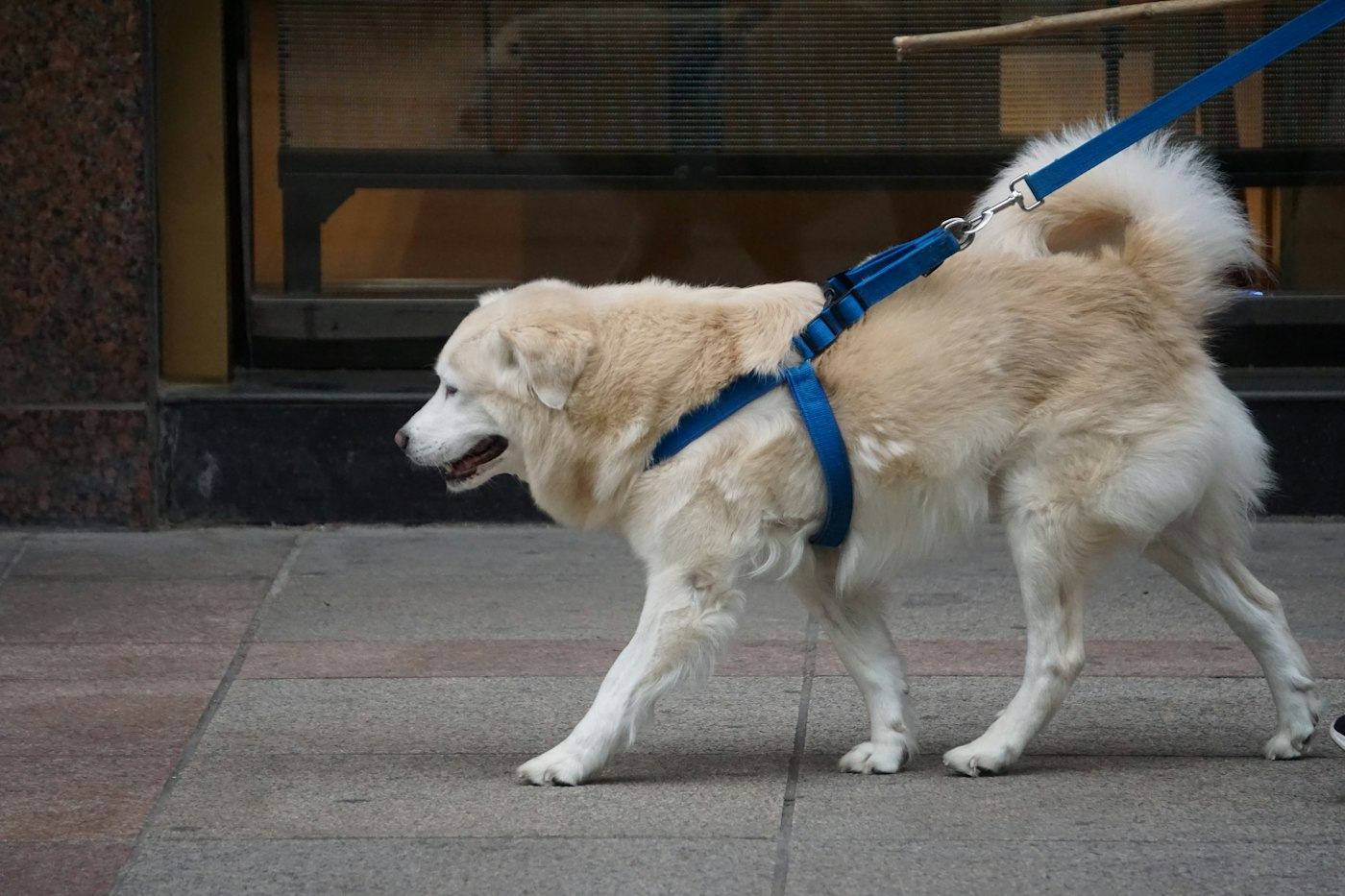
A leash is the piece of gear you will handle more than any other, every single day. The right one feels comfortable in your hand, suits your dog’s size and strength, and fits the way you walk. With spring walks getting longer, it is a good time to make sure yours is up to the job.
Length
- About four feet: keeps your dog close, which is helpful in crowded areas and for dogs still learning leash manners.
- About six feet: a common everyday length that gives a little room to sniff while keeping control. Many parks and public lands set six feet as a maximum.
- Long lines, fifteen feet and up: useful for recall practice and supervised exploring in open areas, but not for sidewalks or busy places.
Adjustable leashes, which can be clipped at different lengths, give you some flexibility on one leash. Check local leash rules wherever you walk; your city or park district’s website usually lists them.
Material
Nylon is lightweight, affordable, easy to wash and available in many colors. It can cause friction burns if it slides quickly through your hand. Leather is soft in the hand, durable and tends to become more comfortable with use, though it needs care to stay supple and does not love being soaked. Biothane and similar coated materials are waterproof, easy to wipe clean and handle mud well, which makes them popular for wet spring walks. Rope leashes are strong and easy to grip, but can be heavier. Chain leashes discourage chewing but are heavy and hard on the hands.
Handle and grip
A comfortable handle matters more than many people expect. Padded handles can reduce rope burn if your dog pulls. Some leashes have a second “traffic handle” near the clip, giving you a quick way to keep your dog close at crosswalks or when passing people. If you walk in the rain, look for a grip that does not get slippery when wet.
Hardware
The clip is where many leash failures happen. Look for a sturdy metal clip that matches your dog’s size and strength, opens and closes smoothly, and does not feel flimsy. Bolt snaps are common; some owners prefer locking carabiner-style clips for strong dogs. Check that stitching around the clip and handle is tight and even.
Matching the leash to your dog
A small dog does not need a heavy leash with a large clip, which can drag on a light collar. A large, strong dog needs a leash and clip rated to handle sudden lunges. Reflective stitching or bright colors help on dim mornings and evenings.
Inspect your leash regularly for fraying, chewed spots, cracked leather and worn hardware, and replace it when you see damage. A leash only works if it holds when it matters.












