

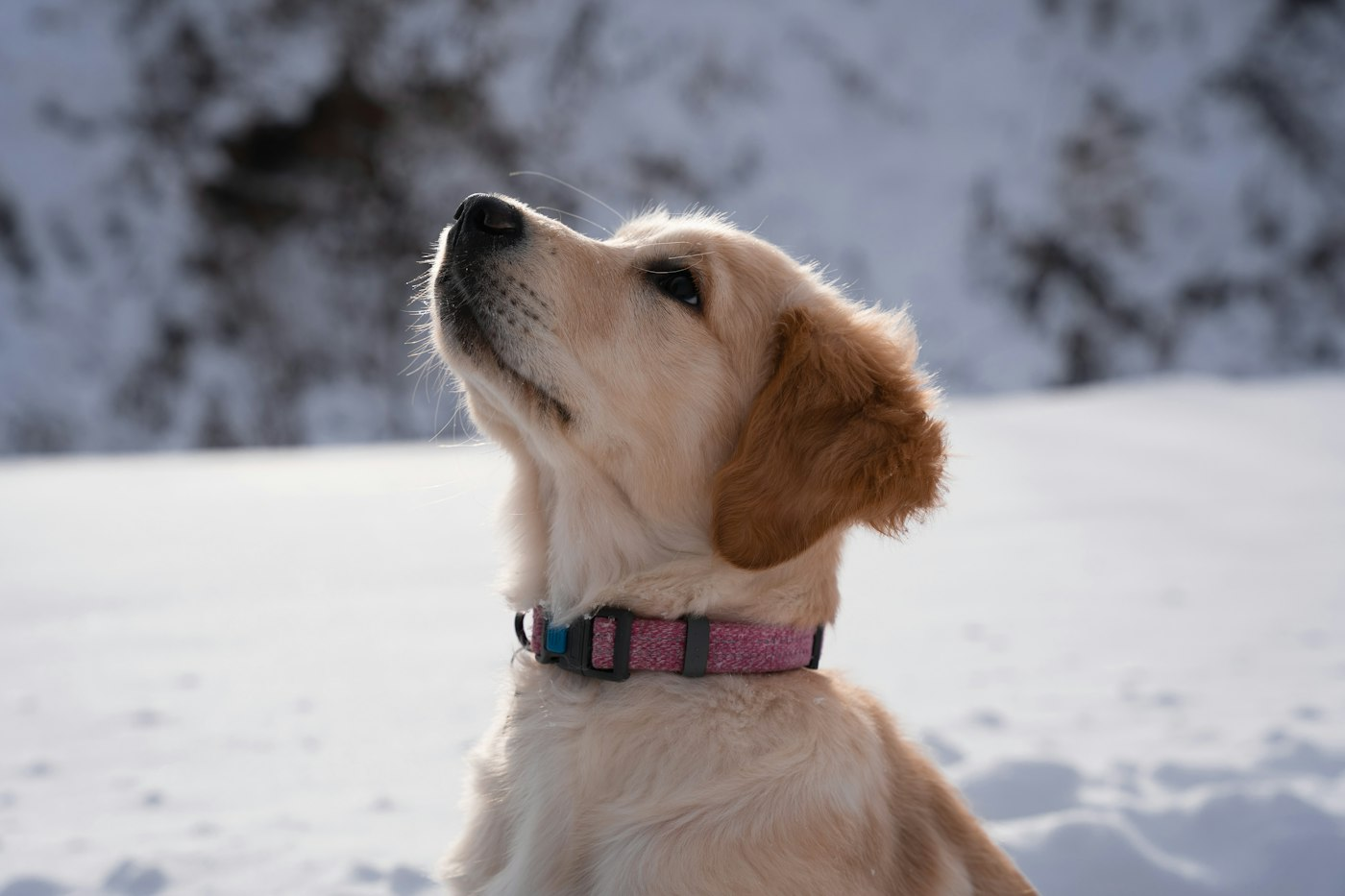
Bringing home a puppy in winter is a joy, but house training in the cold can test anyone’s patience. Puppies need frequent bathroom trips, and many are reluctant to go outside when it is snowy, icy or dark. With some planning, you can keep training on track and help your puppy build good habits even in February.
Why winter makes it harder
Puppies have small bladders and limited control, so they need to go out often, including after waking, eating, drinking and playing. Small or short-coated puppies may feel the cold quickly. Snow can be unfamiliar and even a little frightening. Puppies are also easily distracted by snow itself, sniffing and playing instead of doing their business. Meanwhile, owners are tempted to cut trips short or skip them, which can set training back.
Create a winter bathroom spot
Choose a spot close to the door and keep it shoveled. A small cleared patch of ground or grass is easier for a puppy than deep snow. Go to the same spot each time so the familiar scent encourages your puppy to go. Some owners put down a small area of straw or similar material in the spot; whatever you choose, keep it consistent and avoid areas treated with salt or chemical de-icers.
Keep the routine predictable
- Take your puppy out first thing in the morning and last thing at night
- Go out after meals, naps and play sessions
- Use a consistent cue word when they start to go
- Praise and reward right after they finish, outside
- Head back in promptly so bathroom trips are not confused with playtime
Go out with your puppy every time rather than letting them out alone. You need to see them go so you can reward it, and you can bring them in quickly if they are getting cold.
Keep your puppy comfortable
Short, frequent trips are better than long ones for most puppies in cold weather. A well-fitted jacket can help small or short-coated puppies, though some may need time to get used to wearing one. Wipe and dry paws after each trip to remove snow and any salt. Puppies are still developing their ability to regulate body temperature, so watch for shivering and bring them in if they seem cold. Ask your veterinarian how much cold exposure is appropriate for your puppy’s age and breed.
Handling accidents
Accidents are part of house training. If you catch your puppy in the act, calmly interrupt and take them outside. If you find an accident later, simply clean it up. Punishment after the fact does not help puppies learn and can make them afraid to go in front of you. Use an enzymatic cleaner made for pet messes to remove odors that might attract your puppy back to the same spot. If accidents suddenly increase, or your puppy strains, urinates very frequently or seems uncomfortable, talk to your veterinarian, since a medical issue such as a urinary infection can be involved. Patience and consistency now will pay off when spring arrives.












