

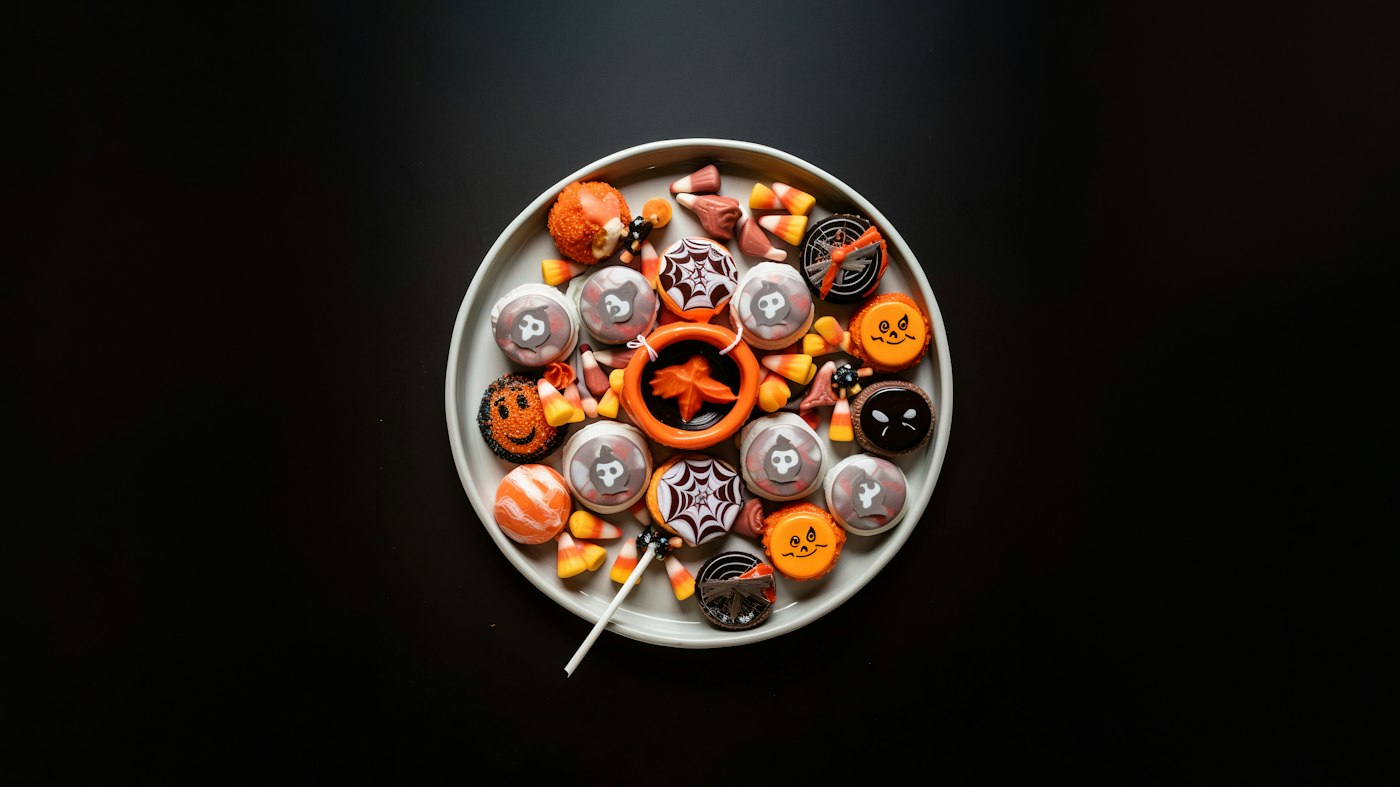
Halloween candy is everywhere in October: in bowls by the door, in pillowcases full of loot, in backpacks and on coffee tables. For dogs, several common treats can be dangerous, and an unattended bag of candy is an easy target. Here is what to know.
Chocolate
Chocolate contains theobromine and caffeine, which dogs process much more slowly than people. Effects can range from vomiting and diarrhea to restlessness, a racing heart, tremors and seizures. In general, darker chocolate and baking chocolate are more dangerous than milk chocolate, and smaller dogs can be affected by smaller amounts. Any chocolate ingestion is worth a call to your veterinarian.
Xylitol, raisins and grapes
Xylitol, sometimes listed as birch sugar, is a sugar substitute found in some sugar-free gum, mints, candies and baked goods. In dogs, it can cause a dangerous drop in blood sugar and may lead to liver damage. Even a small amount can be serious. Check labels on sugar-free treats and keep them well out of reach. Purses and coat pockets are common sources.
Raisins and grapes have been linked to kidney injury in dogs, and it is not possible to predict which dogs will be affected or how much is too much. Small boxes of raisins and chocolate-covered raisins are popular trick-or-treat items. Treat any raisin ingestion as a reason to call your vet.
Wrappers, sticks and other non-food hazards
Dogs who gobble candy often swallow the packaging too. Foil and plastic wrappers, lollipop sticks and small toys can cause choking or blockages in the stomach or intestines. Signs of a blockage may include vomiting, loss of appetite, straining or a painful belly. Large amounts of sugary, fatty candy can also cause stomach upset, and fatty foods have been associated with pancreatitis in dogs.
Storing candy safely
- Keep candy bowls up high and out of reach, not on low tables by the door.
- Ask kids to store their haul in a closed container on a counter or shelf, not on the floor or in their rooms.
- Store sugar-free gum and mints in cabinets, not bags left on the floor.
- Check couches, cars and backpacks for stray pieces after trick-or-treating.
- Walk your yard and route the next morning for dropped candy and wrappers.
Teaching kids why candy is dangerous for dogs helps the whole family stay on the lookout.
If your dog eats candy
Call your veterinarian or an emergency animal hospital right away. A pet poison control service, such as the ASPCA Animal Poison Control Center, can also help and may charge a fee. Be ready to share:
- What your dog ate, including the wrappers or labels if you have them
- Roughly how much is missing
- When it happened
- Your dog’s approximate weight
Do not try to make your dog vomit unless a veterinary professional tells you to. Quick action and accurate information help your vet decide on the right next step. With candy stored high and a plan in place, Halloween can stay a treat for everyone except the dog’s stomach.












