

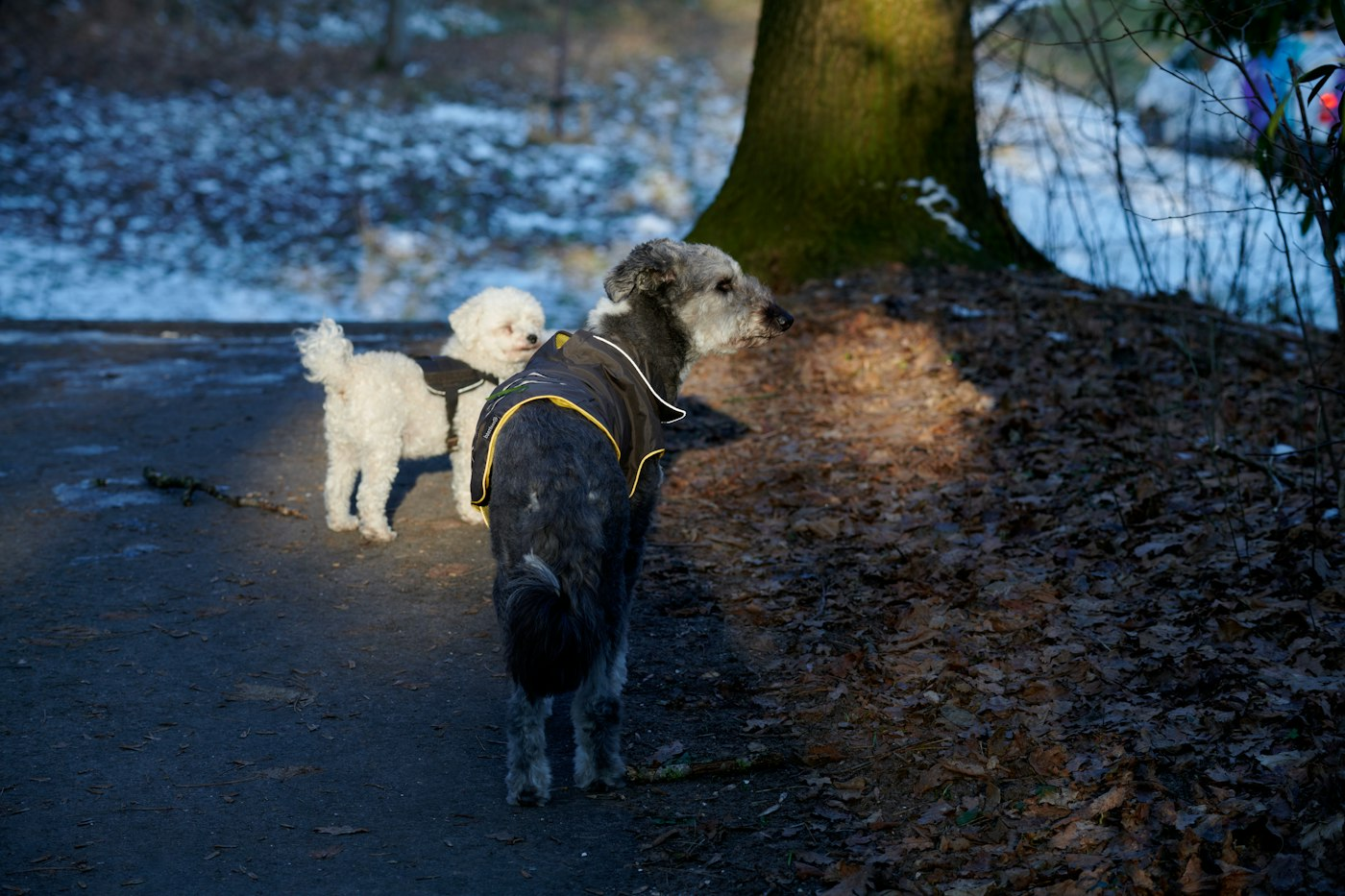
In many places, October is the bridge between light fall layers and real winter weather. It is a good month to pull out the cold-weather gear you stored in spring, see what still fits and figure out what needs repairing or replacing, before the first freezing morning makes the decision for you.
Gather everything in one place
Bring out all of your dog’s seasonal gear: winter jackets, sweaters, booties, reflective vests, clip-on lights and any spare collars or leashes. Lay it out so you can see what you have. It is common to find a jacket you forgot about or realize the booties went missing last year.
Check jackets, sweaters and booties
- Fit. Put each one on your dog. Puppies grow, and adult dogs can change weight or coat length. Check the neck, chest and length along the back.
- Closures. Test hook-and-loop strips, buckles, snaps and zippers. Clean lint and hair out of hook-and-loop closures so they grip.
- Seams and fabric. Look for tears, thin spots and loose stitching.
- Freshness. Wash anything that smells musty from storage, following the care label, and dry it completely.
If your dog wears booties for snow, ice or road salt, check soles for wear and straps for stretch. Try them on and watch your dog walk. If it has been months since your dog wore them, a few short practice sessions indoors with treats can help them get used to the feel again.
Check collars, harnesses and leashes
A winter coat or jacket can change how a harness fits, so check fit with the jacket on. Inspect buckles and rings for damage, webbing for fraying and leashes for weak spots near the clip. Replace anything that looks worn.
Check visibility gear and ID
With the end of daylight saving time coming in early November in the United States, more walks will happen in the dark.
- Charge rechargeable lights and replace batteries in others.
- Look at reflective trim and replace gear where it has peeled or faded.
- Pick up a headlamp or reflective vest for yourself if you do not have one.
Read your dog’s tags and make sure the phone number is current and readable. If you use a QR ID tag, scan it and review the profile. Confirm your microchip registration details. Winter weather can make lost dogs harder to find, so current ID matters.
Make a short shopping list
Once you have checked everything, write down what is missing or worn out. Measure your dog before buying anything new, using a soft tape measure around the neck, around the widest part of the chest and along the back from the base of the neck to the base of the tail.
If your dog is a senior, has arthritis or has any health condition that might be affected by cold, ask your veterinarian how to adjust walks and gear for the season ahead. Then hang everything near the door, ready for the first truly cold morning.












