

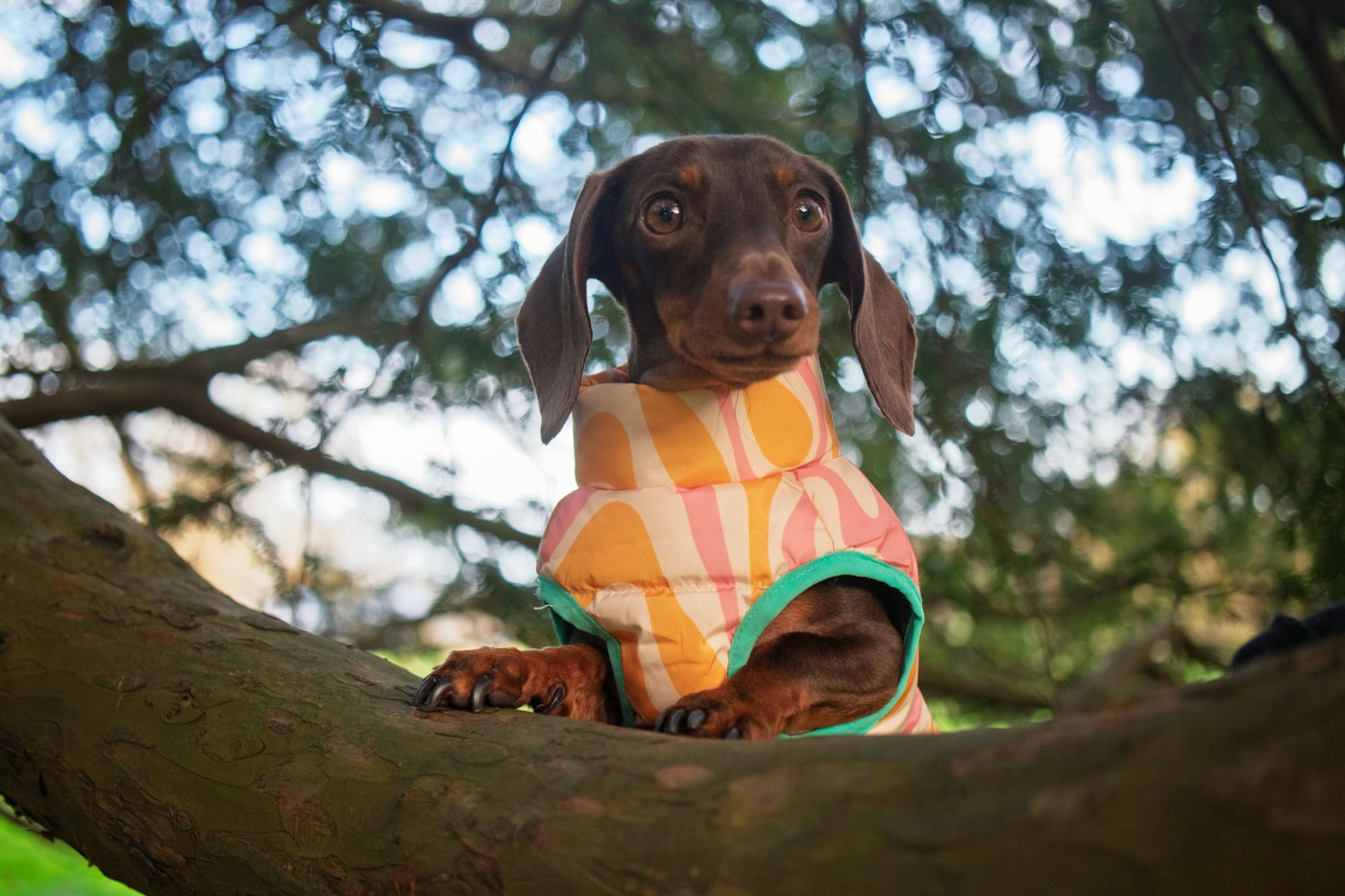
Sizing charts usually start with weight, but weight does not tell you much about shape. A Dachshund and a Beagle may weigh about the same and need completely different gear. Thinking about your dog’s build, not just its size, is the key to collars, harnesses and jackets that fit well and stay comfortable.
Deep-chested and narrow-waisted dogs
Greyhounds, Whippets, Dobermans and many other sighthound and athletic breeds have deep chests that narrow sharply toward a slim waist. Their heads are often narrower than their necks, which makes it easy for them to back out of a standard flat collar. Many owners of these dogs use a martingale-style collar, which tightens slightly when the dog pulls back.
For harnesses, look for a design with adjustable straps around both the neck and chest, so the harness sits snugly behind the front legs without sliding back toward the waist. Jackets made for these dogs typically have a longer chest panel and a tapered shape that follows the body.
Long backs and short legs
Dachshunds, Corgis, Basset Hounds and similar breeds have long bodies and low clearance. Standard jackets often fit at the chest but end halfway down the back, or fit the length but hang too low under the belly.
- Measure back length carefully and choose gear designed for long bodies when possible.
- Look for harnesses that do not restrict the shoulders or rub behind the short front legs.
- Make sure jackets leave enough room underneath for walking and bathroom breaks.
Harnesses are often recommended for long-backed dogs because they distribute pressure across the chest instead of the neck. Ask your veterinarian if you have questions about protecting your dog’s back.
Broad, stocky dogs
French Bulldogs, Boston Terriers, Pugs, Bulldogs and some mixed breeds have wide chests, short backs and thick necks. Harnesses with a Y-shaped front that sits away from the throat are a popular choice for flat-faced breeds. Jackets need extra width at the chest without excess length. Check under the front legs, where wide-chested dogs can be prone to rubbing.
Fluffy and curly coats
Doodles, Poodles and other dogs with dense or curly coats add another factor: friction. Straps and edges can create mats where they rub. Choose smooth materials and rolled or rounded edges where possible, keep gear only as snug as it needs to be and check under collars and harnesses every time you brush. Remeasure after grooming, since fit can change dramatically with a haircut.
Measuring for any shape
Whatever your dog’s build, a soft measuring tape is your best tool. Measure the neck where the collar sits, the chest at its widest point behind the front legs and the back from the base of the neck to the base of the tail. Write the numbers down and compare them to each product’s sizing guide. When your dog is between sizes, check the manufacturer’s advice, and always do a fit check after the first few wears.












