

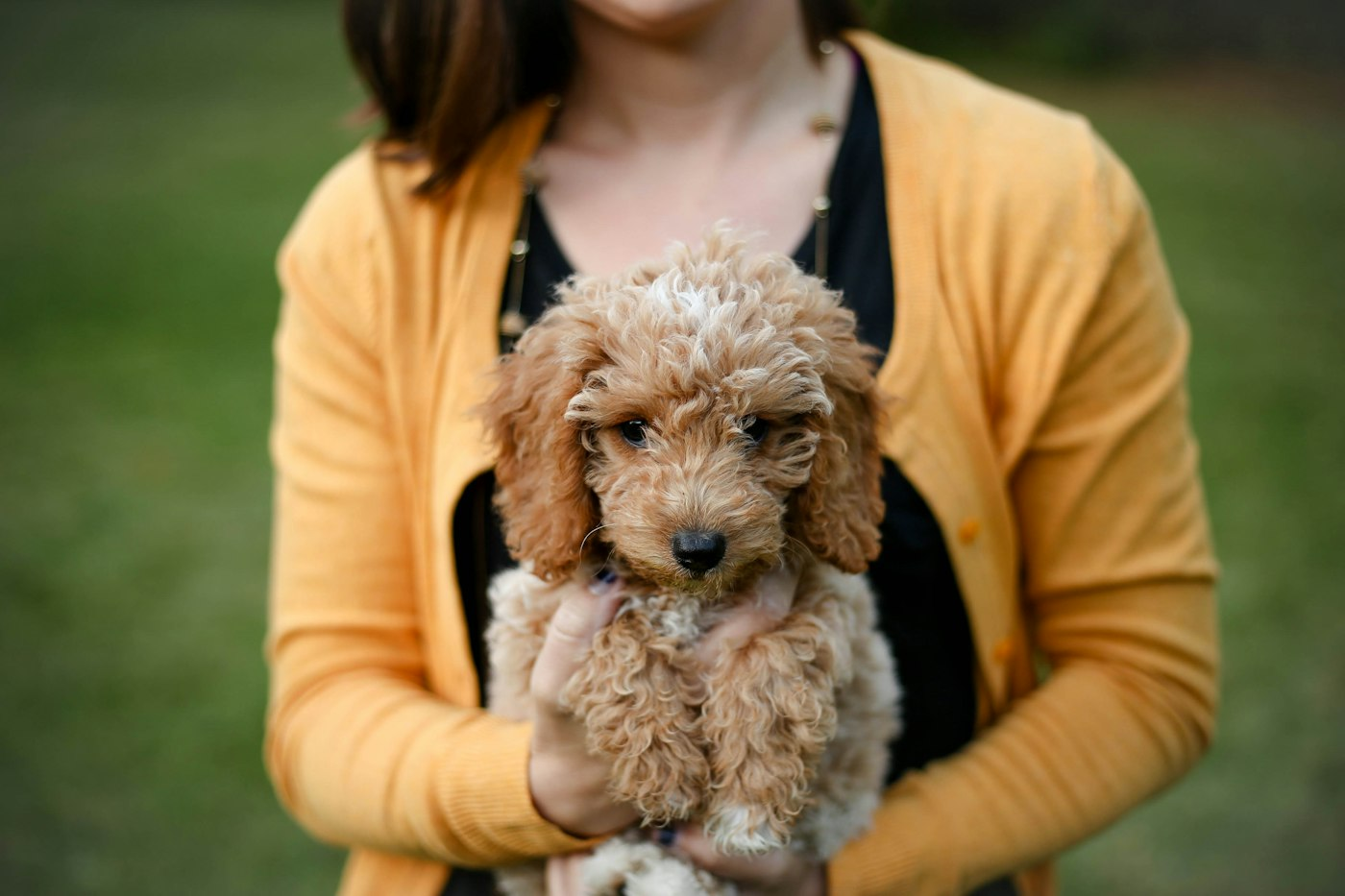
Today, doodles are a familiar sight in parks and neighborhoods. Their teddy-bear faces and curly coats are recognizable almost anywhere. But compared with many established breeds, doodles have a short history. Their story is one of guide dogs, allergies and the ever-changing world of dog breeding.
The Labradoodle and a guide dog program
The doodle story is usually traced to Australia in the late 1980s. A guide dog breeding program there, working with a client who needed a guide dog but had a partner with allergies, crossed a Labrador Retriever with a Standard Poodle. The goal was a dog with the Labrador’s trainability and temperament for guide work and a coat that might suit people with allergies. The resulting dogs became known as Labradoodles, and the name stuck.
The idea caught public attention. Over the following years, more breeders began crossing Poodles with other breeds, and the Labradoodle spread far beyond guide dog work.
The rise of the Goldendoodle
The Goldendoodle, a cross of a Golden Retriever and a Poodle, became popular in the 1990s, with breeders in North America and Australia among the early producers. Golden Retrievers were already one of the most beloved family dogs, known for friendly, gentle temperaments. Combining them with Poodles produced dogs that many families found appealing: friendly, often eager to please and with coats that range from wavy to curly. Goldendoodles come in a range of sizes, depending in part on whether a standard, miniature or toy Poodle is used.
Generations and terminology
Doodle breeders use a system of labels to describe generations:
- F1: a first-generation cross between a purebred Poodle and a purebred Golden Retriever or Labrador
- F1B: an F1 doodle bred back to a Poodle, often producing curlier coats
- F2 and beyond: doodles bred to other doodles
Because doodles are mixes, appearance, coat and temperament can vary, even within one litter. Some breeder associations have worked toward more consistent standards, but doodles are not recognized as breeds by the major traditional kennel clubs.
The allergy question
One reason doodles became popular is the hope that they would be better for people with allergies. Some doodles do shed less noticeably, especially those with curly coats. However, no dog is completely free of allergens, and people with allergies can react differently to individual dogs. Anyone with allergies should talk to an allergist and spend time with a specific dog before bringing one home.
Living with a doodle today
Doodles are now one of the most recognizable kinds of family dogs. They tend to be social and active, and many need regular exercise and mental stimulation. Their coats need consistent grooming, especially in winter when snow and moisture can lead to mats. PUPWEAR itself was inspired by Boston, a GoldenDoodle, which is one reason we think a lot about how gear fits and feels on a fluffy coat. Whatever their background, doodles have earned their place in many homes.












