

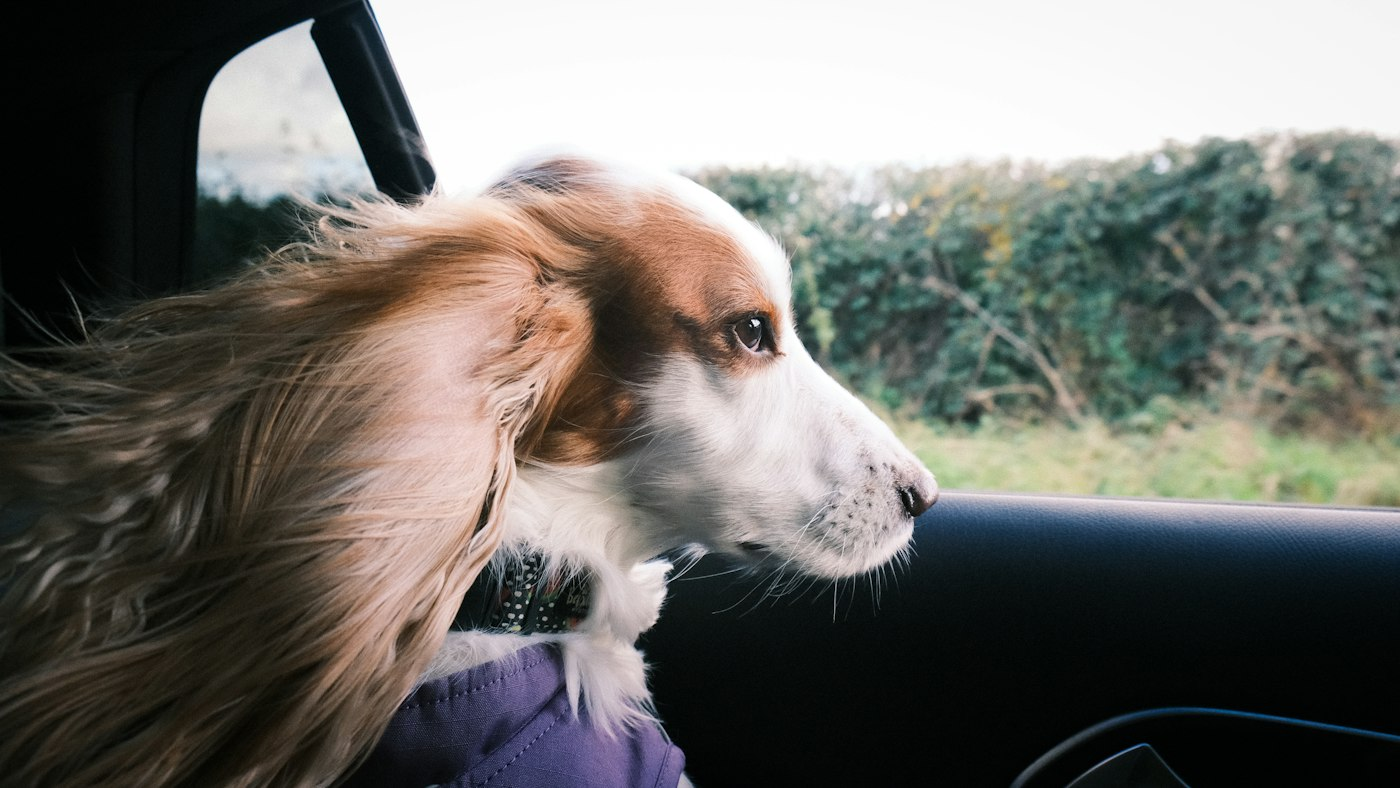
For some dogs the sound of car keys is pure joy. For others, the car means trembling, drooling or refusing to jump in. Often that worry comes from experience: if the only car rides a dog takes end at the vet or groomer, the car becomes a predictor of stress. If you are hoping to take your dog on road trips this summer, spring is a good time to change that association.
Start with a Parked Car
Begin with the engine off and the car in the driveway. Open the doors and let your dog investigate at their own pace. Toss treats near the car, then on the floor by the seat, then on the seat. Do not lift or push a worried dog inside. The goal is for your dog to choose to approach.
Once your dog is comfortable getting in, spend a few minutes sitting in the parked car together. Offer a chew or a stuffed food toy. Then get out and go back inside. Repeat over several days until hopping into the car feels routine.
Add the Engine and Short Trips
Next, start the engine while your dog is settled with a chew, then turn it off. When that is boring, back down the driveway and pull back in. Then drive around the block. Gradually extend the drives, and make sure many of them end somewhere your dog enjoys, such as a quiet park, a friend’s yard or a favorite trail.
- Keep sessions short and positive.
- Secure your dog in a harness or crate from the start so restraint becomes part of the routine.
- Drive smoothly, especially around corners.
- Crack windows slightly for fresh air, but keep your dog’s head inside.
Motion Sickness or Anxiety?
Drooling, lip licking, yawning and vomiting can signal motion sickness, which is especially common in puppies. Many dogs outgrow it, but it can also create a lasting dislike of the car. Some owners find that a light meal well before the drive, rather than a full stomach, and a forward-facing position help.
Anxiety looks a little different: panting, pacing, whining or trying to escape. Often the two overlap. Your veterinarian can help you sort out which is happening and whether medication or other support makes sense for your dog. Do not give your dog any human motion sickness medicine without your vet’s guidance.
Building Up to a Long Drive
Before a big road trip, aim for a few practice drives of an hour or more. Notice how your dog handles them. Do they settle and sleep, or do they get restless after a certain point? That tells you how often you will want to stop.
On travel day, bring familiar items such as a bed, blanket or towel that smells like home. Keep the car cool and never leave your dog alone in a parked car, even for a short errand. Temperatures inside a vehicle can rise quickly.
Patience is the main ingredient. A dog who learns at their own pace that the car leads to good things can become a happy travel companion, and that opens up a whole season of adventures together.












