

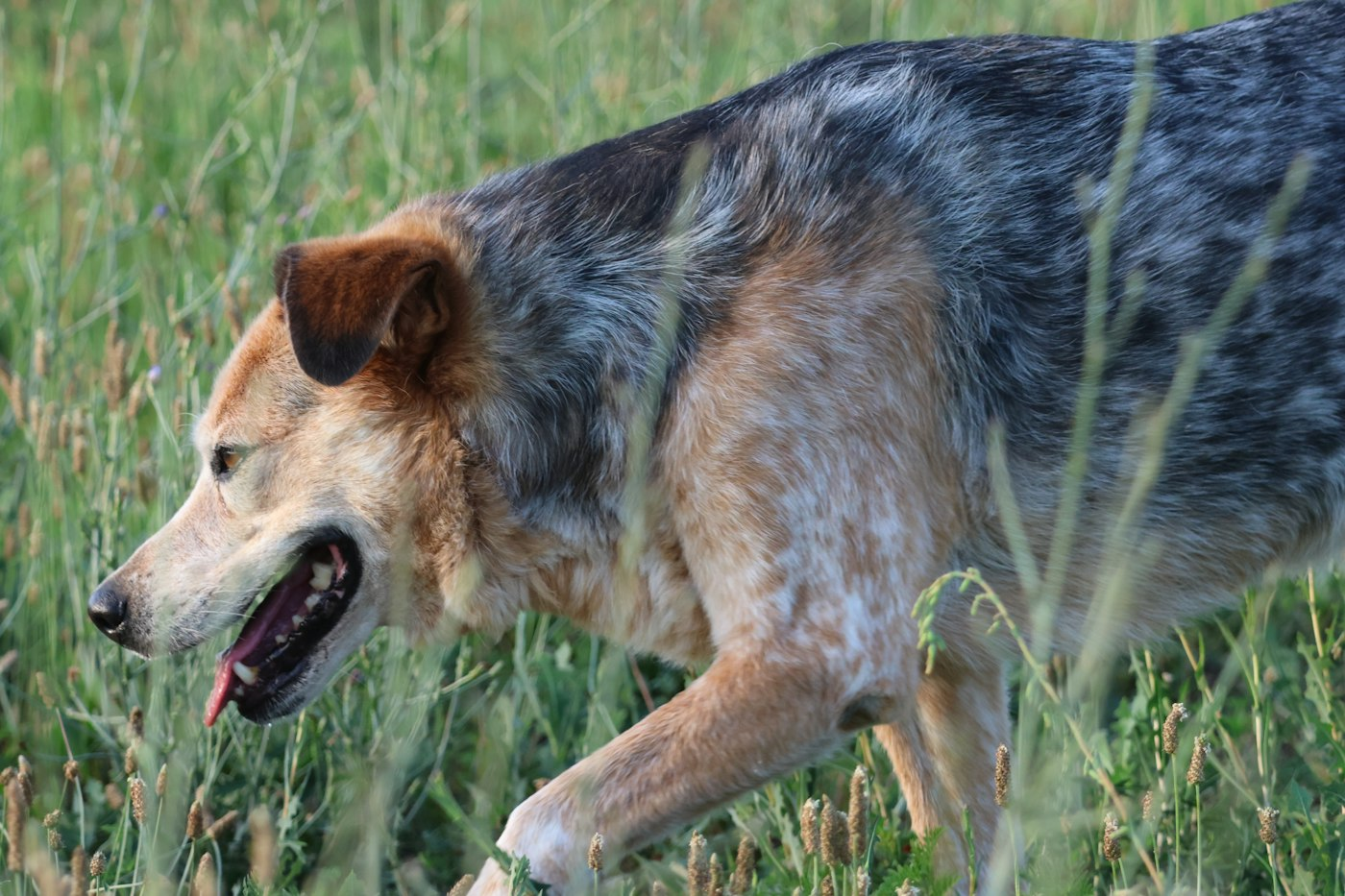
As grasses dry out in late spring and summer, many of them produce seed heads designed to travel. Some, often called foxtails, have tiny barbs that help the seed burrow into soil. Unfortunately, those barbs work just as well on fur and skin. For dogs, these seeds, more broadly called grass awns, can become a real problem.
What grass awns are
Grass awns are the bristly, pointed parts of certain grass seed heads. When green, they are usually soft and attached to the plant. As they dry, they turn brittle and break off easily, catching on anything that brushes past. Because their barbs point backward, they tend to move in only one direction: forward and deeper.
Different regions have different species, and some areas are known for them more than others. Dry fields, roadsides, vacant lots, trail edges and overgrown yards are common places to find them.
Where they end up on dogs
- Between the toes and paw pads. Look for swelling, licking or limping.
- Ears. Head shaking, tilting the head or pawing at an ear can be signs.
- Nose. Sudden, violent sneezing, sometimes with a little blood, may mean an awn was inhaled.
- Eyes. Squinting, redness, tearing or discharge.
- Skin and coat. Seeds can tangle in fur, especially in long or curly coats, and work into the skin.
If you see any of these signs after time in grassy areas, contact your veterinarian promptly. An awn that has worked its way inside the body may need to be removed by a professional, and waiting can make it harder to find.
Reducing the risk
You cannot always avoid grassy places, but a few habits help:
- Steer clear of dry, overgrown grass when you can, and keep your dog on trails.
- Keep your own yard mowed, and pull problem grasses before they go to seed.
- Keep the fur between paw pads and around the ears neatly trimmed.
- Brush your dog after outings, paying attention to the feet, legs, armpits, ears and belly.
Doodles and other dogs with curly or long coats can collect a surprising number of seeds. A slicker brush and a metal comb help you find them before they cause trouble.
Do a quick check after every outing
Make it routine: after a hike or a run through a field, spend a few minutes checking your dog from nose to tail. Spread the toes, look inside the ears with a flashlight and run your hands through the coat. Remove any seeds that are only caught on the surface of the fur.
Do not try to dig out a seed that has entered the skin, ear canal, nose or eye. Call your veterinarian, who has the tools to remove it safely and check whether any fragments remain.












