

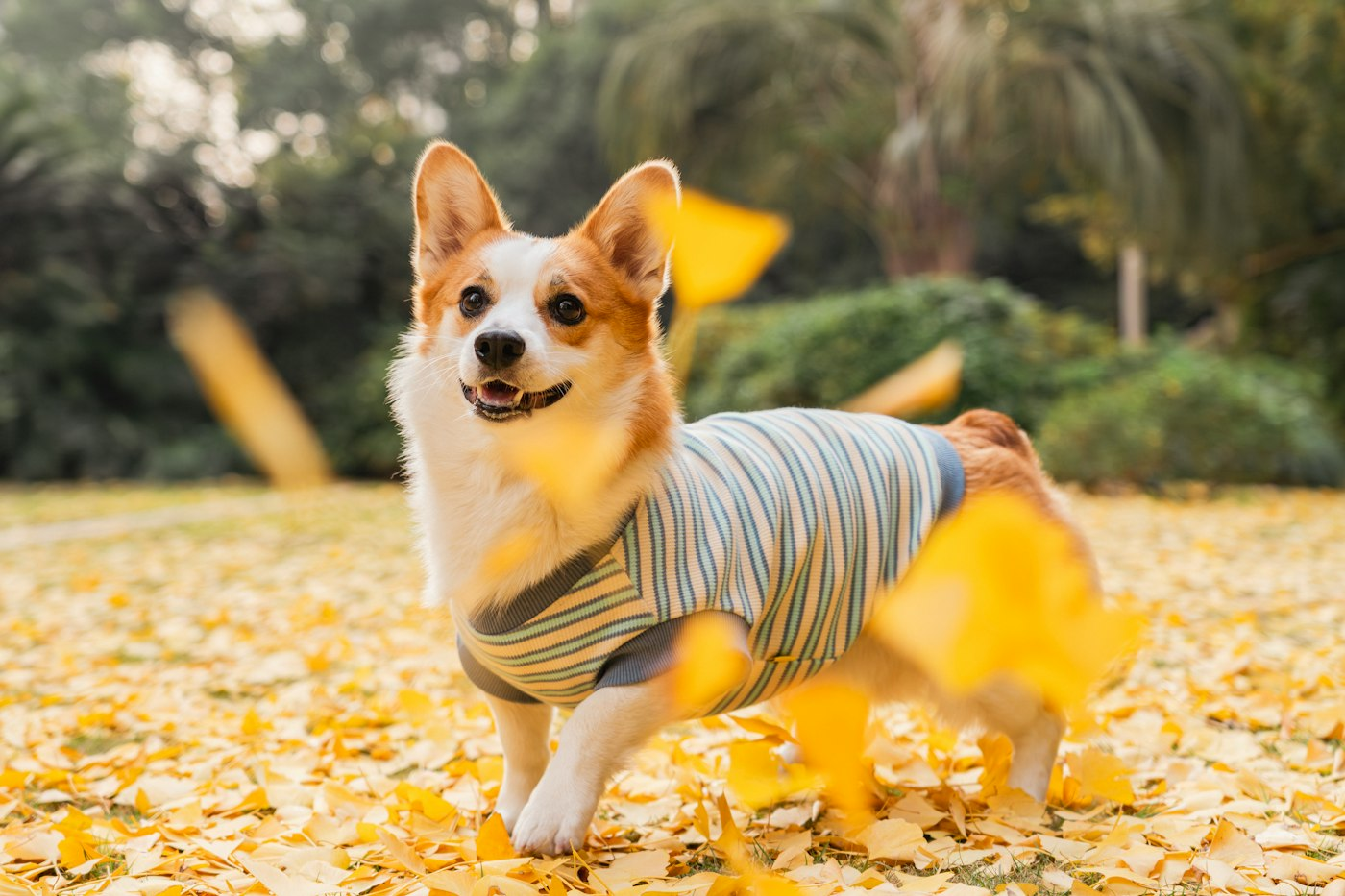
Some September morning, you will step outside with the leash and notice your breath for the first time since spring. Your dog may not notice at all, or may stand at the door looking unconvinced. That first chilly walk is a good moment to think about whether a light jacket belongs in your routine this fall.
There is no single temperature at which every dog needs a layer. A thick-coated dog built for cold work and a short-haired whippet experience the same 48-degree morning very differently. The goal is to read your own dog, not a chart.
Who tends to feel the chill first
Dogs who usually benefit from an early-season layer share a few traits:
- Short or single coats with little undercoat
- Small bodies, which lose heat faster relative to their size
- Lean builds with little body fat
- Puppies and senior dogs, who regulate temperature less efficiently
- Dogs recently groomed short, including doodles fresh from a summer trim
That last group is easy to overlook. A doodle who spent August in a short clip may have far less insulation in September than its fluffy winter self. If your dog has any health condition that affects circulation, weight or energy, ask your veterinarian how cold weather might affect them.
What your dog is telling you
Dogs are fairly honest about being cold. Watch for shivering, a tucked tail, a hunched posture, lifting paws off cold ground, slowing down or turning for home sooner than usual. Some dogs simply refuse to go out at all on a raw, damp morning. Any of these signs on a cool walk is a reasonable cue to try a light layer.
Pay attention to wind and wet as much as the thermometer. A breezy, drizzly 55 degrees can feel colder to a short-coated dog than a still, sunny 45.
Light layers for a season of swings
Fall is a season of big daily temperature swings. A morning that starts near freezing can turn mild by lunch. That makes early fall the time for lighter layers rather than heavy winter coats. A thin fleece or a lightweight shell is easier to take off mid-walk and less likely to overheat an active dog.
Before you head out, check that the jacket fits through the chest and neck without rubbing behind the front legs, and that your dog can walk, sit and relieve themselves comfortably. Bring it off when you get home rather than letting your dog wear it all day indoors.
Easing in
If your dog has never worn a jacket, the first cool weeks are the best time to practice, before you actually need it. Let them sniff it, reward them for calmly having it draped over their back, then fasten it for short periods indoors with treats. By the time real cold arrives, the jacket is just part of getting ready for a walk.
And if your dog is clearly comfortable, trotting happily with no signs of chill, there is no need to dress them up just because the calendar changed. Fall jackets are about comfort, and your dog is the best judge of that.












