

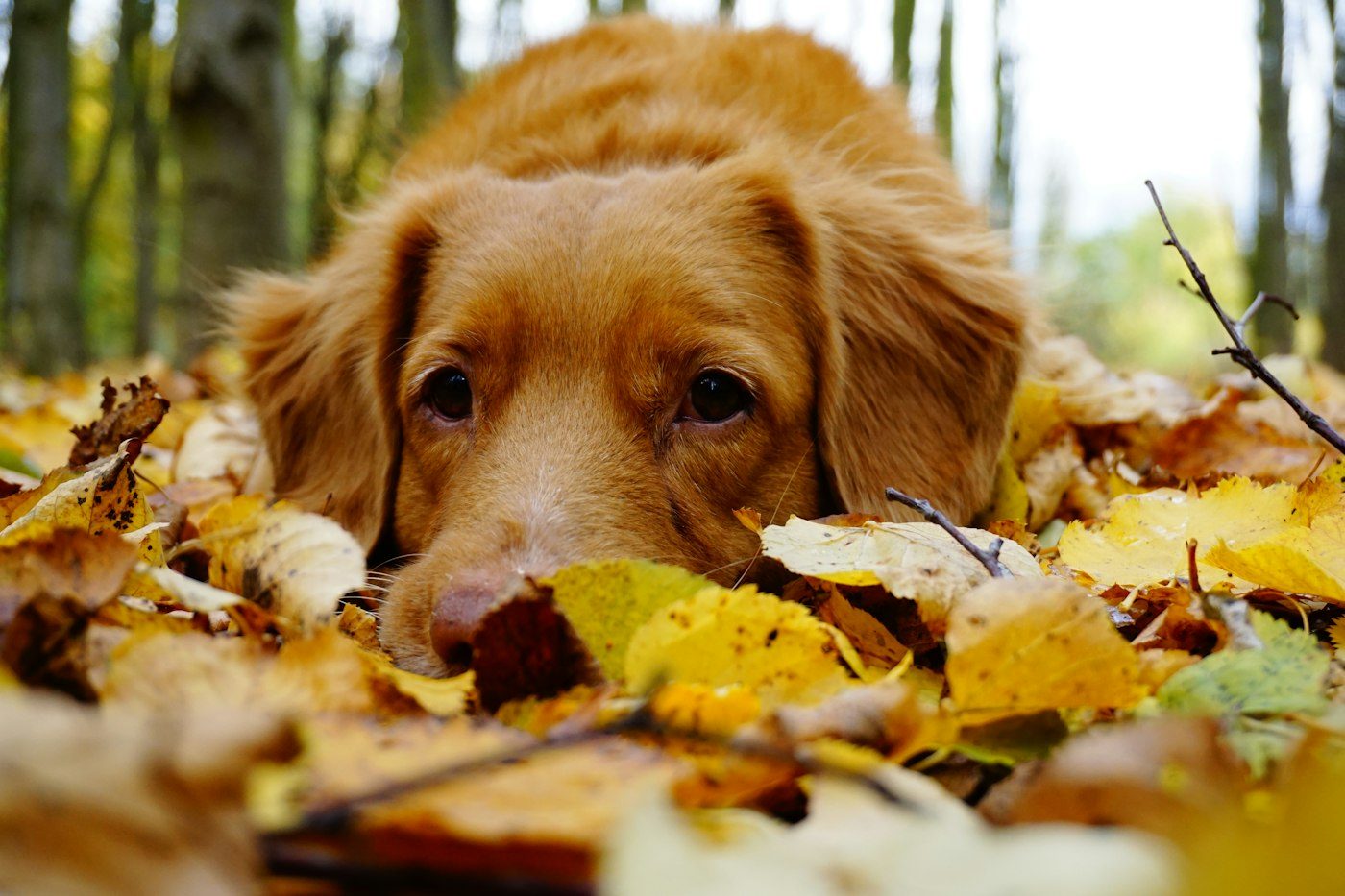
Spring gets most of the attention for allergies, but for many dogs, late summer and fall can be just as uncomfortable. If your dog seems itchier once the leaves start turning, seasonal allergies may be part of the picture. Only your veterinarian can diagnose what is going on, but understanding the common fall triggers helps you have a more useful conversation.
Common fall triggers
- Ragweed and weed pollens. Ragweed is known for releasing pollen from late summer into fall in many parts of the United States.
- Mold spores. Damp, decomposing leaves and wet fall weather can increase outdoor mold.
- Dust mites. As windows close and heating systems start, indoor allergens can become more noticeable.
Fleas also deserve a mention. They can stay active into fall, especially once homes warm up, and flea bites are a common cause of itching in dogs.
How allergies can show up in dogs
People with allergies often sneeze. Dogs more often itch. Common signs include:
- Licking or chewing paws
- Scratching at the face, ears, armpits or belly
- Rubbing against furniture or carpet
- Red or irritated skin
- Recurring ear trouble, including head shaking or odor
- Watery eyes or occasional sneezing
These signs can also come from infections, parasites, food sensitivities and other conditions. That overlap is why a vet visit matters. Persistent scratching can also damage skin and lead to secondary problems that need treatment.
Simple habits that may help
While you work with your veterinarian, a few everyday habits can reduce how much of the outdoors comes in with your dog:
- Wipe paws and the belly with a damp cloth after walks.
- Brush outdoors when possible to remove pollen and debris from the coat.
- Wash your dog’s bedding regularly in hot water if the fabric allows.
- Rake up wet leaves where your dog plays to cut down on mold.
- Keep up with the flea prevention your veterinarian recommends.
Do not give your dog human allergy medications without asking your veterinarian first. Some products contain ingredients that are unsafe for dogs, and the right dose depends on the individual animal.
Gear and itchy dogs
Collars, harnesses and jackets can trap pollen, sweat and moisture against the skin, which may bother an itchy dog. Washing gear regularly and letting it dry fully helps. Check the skin under collars and harness straps for redness. If your dog wears a jacket, make sure it is clean and dry before each wear.
Talking to your vet
Keep notes on when the itching started, where on the body it shows up, and anything that seems to make it better or worse. Photos of red skin or irritated paws can help too. Your veterinarian can look for underlying causes and talk through options that fit your dog. Many dogs with seasonal allergies can be kept comfortable with the right plan.












