

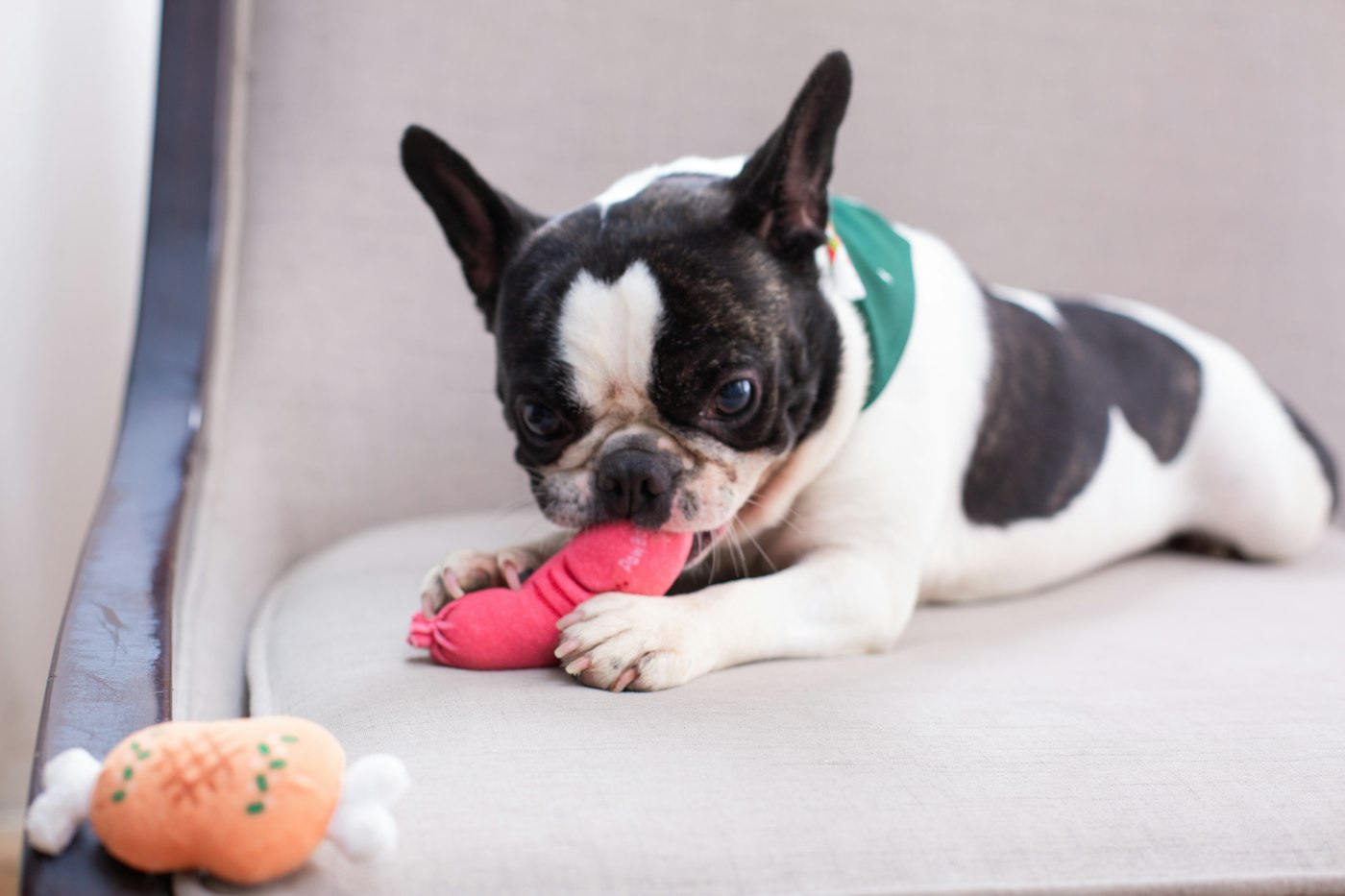
Enrichment is about giving dogs opportunities to use their natural behaviors: sniffing, chewing, foraging, problem-solving and playing. Toys designed for enrichment can help keep dogs mentally engaged, especially on days when long outdoor time is not possible, like the hottest afternoons of late spring and summer. With so many styles available, it helps to understand the main categories.
Food-Dispensing and Puzzle Toys
These toys hold food or treats and release them as the dog plays. They range from simple to challenging.
- Stuffable rubber toys can be filled with kibble, soft food or dog-safe spreads and frozen for a longer challenge.
- Treat balls and wobblers drop kibble as the dog rolls or nudges them.
- Slow feeder bowls with ridges or mazes make meals last longer.
These are good starting points for most dogs. They turn mealtime into an activity.
Puzzle toys hide treats under sliders, flaps or compartments that the dog has to move. They are often rated by difficulty level. Start with an easy puzzle so your dog experiences success, then move up as they learn. Supervise puzzle play, since some dogs try to chew pieces instead of solving the puzzle.
Sniffing, Licking and Chewing Toys
Snuffle mats and similar toys have folds or fabric strips where kibble can be hidden. Dogs use their noses to find each piece. Sniffing is calming and mentally tiring for many dogs, which makes these toys useful before quiet time.
Textured lick mats can be spread with a thin layer of dog-safe food. Licking can be soothing for some dogs, and lick mats are sometimes used during grooming or nail trims. Freezing a lick mat makes it last longer.
Durable chew toys support a dog’s natural need to chew. Choose the right hardness and size for your dog, and inspect them often for damage. Some chew toys also have treat compartments, combining two types of enrichment.
Choosing for Your Dog
Think about your dog’s age, size, chewing style and what they enjoy most.
- Power chewers need sturdy toys and close supervision.
- Puppies benefit from simple puzzles and teething-appropriate chews.
- Senior dogs may enjoy gentle sniffing games and softer lick mats.
- Dogs who get frustrated easily need easier puzzles and more help at first.
Rotate toys rather than leaving them all out at once. A toy that disappears for a week often seems new again when it returns.
Safety Notes
Wash food toys regularly to prevent bacterial buildup. Discard toys that are cracked, torn or small enough to swallow. Count food from toys as part of your dog’s daily intake to avoid weight gain. If your dog has dietary restrictions, ask your veterinarian which foods are appropriate for filling toys.
Enrichment toys are not a substitute for walks, training and time with you, but they are a valuable addition to a dog’s day.












