

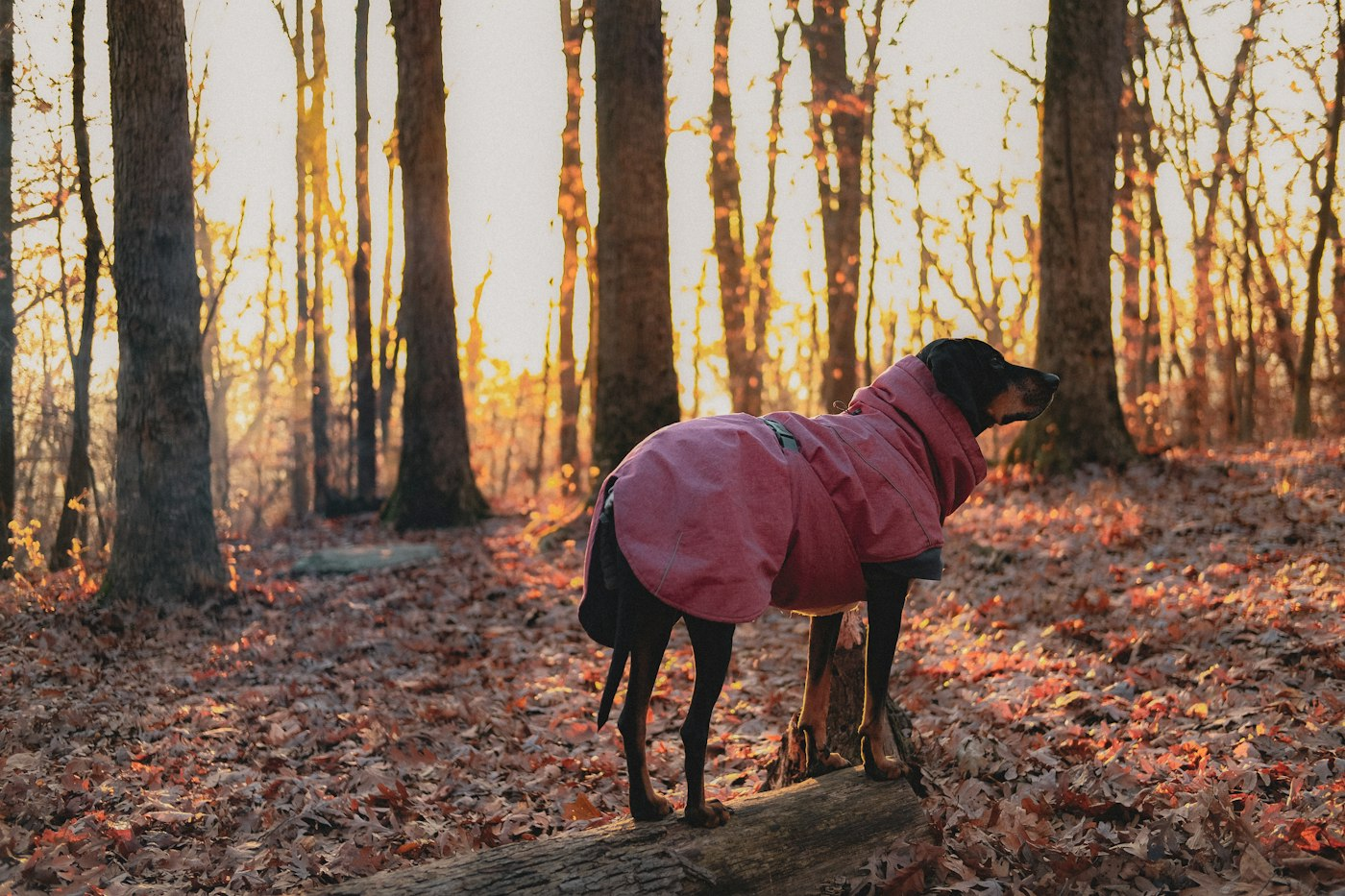
September often brings crisp mornings, breezy evenings and sudden showers, even when afternoons still feel like summer. Most dogs handle this transition easily. Some, though, feel the first chill more than others, and a light jacket can make early walks more comfortable. The trick is knowing which dogs benefit and choosing a layer that will not leave them too warm once the sun comes out.
Dogs that may appreciate a light layer
- Short-coated breeds with little body fat, such as Whippets, Greyhounds and some terrier mixes
- Toy and small breeds, which lose heat faster
- Senior dogs, whose ability to regulate temperature may decrease
- Dogs recovering from illness or surgery, if your veterinarian approves
- Dogs fresh from a short haircut, including Doodles and Poodles who just lost much of their coat
Healthy dogs with thick double coats, such as Huskies, Bernese Mountain Dogs and German Shepherds, rarely need a jacket in early fall and may overheat in one.
What to look for in an early fall layer
A light jacket should be easy to move in and not too warm.
- Lightweight, breathable materials such as thin fleece or a light shell
- Water resistance for drizzly mornings
- Reflective trim for walks at dusk or before sunrise
- Easy on and off, with hook-and-loop closures, snaps or a simple pullover style
- An opening for a leash attachment if your dog wears a harness underneath
Avoid heavily insulated winter coats this early in the season unless your dog clearly needs one.
Getting the fit right
Measure your dog’s neck, chest at the widest point and back length from the base of the neck to the base of the tail. Compare those numbers to the sizing guide for the jacket you are considering. A good fit covers the back and chest without restricting the shoulders or legs and leaves room for the dog to relieve itself comfortably. Check underneath for rubbing after the first few wears, especially on the chest and under the front legs.
Watching your dog’s comfort
Watch for signs your dog is chilly, such as shivering, tucking the tail, hunching or hesitating to go outside. Equally, watch for signs of overheating, such as heavy panting or seeking shade. A light jacket in the morning may need to come off by midday. Never leave a jacket on a dog that is unsupervised or crated, and remove it once you come inside. If your dog seems unusually sensitive to cold, mention it to your veterinarian at your next visit.
Getting your dog used to it
Many dogs accept a jacket easily, but some need time. Let your dog sniff it first, put it on for a few seconds with treats and praise and gradually increase the time. Short, positive sessions build a good association before cooler weather really arrives.












