

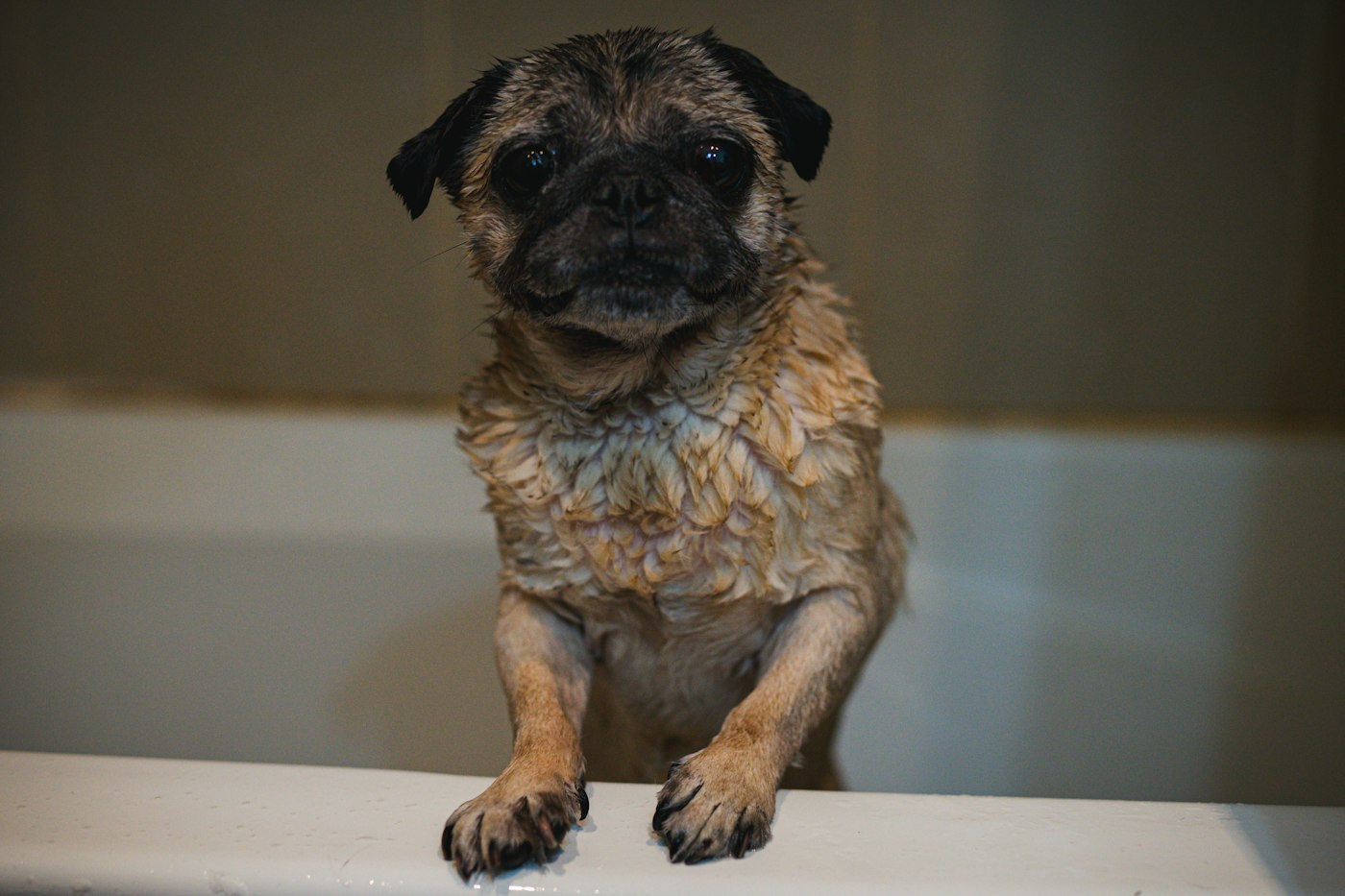
Many dog owners notice changes in their dog’s skin and coat during winter. Flakes appear on dark fur, the coat looks a little duller and some dogs scratch more than usual. Cold, dry outdoor air and heated indoor air can both draw moisture from the skin. Some simple habits may help, though persistent skin problems always deserve a visit to the veterinarian.
Why skin dries out in winter
Winter air holds less moisture, and indoor heating dries it further. Moving between cold outdoor air and warm, dry rooms all day can be hard on skin, both ours and our dogs’. Frequent bathing with harsh products, exposure to road salt and de-icers, and wet fur that is not dried thoroughly can add to irritation. Some dogs are naturally more prone to dry skin than others.
Bathing with care
Bathing too often can strip the natural oils that protect the skin and coat. In winter, many dogs do well with less frequent full baths and more spot cleaning of paws, legs and bellies after walks. When you do bathe:
- Use a shampoo made for dogs, not people, since dog and human skin differ
- Choose a gentle or moisturizing formula if your dog tends toward dryness
- Rinse thoroughly, because leftover shampoo can irritate skin
- Dry completely before your dog goes outside
For doodles and other dogs with thick coats, make sure you dry right down to the skin. Damp fur close to the skin can lead to irritation and mats.
Brushing helps the coat
Regular brushing removes loose hair and dead skin and helps distribute the skin’s natural oils through the coat. It also gives you a chance to notice changes such as flakes, redness, bumps, hot spots or parasites. The right brush depends on your dog’s coat, so ask your groomer if you are unsure.
Around the house
A humidifier can add moisture back into dry indoor air, which may help both you and your dog. Keep your dog’s bed away from radiators, heating vents and fireplaces, where the air is driest and there may be burn risks. Make sure fresh water is always available, since dogs need to stay well hydrated in winter as well as summer.
Diet and when to see the vet
Nutrition plays a role in skin and coat health. Some owners ask about supplements such as fatty acids. Before adding anything to your dog’s diet, talk to your veterinarian, who can tell you whether it is appropriate and how much to use. Also check with your vet if you notice intense or constant scratching, licking or chewing, red or inflamed skin, hair loss, scabs, sores, odor, greasy or crusty patches, or changes in your dog’s energy or appetite. Dry skin can sometimes be a sign of allergies, parasites, infections or other health issues that need professional care. This is general information only, and your vet can help find the cause and the right treatment for your dog.












