

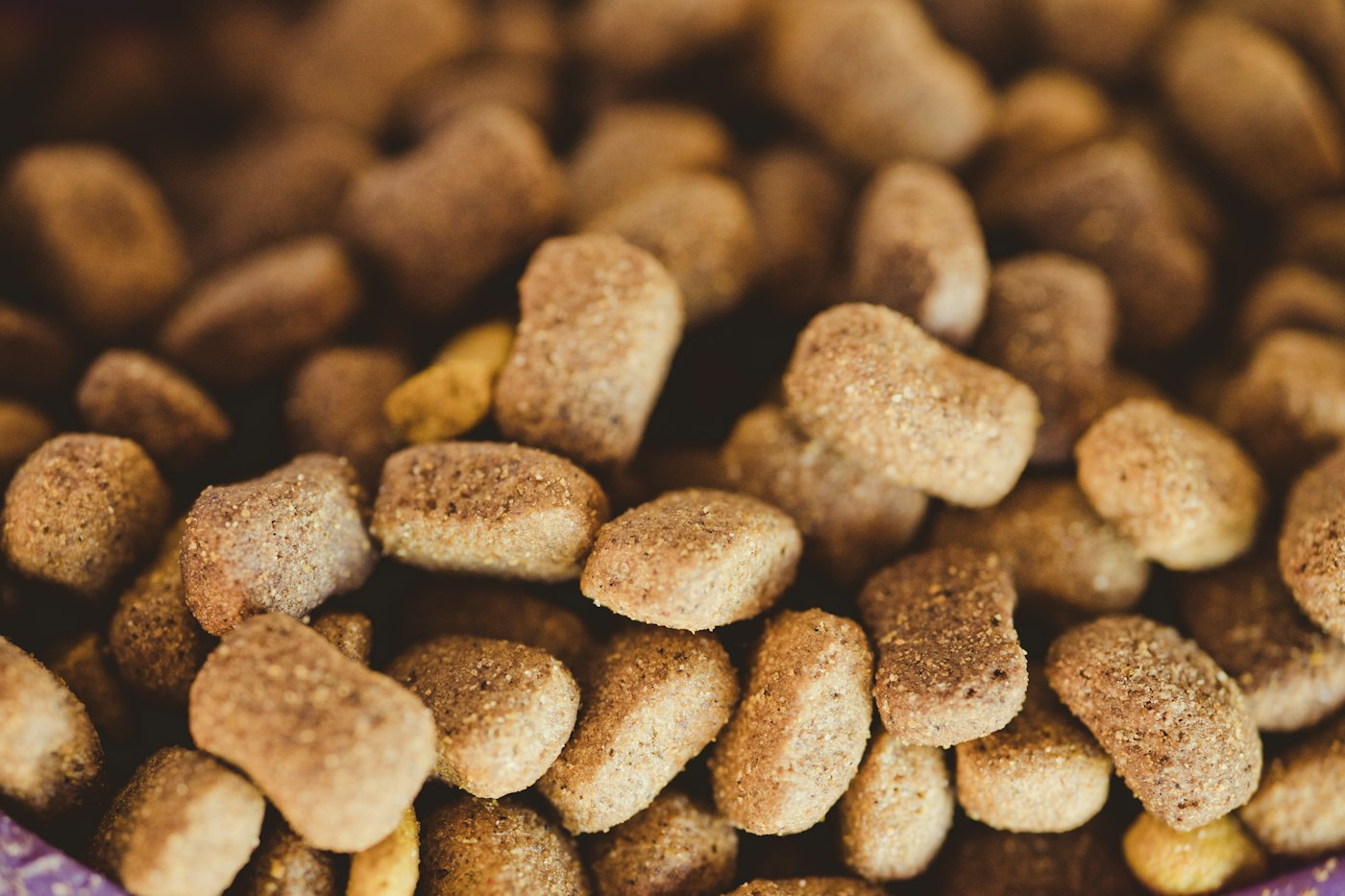
Choosing what to feed your dog can feel overwhelming. Pet food aisles are crowded, advice online is often contradictory and every bag promises something. A basic understanding of what dogs need nutritionally helps you sort through the noise and have a better conversation with your veterinarian, who is the best source of guidance for your individual dog.
The six basic nutrients
Like people, dogs need a combination of nutrients to stay healthy. Nutrition experts usually group them into six categories.
- Water is the most essential. Dogs need constant access to clean, fresh water.
- Protein supplies amino acids that the body uses to build and repair muscle, skin, coat and many other tissues.
- Fat is a concentrated energy source and provides essential fatty acids that support skin, coat and other body functions. It also helps the body absorb certain vitamins.
- Carbohydrates provide energy and, in the form of fiber, support digestion.
- Vitamins are needed in small amounts for a wide range of processes in the body.
- Minerals, such as calcium and phosphorus, support bones, teeth, nerves and more.
The right balance matters as much as the presence of each nutrient. Too much of some vitamins or minerals can be as much of a problem as too little.
Life stage changes the recipe
A puppy, an adult dog and a senior dog have different needs. Puppies are building bones and muscles, so they generally need food formulated for growth. Large and giant breed puppies often have their own specific recommendations because of how quickly they grow. Adult dogs need food that maintains their condition, and older dogs may benefit from adjustments based on activity level and health. Ask your veterinarian when to switch from puppy to adult food and whether a senior diet makes sense for your dog.
Complete and balanced
In the United States, many commercial dog foods include a statement explaining whether the food is formulated to meet nutritional standards set by the Association of American Feed Control Officials, known as AAFCO, for a particular life stage. A food labeled complete and balanced for your dog’s life stage is designed to be fed as the main diet. Treats, toppers and some specialty products are not intended to meet all of a dog’s needs on their own.
Homemade and specialty diets
Some owners are interested in homemade, raw or other specialty diets. These can be difficult to balance correctly, and some raise food safety concerns for both dogs and people. If you are considering one, talk to your veterinarian first. They may recommend working with a board-certified veterinary nutritionist to create a recipe that meets your dog’s needs.
Questions for your vet
- Is my dog’s current food appropriate for its age, size and activity level?
- How much should my dog eat each day, including treats?
- Are there any health conditions that affect what my dog should eat?
- How should I switch foods if a change is needed?
Most food changes go more smoothly when made gradually over about a week, mixing increasing amounts of the new food with the old. Your veterinarian can tell you the best approach for your dog.












