

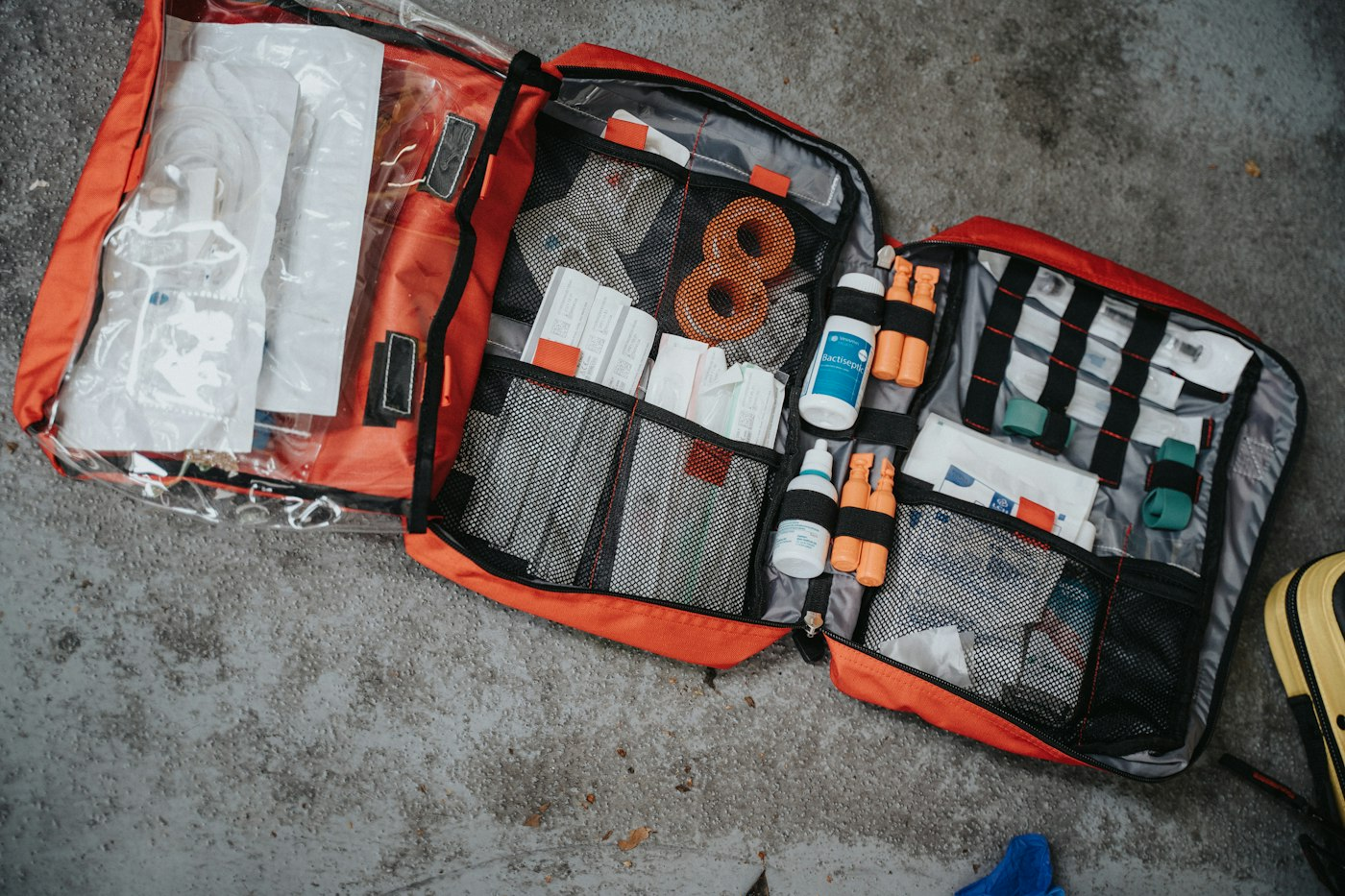
No one plans for a dog emergency, but a little preparation helps you think clearly when one happens. The goal of first aid is not to treat your dog at home. It is to keep you and your dog safe, prevent things from getting worse, and get to a veterinarian as quickly as possible. The tips below are general; your veterinarian is always the right person to guide you through a specific situation.
Protect yourself first
Even the gentlest dog may bite when frightened or in pain. Approach slowly, speak calmly and avoid putting your face near your dog’s mouth. If your dog is not having trouble breathing or vomiting, a soft muzzle or a loop of gauze can prevent a bite while you handle an injury. Never muzzle a dog that is struggling to breathe, vomiting or overheated. If another person is with you, ask them to call the vet while you focus on the dog.
Bleeding, cuts and paw injuries
For a bleeding wound, press a clean gauze pad or cloth firmly against it. Keep steady pressure for several minutes without lifting to check. If blood soaks through, add more gauze on top rather than removing the first layer. Paw pads and ears can bleed heavily even from small cuts. A light wrap can help on the way to the clinic, but it should never be tight enough to cut off circulation. Bleeding that does not slow with pressure needs a vet right away.
Swallowed objects and possible poisons
If you think your dog ate something toxic, such as medication, chocolate, a xylitol-sweetened product, rodent bait or a household chemical, call your veterinarian or an animal poison control hotline immediately. Have the packaging nearby if you can. Do not try to make your dog vomit unless a veterinary professional tells you to and explains how. Some substances cause more harm coming back up, and some home methods are dangerous on their own.
Moving an injured dog
If your dog cannot walk or may have a back or leg injury, keep movement to a minimum. A small dog can be carried in a box or carrier. For a larger dog, slide a firm board, a sturdy blanket or a large towel underneath and lift with a helper, keeping the spine as straight as you can. Drive calmly, and call ahead so the clinic can prepare for your arrival.
Signs that mean go now
Some situations should never wait for a regular appointment. Head to a veterinarian or emergency hospital if you notice:
- Difficulty breathing, choking or blue or pale gums
- Collapse, sudden weakness or inability to stand
- A seizure, especially one that lasts more than a few minutes or repeats
- A swollen, hard belly with restlessness or attempts to vomit that bring nothing up
- Straining to urinate without producing urine
- Any major trauma, such as being hit by a car, even if your dog seems fine
Knowing where the nearest 24-hour emergency hospital is, and saving its number in your phone, is one of the simplest and most useful steps you can take today. A pet first aid course can build on these basics with hands-on practice.












