

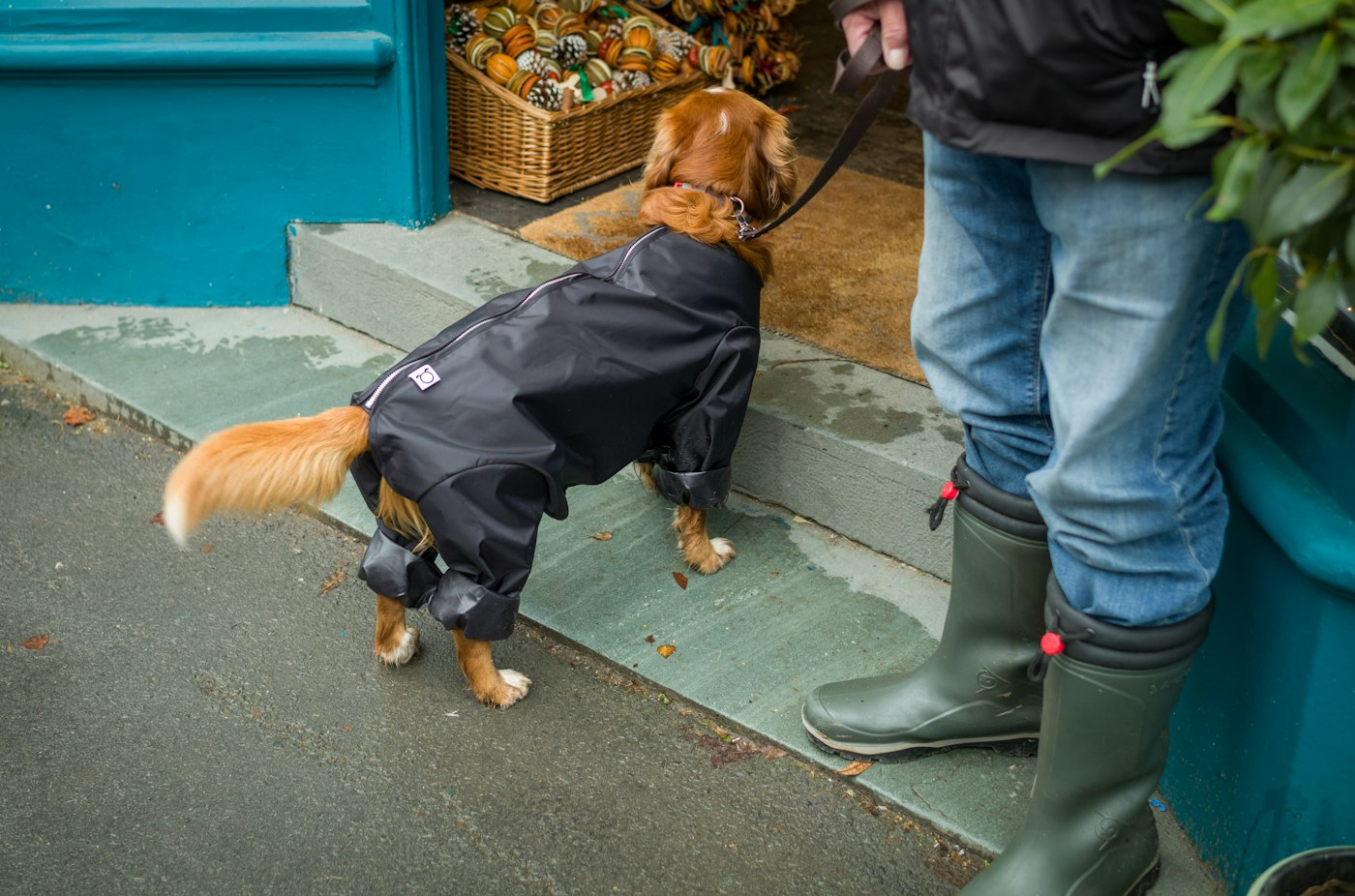
Spring brings rain, and rain brings the question of whether your dog needs a coat for it. Some dogs trot through a downpour and shake off at the door. Others come home soaked to the skin, shivering and smelling like a wet blanket. A raincoat can help the second kind of dog a great deal, but it is not a must-have for every pup. A few questions can help you decide.
How does your dog’s coat handle water?
Many dogs bred for work in and around water have coats that shed moisture well. Labrador Retrievers and other retrievers, for example, have dense coats with natural oils that help keep water from soaking straight through. These dogs may not need much protection in a light rain.
Curly and wavy coats tend to act more like a sponge. Doodles and Poodles can soak up a lot of water, and a wet curly coat takes a long time to dry and is more prone to matting. Short single-coated dogs have little to keep the rain off at all. For both groups, a raincoat can make a noticeable difference.
How big is your dog, and how old?
Small dogs lose body heat quickly, and on cool spring days a soaking can leave them chilled. Their bellies also sit close to wet grass and puddles. Puppies, senior dogs and dogs with certain health conditions may be less able to regulate their temperature. If your dog falls into one of these groups, ask your veterinarian whether keeping them drier on cold, wet walks makes sense.
How long are your walks in the rain?
A quick bathroom break in the yard is very different from a forty-minute walk around the neighborhood. If your rainy-day outings are short, a towel at the door may be all you need. If your dog needs real exercise no matter the weather, or you walk before work in all conditions, a raincoat can save you a lot of drying time.
How much cleanup are you doing?
Some people choose a raincoat as much for the house as for the dog. A coat keeps the back and sides cleaner and drier, which means less mud on the couch and less wet-dog smell. It will not keep legs and paws clean, so you will still want a towel and a paw routine. But for long-coated dogs, it can turn a full drying session into a quick wipe-down.
Will your dog actually wear it?
Comfort matters. Some dogs accept a coat right away, while others need gradual, positive introductions. A good fit is essential: the coat should not rub under the front legs, restrict movement or press on the throat. Watch for signs of stress, such as freezing in place, tucking the tail or trying to get out of the coat.
- A raincoat makes the most sense for curly, short or thin coats, small dogs, puppies and seniors.
- It helps most on longer walks and on cool, wet days.
- It reduces cleanup, but paws and legs still need attention.
- Fit and comfort matter as much as waterproofing.
PUPWEAR makes jackets for dogs, and the same thinking applies to any coat: choose it for the dog you have and the weather you actually walk in.












