

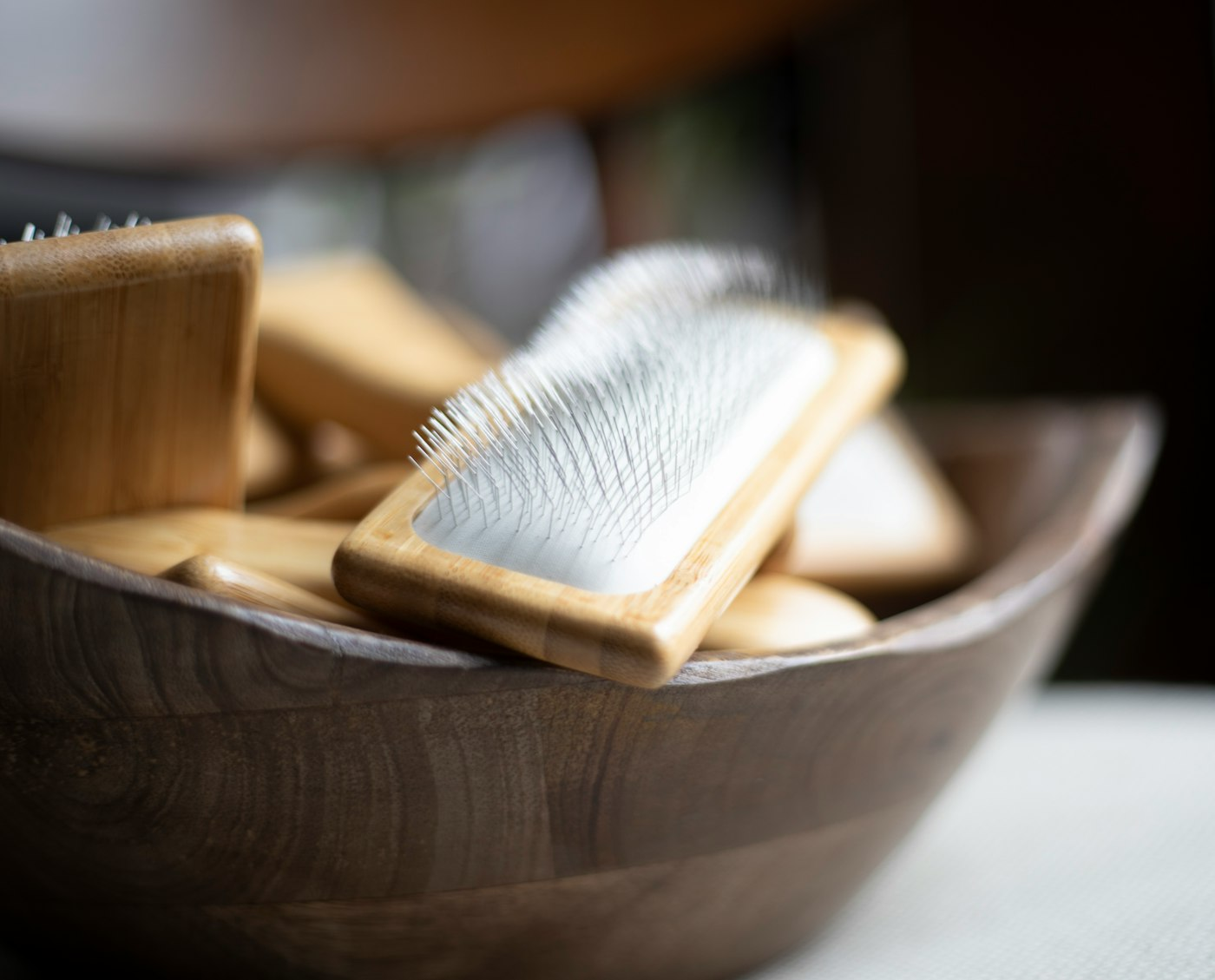
Spring shedding sends many dog owners to the pet store aisle, where a wall of brushes, rakes and combs awaits. Each tool is designed for a different job, and the right choice depends mostly on your dog’s coat. Using the wrong tool can be ineffective at best and uncomfortable for your dog at worst. Here is how the common options compare.
Slicker brushes
A slicker brush has many fine, bent wire pins set close together on a flat or slightly curved pad. It is a workhorse for curly, wavy and medium to long coats, including doodles, Poodles and many mixed breeds. Slickers remove loose hair and gently work through small tangles.
The fine pins can scratch the skin if you press too hard, so use a light touch and brush in short strokes. Test it on your own forearm: if it feels sharp against your skin, it is too much pressure for your dog.
Undercoat rakes
An undercoat rake has one or two rows of longer, widely spaced teeth. It reaches through the outer coat to pull out loose undercoat, which makes it a favorite for thick double-coated breeds such as German Shepherds, Huskies and Golden Retrievers during heavy shedding. Choose a tooth length that suits the depth of your dog’s coat, and work in the direction the hair grows.
Metal combs
A sturdy metal comb, often with wide teeth on one end and narrower teeth on the other, is the best way to check your work. After brushing, run the comb through the coat down to the skin. If it glides through, the coat is clear. If it catches, there is a tangle or mat that the brush missed. For curly-coated dogs, a comb is just as important as the brush.
Deshedding blades and edged tools
Some deshedding tools use a fine-toothed metal edge designed to grab loose undercoat as you stroke along the coat. Many owners of double-coated dogs find them effective during shedding season. They should be used gently and not too often, since overuse can thin or damage the outer coat or irritate the skin. They are generally not recommended for curly or single coats. Follow the manufacturer’s directions and ask a groomer if you are unsure.
Several other common brushes round out a grooming kit:
- Bristle brushes smooth and add shine to short coats and finish long coats after detangling.
- Pin brushes have straight pins, often with rounded tips, and suit long, silky coats.
- Rubber curry brushes loosen dead hair from short, smooth coats like those of Labradors, Beagles and Boxers, and many dogs enjoy the massaging feel.
Choosing for your dog
For a doodle, start with a slicker brush and a metal comb. For a thick double coat, an undercoat rake plus a slicker or bristle brush covers most needs. For a short, smooth coat, a rubber curry brush is often all you need. Whatever you choose, keep sessions short and positive, and watch the skin for redness or irritation. If your dog’s skin looks sore, or the coat seems to be thinning beyond normal shedding, talk to your veterinarian.












