

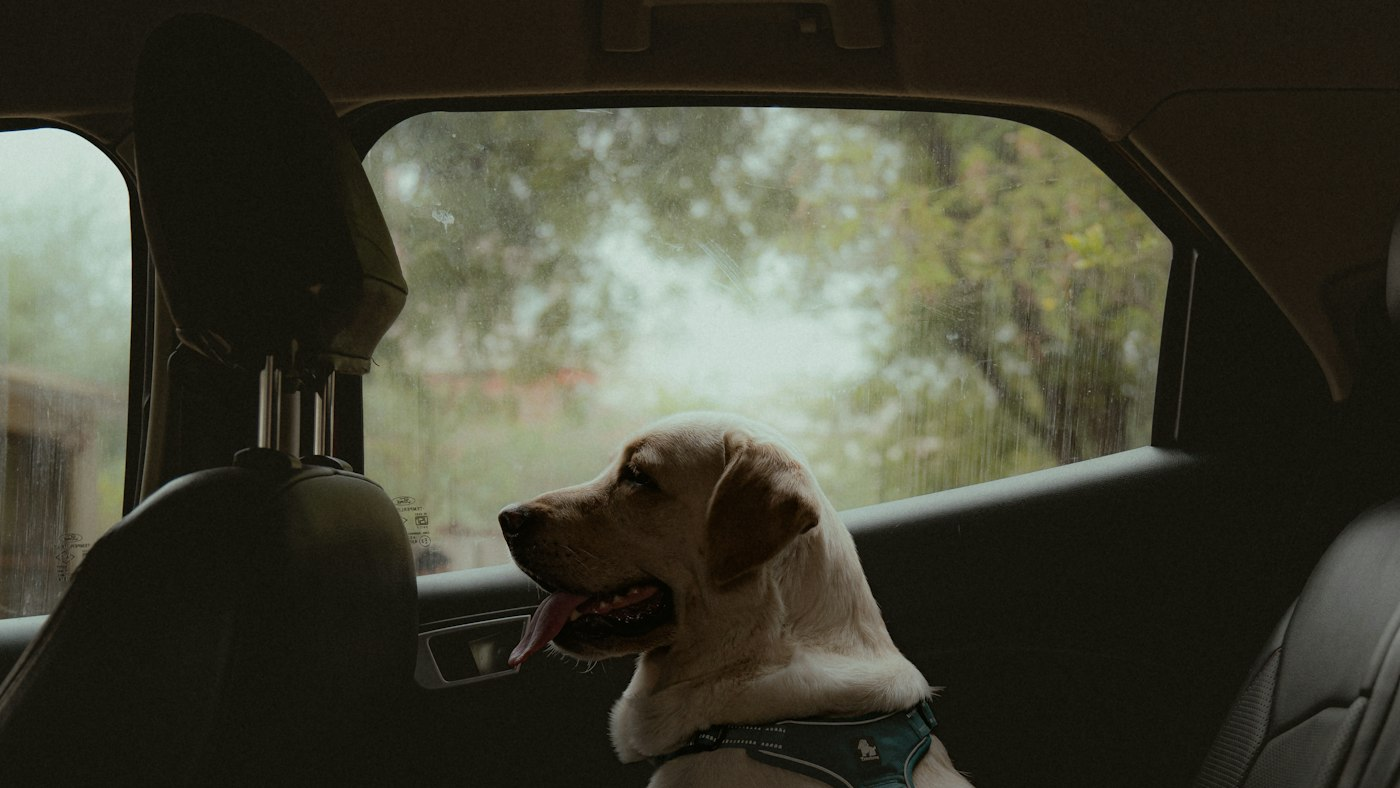
Road trip season is coming, and many dogs ride in the car more often in late spring and summer. It is tempting to let a dog curl up loose on the back seat, but an unrestrained dog can distract the driver, jump into the front seat or out an open door, and be seriously hurt in a sudden stop. Some states and localities also have rules about animals in vehicles, so it is worth checking what applies where you live and where you are traveling.
There are three main ways to secure a dog in the car. Each has strengths, and the right choice depends on your dog’s size, temperament and your vehicle.
Travel Harnesses
A car harness is designed to attach to the seat belt system, either by a tether that clips into the buckle or a loop the belt passes through. It keeps the dog on the seat and limits how far they can move.
- Choose a harness made specifically for car travel, not a walking harness clipped to a seat belt.
- Look for products that say they have been tested in crash conditions, and read what that testing involved. Independent testing programs exist, and some manufacturers describe their results in detail.
- Keep the tether short enough that your dog cannot reach the front seat or fall into the footwell.
- Never attach a car tether to a collar. In a sudden stop, the force lands on the neck.
Crates and Carriers
A sturdy crate can be an excellent option, especially for dogs who already love their crate at home. In a crash, a well-built crate that is properly secured can contain the dog and prevent them from becoming a projectile.
The key word is secured. A crate sliding around the cargo area does not protect anyone. Use straps attached to the vehicle’s cargo anchors, and position the crate so it cannot shift. Hard-sided crates are generally sturdier than soft ones for travel. Small dogs in carriers can ride on the floor behind a front seat, where the carrier is wedged in place.
Cargo Barriers
A barrier or guard separates the cargo area from the passenger cabin in SUVs and wagons. It keeps a dog from climbing forward and is useful for multiple dogs or very large dogs. A barrier on its own does not hold a dog in place during a collision, though, so many owners combine it with a crate in the cargo area.
Fit and Comfort Matter
Whatever you choose, introduce it at home before the trip. Let your dog explore the crate or wear the harness in the house with treats and praise. Then take short drives to fun places so the car predicts good things. A dog who is comfortable in their restraint will travel calmer.
A few more habits help on every drive:
- Keep heads inside windows; debris and insects can injure eyes and ears.
- Never let your dog ride in an open truck bed.
- Make sure your dog is wearing a collar with current ID, since stops at unfamiliar places are a common time for dogs to slip away.
If your dog gets carsick or anxious, talk to your veterinarian before a long trip. There are often simple steps that make travel easier.












