

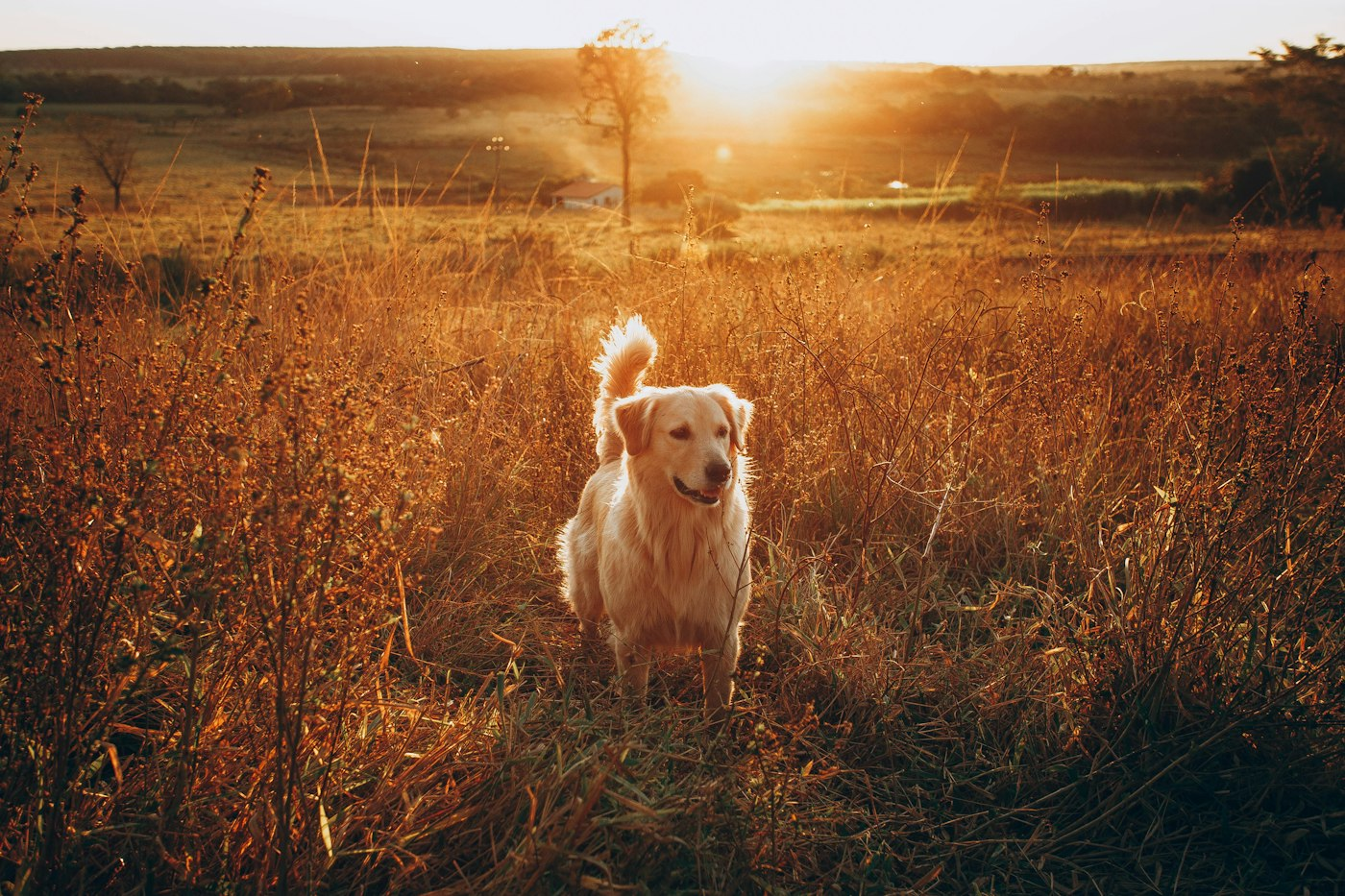
The Golden Retriever has a reputation as the friendly family dog, and for good reason. Goldens are typically affectionate, eager to please and patient. They are also athletic working dogs with a strong desire to be busy. Understanding both sides of the breed will help you give one a happy life.
A Highland history
The Golden Retriever was developed in Scotland in the 1800s. Hunters at the time wanted a dog that could retrieve shot birds from both land and water, working through rugged terrain and cold lochs. Early breeding combined a yellow retriever with a now-extinct water spaniel, and later crosses added other retrievers and setters. The result was a dog with a gentle mouth, a water-resistant coat and a cooperative attitude.
The breed spread to England, Canada and the United States in the early 1900s and soon became a favorite in field trials, obedience competitions and homes alike. Today Goldens also work as guide dogs, therapy dogs and search and rescue dogs.
Temperament
Most Goldens are social, gentle and tolerant, which is why they are often recommended for families. They tend to bond closely with their people and may struggle when left alone for long periods. Young Goldens can be exuberant, mouthy and easily distracted, and many keep a playful streak well past puppyhood. Consistent, reward-based training suits the breed’s sensitive and willing nature.
Because Goldens are so friendly, they are not usually suited to guard work. They are much more likely to greet a visitor with a toy than with a warning bark.
Coat and grooming
Goldens have a double coat: a dense, soft undercoat and a longer, water-repellent outer coat with feathering on the legs, chest, belly and tail. Colors range from light cream to deep gold. They shed throughout the year and more heavily during seasonal transitions.
- Brush several times a week to remove loose undercoat and prevent tangles, especially behind the ears and on the feathering.
- Trim around the paws and ears as needed for neatness.
- Avoid shaving a Golden’s coat unless your veterinarian advises it, since the double coat helps regulate temperature and protect the skin.
Goldens who love to swim should be dried thoroughly, particularly the ears and the dense coat near the skin.
Exercise and enrichment
A Golden Retriever generally needs daily exercise and mental work. Retrieving games, long walks, scent games and training sessions all fit the breed’s history. Many enjoy dog sports such as obedience, rally, dock diving or field work. Without enough activity, a bored Golden may chew, dig or invent its own entertainment.
Like any breed, Goldens can be affected by certain inherited conditions. If you are bringing one home, ask a breeder about health screening for the parents, and talk with your veterinarian about what to watch for as your dog ages. Keeping your Golden lean and fit is one of the most helpful things you can do for long-term comfort.
Gear notes
A sturdy flat collar works well for most adult Goldens. Pick a material that will not trap water against the neck, and check the fit after grooming, since a thick coat can make a collar feel looser or tighter than it is. A clearly readable ID tag or QR tag should hang where it will not get buried in fur.












