

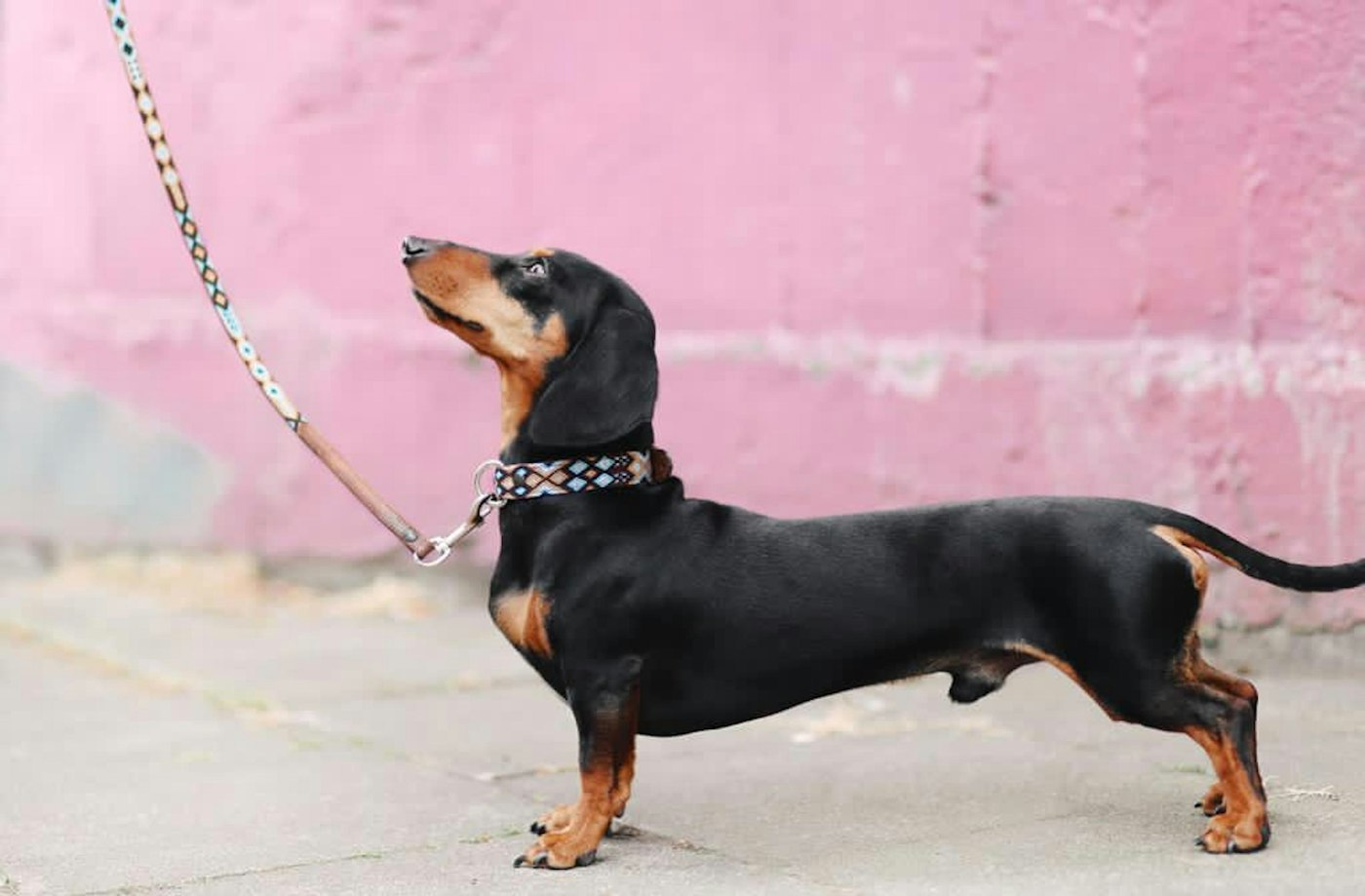
The Dachshund is instantly recognizable, with its long body, short legs and confident attitude. Behind the cartoonish shape is a tenacious hunting dog with a strong will and a lively sense of curiosity. Dachshunds can be devoted and entertaining companions for people who understand their history and needs.
The badger dog
Dachshund means “badger dog” in German, and the breed was developed in Germany several centuries ago to hunt badgers and other burrowing animals. Its low, elongated body allowed it to follow prey underground, and its loud bark helped hunters locate the dog. Smaller Dachshunds were used for smaller game, such as rabbits. The breed later became popular as a companion throughout Europe and the United States.
Varieties and coats
Dachshunds come in two sizes, standard and miniature, and three coat types:
- Smooth coats are short and shiny and need minimal grooming.
- Longhaired coats are silky, with feathering on the ears, chest and legs, and need regular brushing.
- Wirehaired coats are dense and harsh with a distinctive beard and eyebrows, and may need occasional hand-stripping or trimming.
Colors and patterns vary widely and include red, black and tan, cream, dapple and brindle.
Temperament
Dachshunds are typically brave, clever and independent. They were bred to make decisions underground without human direction, which can show up as stubbornness during training. Many are loyal to their families and wary of strangers, and they can be vocal watchdogs. Their hunting instincts may lead to digging and chasing small animals. Positive, patient training with rewards, along with early socialization, helps a Dachshund become a well-mannered companion.
Giving those instincts a safe outlet makes life easier for everyone. Many Dachshunds love scent games, tunnels, digging boxes filled with sand or old blankets, and toys they can burrow under. Earthdog trials, a sport built around the breed’s original job, are another option some owners enjoy exploring.
Caring for a long back
The Dachshund’s distinctive shape means owners often take extra care with its back. Many veterinarians and breed enthusiasts suggest:
- Keeping your Dachshund at a healthy, lean weight
- Limiting jumping on and off furniture, using ramps or steps
- Supporting both the chest and hindquarters when you pick your dog up
- Encouraging regular, moderate exercise to keep muscles strong
Talk with your veterinarian about how to protect your Dachshund’s back and what signs, such as reluctance to move, a hunched posture or weakness in the legs, need prompt attention.
Gear notes
A harness is often recommended for walking Dachshunds, since it distributes pressure across the chest rather than the neck. Look for one designed for a long body and deep chest that does not restrict the front legs. A lightweight collar can hold an ID tag or QR tag. Because they are low to the ground, smooth-coated Dachshunds can feel cold on chilly or wet days, and a well-fitted jacket that covers the long back can help. Measure length carefully, since standard sizes often fit Dachshunds poorly.












