

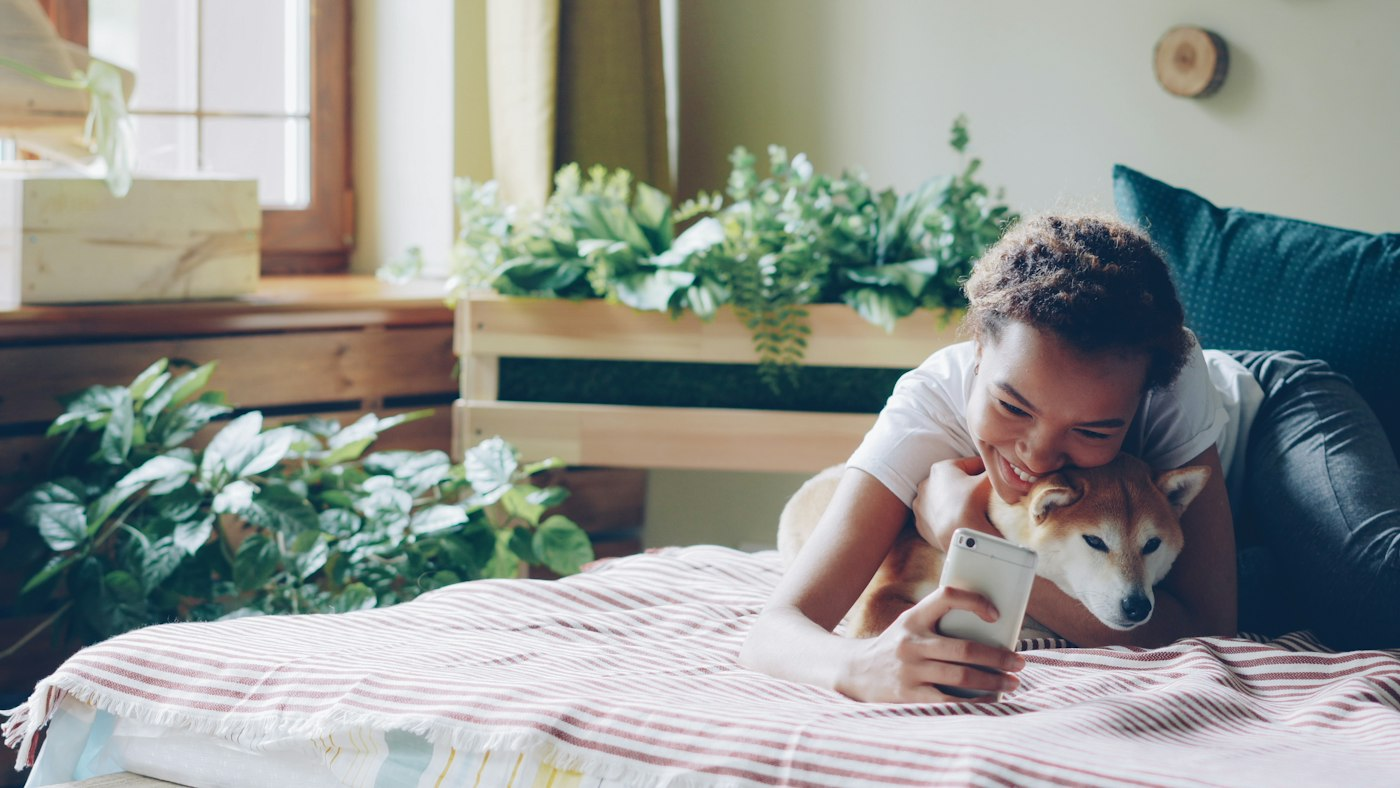
Most dog photos today are taken on phones, and phones are more capable than many people realize. The difference between a forgettable snapshot and a photo you want to print usually comes down to a few basics: light, angle, focus and timing. Late spring, with long days and plenty of outdoor time, is a great season to practice.
Find Good Light
Light shapes everything in a photo. Outdoors, look for soft light: early morning, the late afternoon hours before sunset, an overcast day or open shade. These conditions reduce harsh shadows and help show the detail in your dog’s coat.
Indoors, turn off the overhead lights and move near a window. Natural light from the side often looks much better than a flash, which can startle dogs and create glowing eyes. Dark-coated dogs especially benefit from plenty of soft light so their features do not disappear.
Get Down to Their Level
Many dog photos are taken from a standing person’s height, looking down. Crouch, kneel or lie on the ground so the phone is at your dog’s eye level. The photo instantly feels more personal, and you see the world from your dog’s perspective.
- For portraits, focus on the eyes. Tap the screen on your dog’s eye to set focus.
- Try shooting from slightly below for a heroic look, especially with bigger dogs.
- Simplify the background by moving a few steps so there is grass, sky or a plain wall behind your dog.
Capture Motion
Dogs rarely hold still for long. Use burst mode for running, playing or catching. Many phones also have action or sports modes that use faster shutter speeds. Good light helps freeze motion, so action shots are easiest outdoors in bright conditions.
For running shots, have a helper throw a ball or call your dog toward you while you shoot from low to the ground. Pre-focus on the spot where your dog will be.
Use Portrait Mode Thoughtfully
Portrait mode blurs the background, which can make a dog pop. It sometimes struggles with fluffy edges, such as the fur on a doodle’s ears, and can blur parts of the coat unnaturally. If that happens, step back a little or switch to the regular camera and crop later.
Whatever mode you use, photography should be fun for your dog, too. Keep a pocket of treats and reward often. Use a sound or the dog’s name sparingly to get a head tilt. Some dogs are wary of a phone pointed at them; let them sniff it and reward calm behavior.
Small Edits, Big Results
A few simple edits can improve a photo without making it look artificial:
- Crop to remove distractions and center your dog’s face.
- Straighten tilted horizons.
- Lift shadows slightly on dark-coated dogs.
- Adjust warmth if indoor light makes the photo look orange or blue.
Most of all, take lots of photos. Everyday moments like naps, greetings, muddy paws and the face your dog makes when the leash comes out become precious over time. A recent, clear photo of your dog is also useful to have on hand in case your dog is ever lost.












