

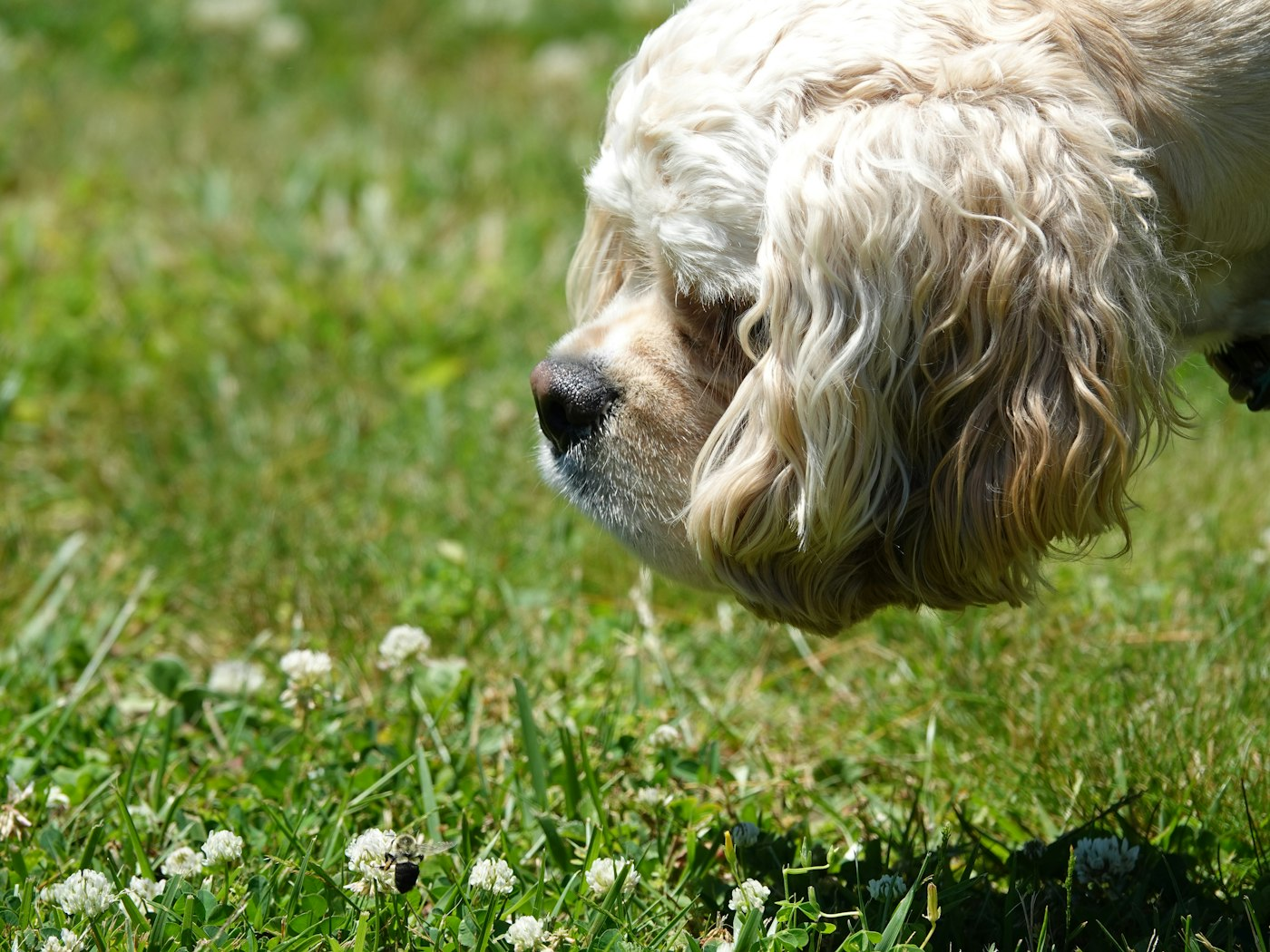
As flowers bloom and the weather warms, bees, wasps, hornets and other stinging insects become more active. Many dogs find buzzing insects irresistible and try to chase, paw at or snap at them. That often ends with a sting to the face, mouth or paws. Most stings cause short-lived discomfort, but some can lead to serious reactions. Knowing what to watch for helps you respond quickly.
Signs your dog may have been stung
- Sudden yelping, pawing at the face or licking a paw
- Swelling, often on the muzzle, lips, around the eyes or on a foot
- Redness or a raised bump at the sting site
- Drooling, especially after a sting in or near the mouth
- Limping or holding up a paw
Honeybees often leave their stinger behind, sometimes with a small sac attached. Wasps and hornets usually do not, and can sting more than once.
General first steps
If you see a stinger, it is generally recommended to remove it promptly. Many sources suggest scraping it out with the edge of a credit card or a fingernail rather than squeezing it with tweezers, which may push more venom in. Move your dog away from the area to avoid more stings, especially if there is a nest nearby.
A cool compress wrapped in a cloth may help reduce mild swelling. Keep your dog calm and watch them closely for the next few hours. Call your veterinarian for advice, even for a seemingly mild sting, particularly if it is your dog’s first known sting. Do not give your dog antihistamines or other human medications unless your veterinarian tells you to, since dosing and ingredients matter.
Warning signs that need emergency care
Some dogs have allergic reactions to stings, and a severe reaction can be life-threatening. Seek emergency veterinary care immediately if you notice:
- Swelling of the face, throat or neck that is spreading quickly
- Difficulty breathing, coughing or wheezing
- Hives or widespread bumps on the body
- Vomiting or diarrhea
- Weakness, collapse, pale gums or confusion
- Stings in the mouth or throat, which can swell and affect breathing
- Multiple stings, such as from disturbing a nest
Reactions can sometimes develop over minutes or hours, so continue to watch your dog after a sting even if they seem fine at first.
Reducing the risk
You cannot avoid stinging insects entirely, but a few habits help. Discourage your dog from snapping at insects, and redirect them with a toy or a cue. Check your yard in spring for nests under eaves, decks, in sheds and in the ground, and have them removed safely, using pet-safe methods or a professional. Keep dogs away from flowering plants that are busy with bees, and from fallen fruit and open trash, which can attract wasps.
If your dog has had a reaction to a sting before, ask your veterinarian what you should do if it happens again, and keep their number and the nearest emergency clinic’s details handy during warm months.












