

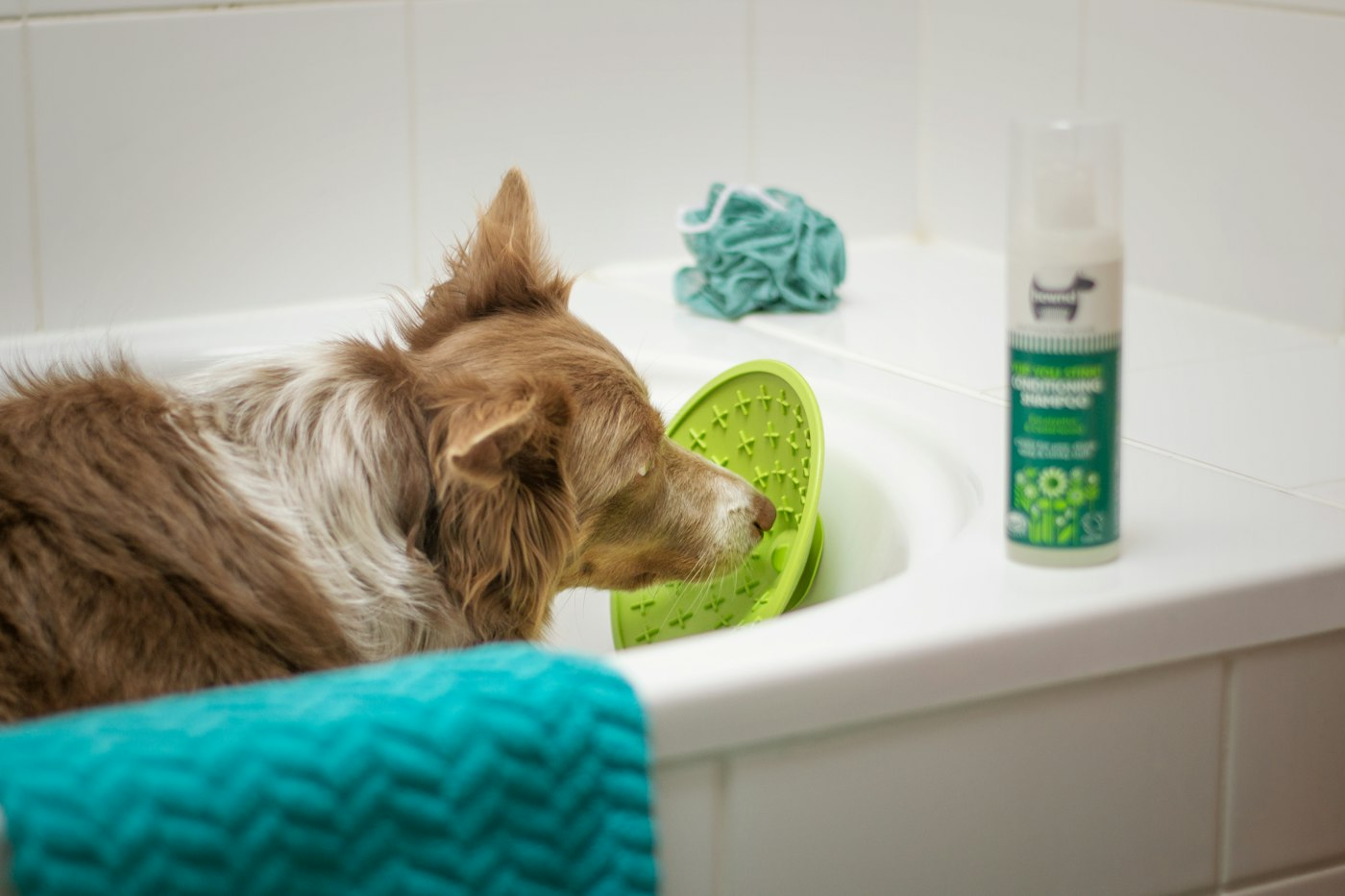
Between melting snow, spring rain and freshly turned garden beds, many dogs need more baths in spring than at any other time of year. Bathing at home does not have to mean a soaked bathroom and a stressed dog. A predictable routine, the right supplies and a little patience go a long way.
Gather everything first
Once your dog is wet, you do not want to leave them to fetch a towel. Set up before you start:
- A shampoo made for dogs; human shampoo is formulated for different skin
- Conditioner, if your dog’s coat is long or curly
- Several absorbent towels
- A non-slip mat for the tub or shower floor
- A handheld sprayer or a cup for rinsing
- Cotton balls to gently keep water out of the ears, if your vet or groomer recommends it
- Treats for good behavior
Brush before you bathe
This step is easy to skip and important not to. Water tightens tangles and mats, especially in curly coats, and can make them much harder to remove. Brush your dog thoroughly before the bath, and comb through to the skin if they have a doodle or Poodle-type coat.
Wash from the neck back
Use lukewarm water. Test it on your wrist, as you would for a baby. Wet your dog thoroughly, starting at the neck and working toward the tail, so water soaks all the way down to the skin. Thick and curly coats can take a while to get fully wet.
Lather the shampoo in, following the label directions, and work it gently through the coat. Wash the face last with a damp washcloth instead of pouring water over the head, and keep soap out of the eyes and ears.
Rinse more than you think you need to
Shampoo left in the coat can irritate the skin and attract dirt. Rinse until the water runs completely clear and the coat no longer feels slippery, then rinse once more. Pay extra attention to the armpits, belly, between the toes and under the tail.
Dry completely
Squeeze excess water from the coat and blot with towels rather than rubbing hard, which can create tangles. For curly coats, a damp undercoat can lead to mats and skin irritation, so many owners follow towels with a pet dryer or a human hair dryer on a cool or low setting, held at a distance and kept moving. Never leave a dryer pointed at a dog, and never use a hot setting. Brush as you dry to keep curls from tangling.
Keep your dog in a warm, draft-free spot until fully dry, especially on chilly spring days. If your dog’s skin looks red, flaky or itchy after bathing, or you are unsure how often to bathe a dog with skin issues, ask your veterinarian. Some skin conditions call for medicated shampoos and a specific bathing schedule.












